Nearly a thousand Google workers sign letter urging company to divest from ICE, CBP Published Sat, Feb 7 202610:43 AM ESTUpdated Sat, Feb 7 20264:45 PM EST Laya Neelakandan@in/layaneelakandan@Laya_neel ShareShare Article via FacebookShare Article via TwitterShare Article via LinkedInShare Article via Email Key Points Hundreds of Google workers signed an open letter urging the company to cut its ties with ICE and CBP after rising violence. The letter also calls on the company to institute protections for its workers. It adds to mounting pressure on tech companies to speak out against federal immigration policies.
In this articleGOOGL-1.45 (-0.45%) The logo for Google LLC is seen at the Google Store Chelsea in Manhattan, New York, Nov. 17, 2021. Andrew Kelly | Reuters
More than 900 Google workers have signed an open letter condemning recent actions by U.S. Immigration and Customs Enforcement (ICE) and Customs and Border Protection (CBP), urging the tech giant to disclose its dealings with the agencies and divest from them.
The letter, citing recent ICE killings of Keith Porter, Renee Good, and Alex Pretti, said that the employees are “appalled by the violence” and “horrified” by Google’s part in it.
“Google is powering this campaign of surveillance, violence, and repression,” the letter reads.
It goes on to cite that Google Cloud is aiding CBP surveillance and powering Palantir’s ImmigrationOS system, which is used by ICE. The letter states that Google’s generative artificial intelligence is used by CBP and that the Google Play Store has blocked ICE tracking apps.
The letter also quotes a social media post by Google Chief Scientist Jeff Dean from early January, who wrote, “We all bear a collective responsibility to speak up and not be silent when we see things like the events of the last week.”
“We are vehemently opposed to Google’s partnerships with DHS, CBP, and ICE,” the employees wrote. “We consider it our leadership’s ethical and policy-bound responsibility to disclose all contracts and collaboration with CBP and ICE, and to divest from these partnerships.”
The letter calls on Google to acknowledge the danger that workers face from ICE, host an emergency internal Q&A on the company’s DHS and military contracts, implement safety measures to protect workers — such as flexible work-from-home policies and immigration support — and reveal its ties with the government agencies to help all involved determine where the company will draw a line.
“As workers of conscience, we demand that our leadership end our backslide into contracting for governments enacting violence against civilians,” the letter reads. “Google is now a prominent node in a shameful lineage of private companies profiting from violent state repression. We must use this moment to come together as a Googler community and demand an end to this disgraceful use of our labor.”
Google did not immediately respond to a CNBC request for comment.
ByteDance will add AI safeguards after Disney threatened to sue. The Chinese tech giant said it plans to “strengthen safeguards” for its Seedance 2.0 video-making tool after several Hollywood studios complained that it was using their copyrighted characters without permission. Disney sent the company a cease-and-desist letter last week, accusing it of “hijacking” its characters. ByteDance said it “heard the concerns” but did not specify how it would protect companies’ intellectual property. Last week, Seedance 2.0 generated a hyperrealistic video depicting the likenesses of Tom Cruise and Brad Pitt fighting on a rooftop, leading one Hollywood screenwriter to say, “It’s likely over for us.”
Like everyone in the elevator at the end of Willy Wonka, US-based Corning is riding glass to new heights. The 175-year-old company’s stock hit an all-time high on Friday and is up more than 130% over the past year because it’s a surprising AI winner.
Window to the future: Corning has long been an innovator, producing everything from Edison’s first light bulbs to Pyrex bakeware. Then, in 1970, the company’s researchers developed fiber-optic wire. But over time, that glass fiber product started to look like it needed Windex.
In 2018, Corning focused on making thinner, tougher glass cables that performed especially well in data centers. When the AI boom hit, the company was perfectly positioned to help build out the infrastructure:
Late last month, Corning signed a $6 billion fiber-optic cable contract with Meta.
The glassmaker expects other AI “hyperscalers” to follow suit.
Glass bubble? Corning was on a similar trajectory from 1997 to 2000, but when the dot-com bubble popped, the company lost more than 90% of its value. The company says it’s more diversified now. In August, Corning signed a $2.5 billion deal to manufacture all of the cover glass for iPhones and Apple Watches.
YouTube on Monday introduced lower-priced YouTube TV plans that will allow subscribers to better tailor their plans to their own interests in areas like sports, news, and entertainment. The company said that it will offer more than 10 different plans to choose from, all priced below the $82.99 per month main YouTube TV plan that has access to more than 100 networks. The new plans will start rolling out this week.
While that main plan will not go away, the new plans will allow customers to pick what matters most and what they could do without in return for cost savings.
Image Credits:YouTube
Among the new plans are a $64.99 per month Sports plan, a Sports + News plan for $71.99 per month, a less expensive Entertainment plan for $54.99 per month, and a $69.99 per month News + Entertainment + Family plan, which includes kids’ content.
The Sports plans include all major broadcasters, plus networks like FS1, NBC Sports Network, all of the ESPN networks, and ESPN Unlimited. This plan is $18 cheaper per month than the main plan.
YouTube TV’s news channels include CNBC, Fox News, CNN, MS NOW, and Bloomberg, along with other national news channels. Combined with Sports, the package is priced $11 lower per month than the main YouTube TV plan.
The entertainment-only plan is $28 cheaper per month than the main plan, and includes major broadcasters as well as FX, Hallmark, Comedy Central, Bravo, Paramount, Food Network, and HGTV. Families with small kids can add other channels like Disney Channel, Nickelodeon, National Geographic, Cartoon Network, and PBS Kids for a bit more.
The company is also offering discounts for new subscribers, which could lower the price of certain plans further for either the first few months or the first year. Subscribers will continue to have access to YouTube TV’s unlimited DVR, support for up to six family members on one account, multiview, and more.
Other add-ons like NFL Sunday Ticket + RedZone, HBO Max, and 4K Plus can also be purchased to customize plans further.
The company says all the new plans will roll out over the next several weeks.
Customized packages are now not a new idea in streaming — à la carte options were a key part of the early streaming pioneer Sling TV’s initial offering, for instance. This element of personalization was also one of the factors that was meant to make streaming a better alternative to traditional pay TV, where consumers often ended up paying for channels they didn’t want.
But as streamers added more content, networks, and, in particular, sports programming, the cost of streaming inched back up to compete with cable and linear television. Live TV streamers like YouTube TV may have offered convenience and some savings over still more expensive cable, but it wasn’t exactly affordable anymore.
These new packages hit the market at a time when consumer confidence is at its lowest in more than 11 years, due to fears about the labor market and higher prices, which have made consumers more cautious about their spending.
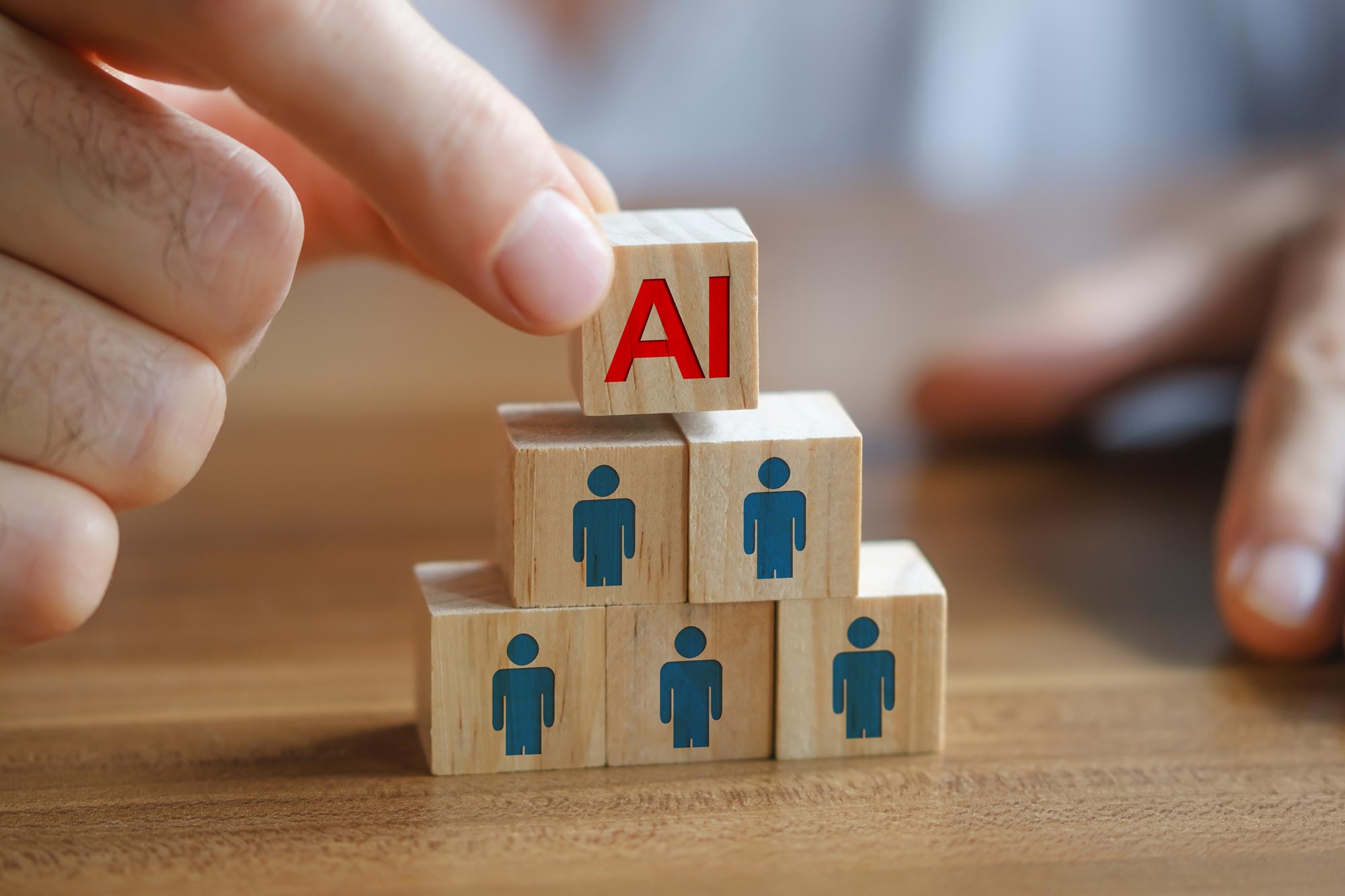
A massive study shows that AI can now beat the average human on certain creativity tests. Yet the most creative people remain well ahead, highlighting AI’s role as a creative assistant rather than a replacement. Credit: Shutterstock
Are generative artificial intelligence systems such as ChatGPT capable of real creativity? A new large-scale study led by Professor Karim Jerbi from the Department of Psychology at the Université de Montréal set out to answer that question. The research team also included Yoshua Bengio, a leading AI pioneer and professor at the Université de Montréal. Together, they conducted the most extensive comparison to date between human creativity and the creative abilities of large language models.
The findings, published in Scientific Reports, point to a major shift. Generative AI systems have now reached a level where they can outperform the average human on certain creativity measures. At the same time, the study makes it clear that the most creative people still exceed the performance of even the strongest AI models.
AI Reaches Average Human Creativity Levels
The researchers evaluated several major large language models, including ChatGPT, Claude, Gemini, and others, and compared their results with data from 100,000 human participants. The outcome marks a clear turning point. Some AI systems, including GPT-4, scored higher than the average human on tasks designed to measure divergent linguistic creativity.
“Our study shows that some AI systems based on large language models can now outperform average human creativity on well-defined tasks,” explains Professor Karim Jerbi. “This result may be surprising — even unsettling — but our study also highlights an equally important observation: even the best AI systems still fall short of the levels reached by the most creative humans.”
Further analysis by the study’s co-first authors, postdoctoral researcher Antoine Bellemare-Pépin (Université de Montréal) and PhD candidate François Lespinasse (Université Concordia), revealed an important pattern. While some AI models now outperform the average person, the highest levels of creativity remain uniquely human.
When the researchers looked more closely, they found that the most creative half of human participants achieved higher average scores than all AI systems tested. The difference was even more pronounced among the top 10 percent of the most creative individuals.
“We developed a rigorous framework that allows us to compare human and AI creativity using the same tools, based on data from more than 100,000 participants, in collaboration with Jay Olson from the University of Toronto,” says Professor Karim Jerbi, who is also an associate professor at Mila.
How Creativity Was Measured in Humans and AI
To make a fair comparison between people and machines, the research team used several methods. The primary tool was the Divergent Association Task (DAT), a psychological test designed to measure divergent creativity, or the ability to generate many original and varied ideas from a single prompt.
Created by study co-author Jay Olson, the DAT asks participants, whether human or AI, to generate ten words that are as different in meaning from one another as possible. A highly creative response might include words such as “galaxy, fork, freedom, algae, harmonica, quantum, nostalgia, velvet, hurricane, photosynthesis.”
Performance on this task in humans closely mirrors results on other well-established creativity tests used in idea generation, writing, and creative problem solving. Although the task is language-based, it does not simply test vocabulary. Instead, it taps into broader cognitive processes involved in creative thinking across many domains. Another advantage of the DAT is its speed and accessibility, as it takes only two to four minutes to complete and is available online to the general public.
From Simple Word Tests to Creative Writing
Building on these results, the researchers examined whether AI performance on this basic word association task could translate into more complex creative activities. To test this, they directly compared AI systems and human participants on creative writing tasks.
These included writing haiku (a short three-line poetic form), producing movie plot summaries, and creating short stories. Once again, the pattern was clear. While AI sometimes outperformed average human participants, the most skilled human creators continued to demonstrate a clear advantage.
Can AI Creativity Be Adjusted?
The findings raised an important follow-up question. Can AI creativity be shaped or controlled? According to the study, it can. One key factor is the model’s temperature, a technical setting that influences how predictable or adventurous an AI’s responses are.
At lower temperature settings, AI systems tend to generate safer and more predictable outputs. At higher temperatures, the responses become more varied and less constrained, encouraging risk-taking and more original associations.
The researchers also found that the way prompts are written plays a major role. For example, instructions that encourage AI models to consider the origins and structure of words using etymology lead to more unexpected ideas and higher creativity scores. Together, these results show that AI creativity depends heavily on human input and guidance, making interaction between people and machines a central part of the creative process.
Will AI Replace Human Creators?
The study offers a balanced perspective on fears that artificial intelligence could replace creative professionals. While some AI systems can now rival human creativity on specific tasks, the research also highlights clear limitations and the continued importance of human creativity.
“Even though AI can now reach human-level creativity on certain tests, we need to move beyond this misleading sense of competition,” says Professor Karim Jerbi. “Generative AI has above all become an extremely powerful tool in the service of human creativity: it will not replace creators, but profoundly transform how they imagine, explore, and create — for those who choose to use it.”
Rather than predicting the end of creative careers, the findings encourage a new way of thinking about AI. The technology may serve as a creative assistant that expands possibilities for exploration and inspiration. The future of creativity may depend less on humans versus machines and more on new forms of collaboration, where AI supports and enhances human imagination.
“By directly confronting human and machine capabilities, studies like ours push us to rethink what we mean by creativity,” concludes Professor Karim Jerbi.
The article “Divergent creativity in humans and large language models” was published in Scientific Reports on January 21, 2026.
Reference: “Divergent creativity in humans and large language models” by Antoine Bellemare-Pepin, François Lespinasse, Philipp Thölke, Yann Harel, Kory Mathewson, Jay A. Olson, Yoshua Bengio and Karim Jerbi, 21 January 2026, Scientific Reports. DOI: 10.1038/s41598-025-25157-3
The research involved collaboration among scientists from Université de Montréal, Université Concordia, University of Toronto Mississauga, Mila (Quebec AI Institute), and Google DeepMind.
The study was led by Professor Karim Jerbi, with Antoine Bellemare-Pépin (Université de Montréal) and François Lespinasse (Université Concordia) serving as co-first authors. The author team also included Yoshua Bengio, founder of Mila and LoiZéro, and one of the world’s leading pioneers of deep learning, the technology behind modern AI systems such as ChatGPT.
eComTechnology since 2003.
I am a business economist with interests in international trade worldwide through politics, money, banking and secure VOIP and Mail Communications.
The author of RG Richardson City Guides has over 300 guides, including restaurants and finance.
RG Richardson City author has over 300 travel guides. Let our interactive search city guides do the searching, no more typing, and they never go out of date. With over 13,900 preset searches, you only have to click on the preset icon. Search for restaurants, hotels, hostels, Airbnb, pubs, clubs, fast food, coffee shops, real estate, historical sites and facts all just by clicking on the icon. Even how to pack is all there.
Finance, Money, Banking, and Economics definitions interactive dictionary.