Wednesday, 15 April 2026

US economy grew a sluggish 0.5% in fourth quarter


The 
US economy grew a sluggish 0.5% in the fourth quarter, the government says, downgrading its previous estimate


Gas prices are displayed at a gasoline station, Tuesday, April 7, 2026, in Los Angeles. (AP Photo/Damian Dovarganes)
By PAUL WISEMAN
Updated 7:29 AM GMT-7, April 9, 2026
Leer en español

WASHINGTON (AP) — The American economy, slowed by last fall’s 43-day government shutdown, grew at a sluggish 0.5% annual pace from October through December, the Commerce Department reported Thursday in downgrade of its previous estimate.

U.S. gross domestic product — the nation’s output of goods and services — decelerated in the fourth quarter after registering impressive growth of 4.4% from July through September and 3.8% from April through June. The latest number was marked down from the Commerce Department’s previous estimate of 0.7% fourth-quarter growth.

Federal government spending and investment fell at a 16.6% annual pace because of the shutdown, lopping 1.16 percentage points off fourth-quarter GDP growth. Consumer spending expanded 1.9%, down a notch from the previous estimate and from 3.5% in the second quarter. Spending on goods — such as cars and clothing — grew just 0.3%, down from 3% in the July-September period.

For all of 2025, the economy grew 2.1% last year, slower than 2.8% in 2024 and 2.9% in 2023.

Business investment, excluding housing, increased at a 2.4% pace, likely reflecting money being poured into artificial intelligence, but the increase was down from 3.2% in the third quarter.

First Statewide Data Center Ban Passed by Maine Legislature

First Statewide Data Center Ban Passed by Maine Legislature

First Statewide Data Center Ban Passed by Maine Legislature
If Governor Janet Mills signs it, it will block construction of new data centers over 20 MW.
BY MIKE PEARLPUBLISHED APRIL 14, 2026, 11:18 PM ET

READING TIME 2 MINUTES

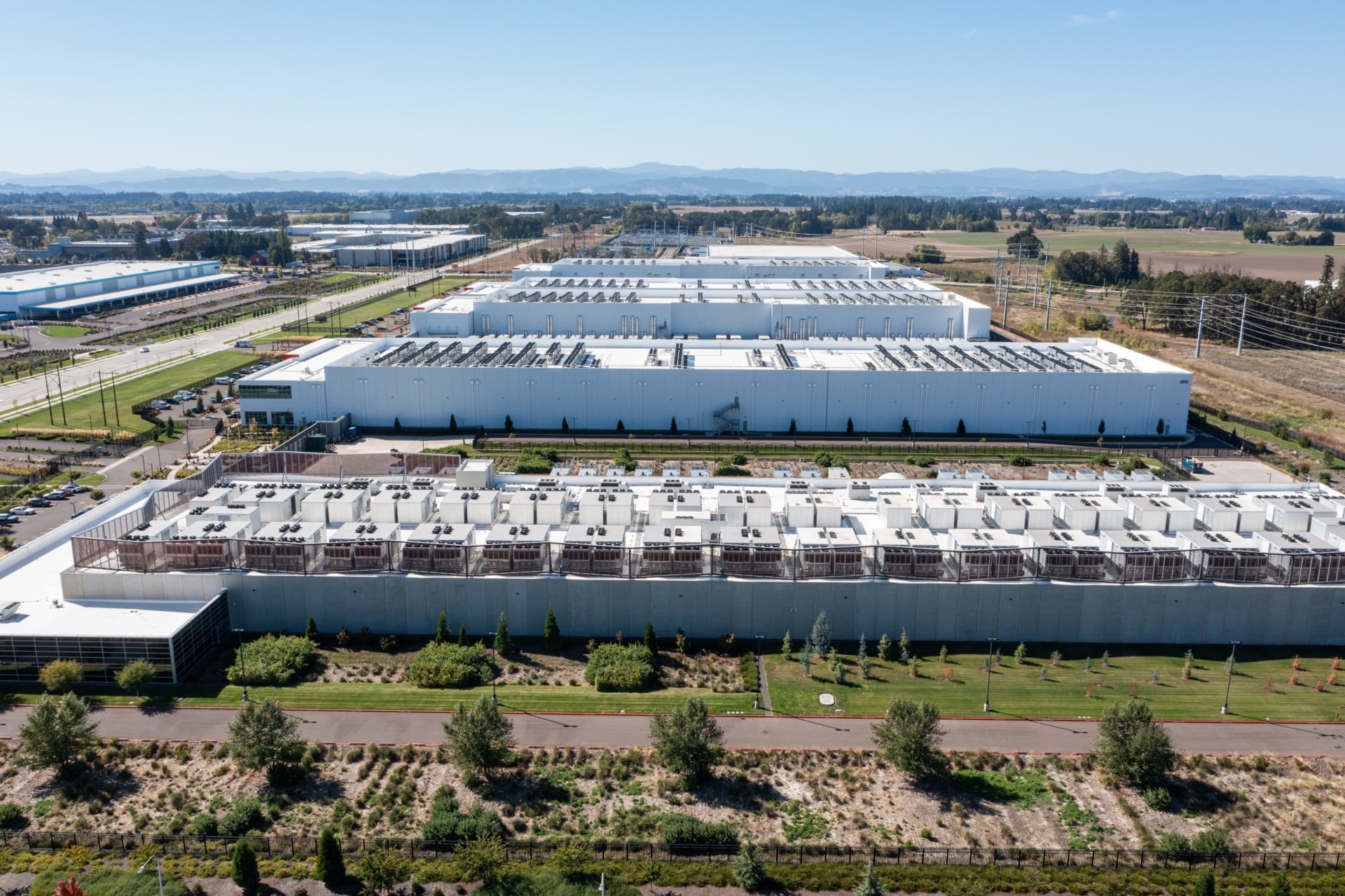
Actually a data center in Oregon. © Hrach Hovhannisyan via Shutterstock
READ LATER COMMENTS (10)


On Tuesday, the Democrat-controlled state legislature in Maine passed a ban on large data centers. It wasn’t exactly close. The state’s House passed it 79-62, and the Senate passed it 21-13—along party lines with a few exceptions, according to the Wall Street Journal. Governor Janet Mills’ signature is still needed before it becomes law, and the Journal says she has signaled interest in signing such a ban under certain circumstances.


This ban passed in spite of—or perhaps because of—relatively low data center activity in Maine. Business Insider maps likely data centers construction by tracking permit requests for certain generators, and Maine appears to only have two such projects. However, data center demand drives up home energy costs, and the website Electric Choice ranks Maine fourth highest in electricity prices.

Insider also notes that similar legislative efforts have stalled or failed outright in Georgia, Maryland, Michigan, New Hampshire, New York, Oklahoma, South Carolina, South Dakota, Vermont, Virginia, and Wisconsin. Plenty of other cities and states are still considering laws like this one.

Maine’s ban has frequently been described as a ban on “large” data centers, but the threshold is 20 megawatts, which is actually pretty low, and effectively blocks construction of what is commonly known as an AI data center. According to the Regional Plan Association, while data centers used about two megawatts of electricity when the concept of a data center was new, the average contemporary data center uses about 40 megawatts.

Maine’s bill places a moratorium on construction until November of 2027, and also creates a council whose job will be to evaluate the cost of data centers on the people of Maine.

We are paying more for a PlayStation


The Guardian · 19 minutes agoby Keza MacDonald · Games


We are paying more for a PlayStation so that idiots can use ChatGPT to mislead people on dating apps – something is rotten in the state of gaming

Don’t get Pushing Buttons delivered to your inbox? Sign up here

When the PlayStation 5 launched almost five and a half years ago, it was listed at £449 in the UK. If you were to buy one at the recommended retail price today, it would be £569.99, or £789.99 for the updated Pro model. Sony has just raised the price of its console by another £90, the latest in a series of hikes. This is unprecedented: consoles have always decreased in price over time (until they become retro collectibles – the other day, I saw someone asking £200 for a SNES on Vinted). So, what’s going on?

Unfortunately, this is another case of artificial intelligence ruining things for everyone. AI data centres need lots and lots and lots of computing power to be able to present you with lies whenever you Google anything, and this has pushed up demand and pricing for RAM and storage. This isn’t the only reason prices are rising – the wars in Ukraine and Iran have caused global economic disruption, and rampant inflation has eaten into many companies’ bottom line. But AI is the cause that’s easiest to get angry about, because it doesn’t need to be this way.Continue reading...

Tuesday, 14 April 2026

Brutal times for the US battery industry | MIT Technology Review

Brutal times for the US battery industry | MIT Technology Review


Brutal times for the US battery industry


Investors are pulling back and companies are going under. What comes next?
By Casey Crownhartarchive page
March 12, 2026
Stephanie Arnett/MIT Technology Review | Adobe Stock, Envato

Just a few years ago, the battery industry was hot, hot, hot. There was a seemingly infinite number of companies popping up, with shiny new chemistries and massive fundraising rounds. My biggest problem was sifting through the pile to pick the most exciting news to cover.

That tide has turned, and in 2026, what seems to be in unlimited supply isn’t battery success stories but stumbles or straight-up implosions. Companies are failing, investors are pulling back, and batteries, especially for EVs, aren’t looking so hot anymore. On Monday, Steve Levine at The Information (paywalled link) reported that 24M Technologies, a battery company founded in 2010, was shutting down and would auction off its property.


The company itself has been silent, but this is the latest in a string of bad signs, and it’s a big one—at one point 24M was worth over $1 billion, and the company’s innovations could have worked with existing technology. So where does that leave the battery industry?

Many buzzy battery startups in recent years have been trying to sell some new, innovative chemistry to compete with lithium-ion batteries, the status quo that powers phones, laptops, electric vehicles, and even grid storage arrays today. Think sodium-ion batteries and solid-state cells.


24M wasn’t trying to sell a departure from lithium-ion but improvements that could work with the tech. One of the company’s major innovations was its manufacturing process, which involved essentially smearing materials onto sheets of metal to form the electrodes, a simpler and potentially cheaper technique than the standard one.

The layers in the company’s batteries were thicker, which cut down on some of the inactive materials in cells and improved the energy density. That allows more energy to be stored in a smaller package, boosting the range of EVs—the company famously had a goal of a 1,000-mile battery (about 1,600 kilometers).


We’re still thin on details of what exactly went down at 24M and what comes next for its tech. The company didn’t get back to my questions sent to the official press email, and nobody picked up the phone when I called. 24M cofounder and MIT professor Yet-Ming Chiang declined to speak on the record.

For those who have been closely following the battery industry, more bad news isn’t too surprising. It feels as if everyone is short on money these days, and as purse strings tighten, there’s less interest in novel ideas. “It just feels like there’s not a lot of appetite for innovation,” says Kara Rodby, a technical principal at Volta Energy Technologies, a venture capital firm that focuses on the energy storage industry.
Related Story
What’s next for EV batteries in 2026


Natron Energy, one of the leading sodium-ion startups in the US, shut down operations in September last year. Ample, an EV battery-swapping company, filed for bankruptcy in December 2025.

There were always going to be failures from the recent battery boom. Money was flowing to all sorts of companies, some pitching truly wild ideas. But what recent months have made clear is that the battery market is turning brutal, even for the relatively safe bets.


Because 24M’s technology was designed to work into existing lithium-ion chemistry, it could have been an attractive candidate for existing battery companies to license or even acquire. “It’s a great example of something that should have been easier,” Rodby says.

The gutting of major components of the Inflation Reduction Act, key legislation in the US that provided funding and incentives for batteries and EVs, certainly hasn’t helped. The EV market in the US is cooling off, with automakers canceling EV models and slashing factory plans.

There are bright spots. China’s battery industry is thriving, and its battery and EV giants are looking ever more dominant. The market for stationary energy storage is also still seeing positive signs of growth, even in the US.

But overall, it’s not looking great.

This article is from The Spark, MIT Technology Review’s weekly climate newsletter. To receive it in your inbox every Wednesday, sign up here.

Monday, 13 April 2026

New Disney CEO’s first order of business: layoffs.

 New Disney CEO’s first order of business: layoffs. Disney is reportedly planning to cut as many as 1,000 jobs, as part of a cost-cutting initiative under CEO Josh D’Amaro, who took over as head of the Mouse House last month. The layoffs are expected to primarily impact the company’s marketing department, which was consolidated under the newly created role of chief marketing and brand officer in January, when Bob Iger was still CEO. Disney’s parks and cruises business remains a strong profit center, but the company faces questions around its stock price, franchise fatigue, and linear TV’s decline.

SpaceX Starlink Satellite Malfunctions, Breaks Apart in Orbit

SpaceX Starlink Satellite Malfunctions, Breaks Apart in Orbit

SpaceX Starlink Satellite Malfunctions, Breaks Apart in Orbit

This is the second anomalous incident affecting the megaconstellation in just over three months.
BY 

READING TIME 2 MINUTES

 COMMENTS (13)

A Starlink satellite suffered an unidentified anomaly, generating a small field of debris in low-Earth orbit.

SpaceX lost contact with one of its Starlink satellites on Sunday due to an in-orbit malfunction, the company confirmed on X. Orbital tracking company LeoLabs later reported debris in the vicinity of the satellite after the event, suggesting that the Starlink satellite likely broke apart in orbit.

SpaceX is working to identify the cause of the anomaly, the second such anomaly to affect one of its satellites in just over three months. The company reassured the public, however, that the event doesn’t pose a risk to the International Space Station (ISS), the upcoming launch of the Artemis 2 mission, or SpaceX’s Transporter-16 mission.

Orbital malfunction

The latest incident involved Starlink-34343, which was orbiting Earth at an altitude of approximately 347 miles (560 kilometers) above the surface. SpaceX didn’t clarify what type of anomaly affected its Starlink satellite, only that it resulted in a loss of communication.

The event was likely caused by an internal energetic source rather than an in-orbit collision with space debris or another object, according to LeoLabs. The company detected tens of fragments within the vicinity of the satellite over its radar site in the Azores, Portugal. “Additional fragments may have been produced—analysis is ongoing,” LeoLabs wrote on X.

Because the satellite was at a low altitude at the time of the malfunction, the resulting debris will likely deorbit within a few weeks, according to LeoLabs.

SpaceX also downplayed any risk posed by debris from its satellite. “Latest analysis shows the event poses no new risk to the [ISS], its crew, or to the upcoming launch of NASA’s Artemis II mission,” the company wrote on X. “We will continue to monitor the satellite along with any trackable debris and coordinate with [NASA] and the [U.S. Space Force].”

The rocket company also added that the satellite breakup did not threaten the launch of SpaceX’s Transporter-16 rideshare mission, which lifted off earlier this morning. The mission is “designed to avoid Starlink with payload deploys well above or well below the constellation,” according to SpaceX.

Take two

The recent malfunction is giving us a serious case of déjà vu. In December 2025, another Starlink satellite experienced an anomaly that caused it to fall out of orbit and tumble its way toward Earth. The satellite suddenly dropped around 2.5 miles (4 kilometers) in altitude and created a small field of debris.

There are currently over 10,000 Starlink satellites in orbit, and each is designed to remain operational for around five to seven years. Every day, one or two Starlinks fall back to Earth and break up in the atmosphere. The back-to-back anomalies, however, are not part of Starlink’s scheduled demise.

“These events illustrate the need for rapid characterization of anomalous events to enable clarity of the operating environment,” LeoLabs wrote.

Sunday, 12 April 2026

Formula 1 is not slowing down

Formula 1 fans

F1 fans gather this weekend for round 3 of 2026 in Tokyo. Mark Sutton/Getty Images

Somebody wave the red flag, because Formula 1 is making it rain at racetracks around the world. The open-wheel auto racing competition hit $3.9 billion in revenue last year—a 14% jump from 2024, according to its owner, Liberty Media. Much of that success has depended on getting fans out of the house and down to the track.

Lights out and away we grow: 2025 was the most-attended F1 season ever, drawing 6.7 million spectators over its 24-race season, which ran from March through December. Per F1:

  • Nineteen events sold out.
  • Eleven races set new attendance records.
  • One race, the British Grand Prix, drew 500,000 fans.

Tickets can be expensive, running hundreds of dollars for multiday passes that include the race and other live entertainment. For example, Road House actor (and singer) Post Malone is set to perform at the United States Grand Prix weekend in Austin, Texas, this October.

It’s a two-way street

Cities and circuits pay F1 millions of dollars in promoter fees for the rights to host races. It’s a steady revenue stream that accounted for about $824 million of F1 earnings in 2025, Sportico reported.

For many cities, it’s worth ponying up for a race, since its economic impact can be worth much more. Per CNBC, the Belgian Grand Prix contributes around $250 million to the country’s economy each year, depending on fans’ appetites for beer and waffles.

The downsides of being global: The war in Iran forced the cancellation of two Middle Eastern races scheduled for next month in Bahrain and Saudi Arabia. Losing those two races from the schedule could cost F1 about $200 million in revenue, according to a Guggenheim Partners analyst report cited by Sportico.


Interactive Communications

Interactive Communications
Interactive Communications VOIP and VPN

eComTechnology RG Richardson Communications

eComTechnology since 2003. I am a business economist with interests in international trade worldwide through politics, money, banking and secure VOIP and Mail Communications. The author of RG Richardson City Guides has over 300 guides, including restaurants and finance. RG Richardson City author has over 300 travel guides. Let our interactive search city guides do the searching, no more typing, and they never go out of date. With over 13,900 preset searches, you only have to click on the preset icon. Search for restaurants, hotels, hostels, Airbnb, pubs, clubs, fast food, coffee shops, real estate, historical sites and facts all just by clicking on the icon. Even how to pack is all there. Finance, Money, Banking, and Economics definitions interactive dictionary.

Data Centers Causing Huge Temperature Spikes for Miles Around Them

Data Centers Causing Huge Temperature Spikes for Miles Around Them, Study Suggests Not very cool. By Frank Landymore Published Apr 1, 2026 9...