Search This Blog

Sunday, 23 November 2025

Prospector’s ‘Doomsday’ Mansion

chrome://vivaldi-webui/startpage?section=Speed-dials&background-color=#00000a


Prospector’s ‘Doomsday’ Mansion
Vernon Pick was an American millionaire who left behind a unique property in Lillooet, BC.

Tyler Olsen TodayThe Tyee

Tyler Olsen is a senior editor at The Tyee.Our journalism is supported by readers like you. Click here to support The Tyee.


7 Comments

Vernon Pick struck it rich after discovering a uranium deposit in Colorado in the 1950s. The self-taught engineer and inventor later created a unique home powered by its own dam near Lillooet, BC. Photo illustration by The Tyee. Images via Newspapers.com.


“To be a philosopher is not merely to have subtle thoughts, nor even to found a school, but so to love wisdom as to live according to its dictates, a life of simplicity, independence, magnanimity, and trust. It is to solve some of the problems of life, not only theoretically, but practically.” — Henry Thoreau, Walden

Announcements, Events & more from Tyee and select partners
Youth Homelessness Is a Call to Action

In Vancouver, there are more unhoused youth than there are shelter beds. Family Services of Greater Vancouver is working to change that.

Word gets around fast when a uranium tycoon moves to a small town and starts building his own dam to power an off-the-grid high-tech research facility.

Was Vernon Pick building a nuclear base? Or seeking his own Armageddon hideout? Surely, some thought, there was something nefarious going on at a property with a home accessible only by an electric-powered railway.

North America’s “Uranium King” has been gone from Lillooet for decades now, but his dream-fuelled canyon estate continues to energize hikers, historians — and maybe even your own home. In recent years, the legend of Vernon Pick has inspired a mini-industry of YouTube videographers, many of whom have caricaturized him as an eccentric prospector trying to hide away from a potential nuclear holocaust.

The real Pick was much more interesting. His story is one of curiosity, boredom, ambition, fear, optimism and hope. Uranium might have made Pick rich. But it was Henry David Thoreau, in part, who made him a legend.

The Tyee is supported by readers like you Join us and grow independent media in Canada


‘Where’s a good area to look for uranium?’

“They have got to live a man’s life, pushing all these things before them, and get on as well as they can.” — Henry Thoreau, Walden

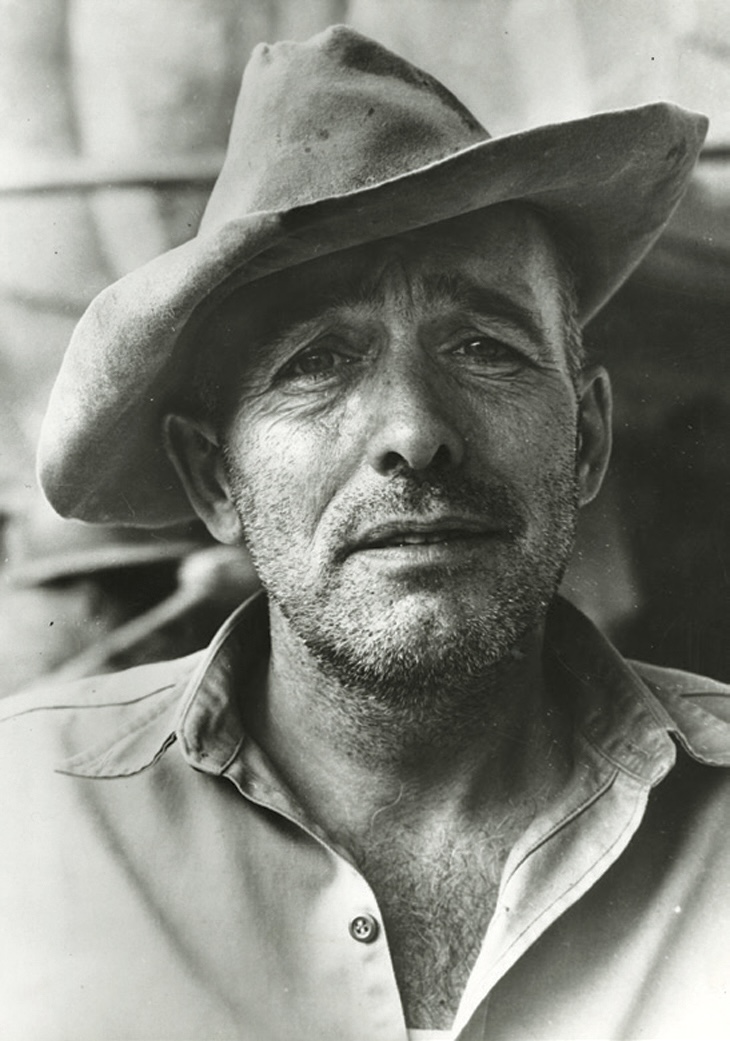
Vernon Pick was 51 years old when he became famous. But he had already packed several lifetimes into his first half-century on this planet.A portrait of Vernon Pick from the 1950s. Photo public domain.

Born in 1903 in Wisconsin, Pick grew up in the U.S. Midwest, joined the Marines, was discharged for being of “bad” character, worked in a Manitoba mine, learned to fly airplanes and became a self-taught electrical engineer. He ran an electric company for 17 years, then a printing press. He built his wife her own loom, repaired electric motors and took all sorts of university courses, including a writing class apparently taught by Sinclair Lewis.

And he dreamed of the type of personal independence that his idol, Henry Thoreau, wrote about in Walden, his enduring memoir about self-sufficient living.

By 1940, Pick had made enough money to buy a large plot of land in Minnesota where he imagined he could create something of a self-sustaining community. Crucially, the land had its own rundown hydro dam that could power the site. Pick rebuilt the dam, fixed up one of three houses and moved in with his wife in 1946.

But five years later, the mill burned down. Pick received $13,500 in insurance money, but it wasn’t enough to rebuild. And in a sign of restlessness to come, Pick seemed ready to move on. So he and his wife bought a truck and a trailer and headed south, toward the sunnier skies of Mexico.

They got only as far as Colorado Springs, where everyone seemed to be talking about the search for uranium. Between the nuclear arms race and the growing potential for atomic energy, a resource with a previously niche set of uses was suddenly in high demand. Pick bought a book about uranium prospecting, decided Mexico could wait and instead drove to Grand Junction, Colorado, a hub of uranium refining. According to a 1954 article published in the Buffalo Evening News Magazine, Pick walked into the offices of the Atomic Energy Commission, met its mining head and asked him: “Where’s a good area to look for uranium?”

Pick was told to head west, to a remote area in nearby Utah. And it was there, instead of lounging on a beach in Mexico, that the 48-year-old Pick went exploring. He would drive into a promising area as far as possible, load a backpack with 55 pounds of gear and start hiking. Pick would carry a heavy “scintillometer,” a device that can pick up radioactive material from a hundred metres or so away.

For months, he found little of value.

“He would drag himself in, hungry and dehydrated and tired,” his wife Ruth told a reporter. “For a couple days he just ate and slept, and then he was ready to go out again.”

Having started his prospecting with around $6,000, he was down to about $300 when he walked four days into the wilderness, stopped to rest under a cottonwood tree, spotted a promising strata of rocks on a cliff face and started climbing. When he got to the site, he turned on his scintillometer and watched its needle go wild.

Thursday, 20 November 2025

Elon Musk’s Grokipedia contains copied/ripped Wikipedia pages

 Elon Musk’s Grokipedia contains copied Wikipedia pages | The Verge


Elon Musk’s Grokipedia contains copied Wikipedia pages


Some of Grokipedia’s pages say that content is ‘adapted’ from Wikipedia.
by Jay Peters


Oct 27, 2025, 5:46 PM PDT


6464Comments (All New)


Image: Grokipedia

Jay Peters


is a senior reporter covering technology, gaming, and more. He joined The Verge in 2019 after nearly two years at Techmeme.


xAI’s Grokipedia, its Wikipedia-like online encyclopedia, is now live. The similarities go deeper than expected.


Grokipedia’s design is pretty basic right now; like Wikipedia, the homepage is mostly just a big search bar, and entries resemble very basic Wikipedia entries, with headings, subheadings, and citations. I haven’t seen any photos on the site yet. Wikipedia lets users edit pages, but it doesn’t appear that users can currently do that on Grokipedia; a big edit button at the top only appeared on a few pages for me, and when I clicked the button, it only showed edits that had already been completed without specifying who is actually suggested or made the changes, and I wasn’t able to suggest changes of my own.


Entries also claim that Grok has fact-checked them — a controversial idea, given how large language models tend to make up false “facts” — and how long ago the “fact check” happened.

Screenshot: Grokipedia


However, despite Elon Musk promising that Grokipedia would be a “massive improvement” over Wikipedia, some articles appear to be cribbing information from Wikipedia. At the bottom of the page for the MacBook Air, for example, you can see this message: “The content is adapted from Wikipedia, licensed under Creative Commons Attribution-ShareAlike 4.0 License.” In some cases, the cribbing goes farther than a rewrite: I’ve also seen that message on pages for the PlayStation 5 and the Lincoln Mark VIII, and both of those pages are almost identical — word-for-word, line-for-line — to their Wikipedia counterparts.


“Even Grokipedia needs Wikipedia to exist,” Lauren Dickinson, a spokesperson for the Wikimedia Foundation, the non-profit that operates Wikipedia tells The Verge. You can read Dickinson’s full statement in full at the end of this article.

Image: Wikipedia (left), Grokipedia (right)

Image: Wikipedia (left), Grokipedia (right)


It’s not the first time xAI’s AI has been caught pointing to Wikipedia; last month, in response to an X user pointing out that Grok cites Wikipedia pages, Musk said that “we should have this fixed by end of year.”


Not all Grokipedia articles are based directly on Wikipedia ones, and some will be controversial.


While both sites have articles on climate change, for example, Wikipedia’s page points out that “There is a nearly unanimous scientific consensus that the climate is warming and that this is caused by human activities. No scientific body of national or international standing disagrees with this view.”


In Grokipedia’s entry, meanwhile, the word “unanimous” only appears in one paragraph: “Critics contend that claims of near-unanimous scientific consensus on anthropogenic causes dominating recent climate change overstate agreement due to selective categorization in literature reviews.” It suggests that the media and advocacy organizations like Greenpeace are “contributing to heightened public alarm,” and are part of “coordinated efforts to frame the issue as an existential imperative, influencing public discourse and policy without always grounding in proportionate empirical evidence.”


According to a ticker at the bottom of the homepage, Grokipedia has over 885,000 articles; Wikipedia currently maintains around 7 million English pages. However, this is an early version of Grokipedia — it has a v0.1 version number on the homepage.

RelatedWikipedia is under attack — and how it can survive


Here is Dickinson’s full statement:


We’re still in the process of understanding how Grokipedia works.

Since 2001, Wikipedia has been the backbone of knowledge on the internet. Hosted by the Wikimedia Foundation, it remains the only top website in the world run by a nonprofit. Unlike newer projects, Wikipedia’s strengths are clear: it has transparent policies, rigorous volunteer oversight, and a strong culture of continuous improvement. Wikipedia is an encyclopedia, written to inform billions of readers without promoting a particular point of view.

Wikipedia’s knowledge is – and always will be – human. Through open collaboration and consensus, people from all backgrounds build a neutral, living record of human understanding – one that reflects our diversity and collective curiosity. This human-created knowledge is what AI companies rely on to generate content; even Grokipedia needs Wikipedia to exist.

Wikipedia’s nonprofit independence — with no ads and no data-selling — also sets it apart from for-profit alternatives. All of these strengths have kept Wikipedia a top trusted resource for more than two decades.

Many experiments to create alternative versions of Wikipedia have happened before; it doesn’t interfere with our work or mission. As we approach Wikipedia’s 25th anniversary, Wikipedia will continue focusing on providing free, trustworthy knowledge built by its dedicated volunteer community. For more information about how Wikipedia works, visit our website and new blog series.

Wednesday, 19 November 2025

Sao Paulo Grand Prix: Lewis Hamilton describes his first season at Ferrari as 'a nightmare' - BBC Sport

Sao Paulo Grand Prix: Lewis Hamilton describes his first season at Ferrari as 'a nightmare' - BBC Sport

Hamilton's first season at Ferrari 'a nightmare'

Lewis Hamilton in the pit lane after getting out of his Ferrari to retire from the Sao Paulo Grand PrixImage source,Getty Images
Image caption,

Lewis Hamilton is yet to finish on the podium for Ferrari

Lewis Hamilton said his first season at Ferrari had been "a nightmare" after he retired from the Sao Paulo Grand Prix.

The seven-time world champion was hit by the Williams of Carlos Sainz on the first lap, before misjudging an attempted overtake on Alpine's Franco Colapinto at the start of lap two.

That resulted in front wing damage which was quickly replaced during a pit stop, but he was left lacking pace with a damaged floor.

Hamilton was given a five-second penalty for the incident with Colapinto and eventually retired from last position on lap 39.

Briton Hamilton is yet to finish on the podium for Ferrari, although he had a dominant victory in the sprint race at the Chinese Grand Prix in March. He is sixth in the drivers' championship.

"This is a nightmare, and I have been living it for a while. The flip between the dream of driving for this amazing team and the nightmare of the results we have had, the ups and downs, it's challenging," Hamilton told Sky Sports.

Tuesday, 18 November 2025

Canada weighs F-35 and Gripen fleet, seeks industrial return

Canada weighs F-35 and Gripen fleet, seeks industrial return

Canada delays F-35 decision as Ottawa weighs Gripen option and industrial return

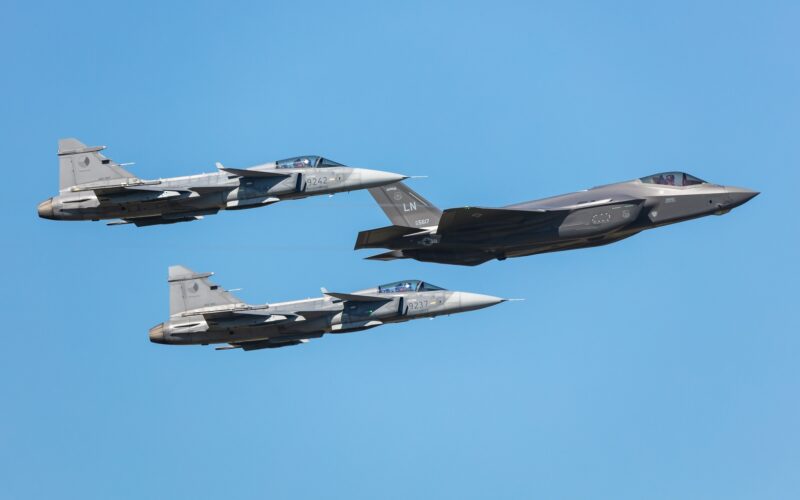
DefenseUSAF Lockheed F35 Lightning II stealth fighter jet in formation with two Czech Saab Gripen jets
Soos Jozsef / Shutterstock.com

Canada’s long-delayed F-35A fighter jet program is facing renewed uncertainty as Prime Minister Mark Carney’s government weighs whether to proceed with its planned fleet of 88 aircraft from Lockheed Martin or diversify toward a mixed fleet that could include Saab’s Gripen E.

The Liberal government first announced in March 2025 that it would “review” the purchase, citing heightened trade and diplomatic tensions with the United States. The move came as Canada was entering an election campaign.

Following his re-election, Carney has advocated for greater “diversification” in Ottawa’s defense and industrial partnerships. That stance was underscored by a new defense and trade cooperation framework signed with the European Union in June 2025.

Decision still pending

Canada’s F-35 saga dates back to July 2010, when then-Prime Minister Stephen Harper’s Conservative government announced plans to buy 65 F-35As for CAD 9 billion ($6.5 billion), arguing the aircraft was essential for national defense and Arctic sovereignty.

The decision quickly drew controversy. During the 2015 election, Liberal leader Justin Trudeau vowed to cancel the sole-source deal, accusing the Conservatives of bypassing competition and committing to an “unnecessary and expensive fighter.” After taking office, Trudeau’s government confirmed it would seek alternatives.

That pledge led to the launch of the Future Fighter Capability Project (FFCP) in 2017, an open competition to replace the CF-18s. Several manufacturers initially participated, including Boeing with the F/A-18 Super Hornet, Dassault Aviation with the Rafale, and Airbus with the Eurofighter Typhoon.

Dassault withdrew in 2018, citing interoperability and security concerns linked to Canada’s participation in the Five Eyes intelligence alliance, while Airbus followed in 2019, arguing the competition’s terms favored Lockheed Martin. In 2021, Boeing’s Super Hornet bid was also disqualified for undisclosed reasons.

In 2022, the Department of National Defence selected the F-35A over Saab’s JAS 39 Gripen E/F, and Ottawa formally notified an initial order for 16 aircraft in January 2023. However, the remainder of the 88-jet fleet remains unconfirmed.

A final decision was initially expected by the end of the summer, yet Carney’s office has not announced any outcome. While the RCAF remains firmly in favor of the F-35, key cabinet figures, including Minister of Industry Mélanie Joly, have raised concerns about the contract’s economic balance.

Military urges urgency

During a recent parliamentary hearing, Deputy Minister of National Defence Stefanie Beck defended the F-35 acquisition, arguing that fifth-generation capabilities are essential to maintain parity with adversaries.

“It is impossible to underestimate the importance of having fifth-generation aircraft because that is what our adversaries have,” Beck said, pointing to Russia’s Su-57 and China’s J-20 and J-35 fighters.

RCAF Commander General Jamie Speiser-Blanchet echoed that warning, noting that both countries field advanced aircraft and high-speed missile systems. “It is urgent to transition to a new fleet of fighters,” she said.

Economic pressures mount

Despite military backing, the F-35’s ballooning costs remain contentious. A 2024 report from the Office of the Auditor General of Canada (OAG) estimated that the total acquisition cost had increased by at least 46% since 2022, reaching CAD 27.7 billion ($20 billion).

Joly has since pressed Lockheed Martin to provide additional industrial benefits or risk seeing the order scaled down.

“Ottawa could obtain further commitments from Lockheed Martin in exchange for maintaining the 88-fighter contract,” Joly said in an interview on October 12, 2025. “Otherwise, the government could procure fewer F-35s and complement them with Gripen Es assembled in Canada.”

Joly added that her priority was ensuring taxpayers’ money “reduces dependence on the United States and creates jobs in Canada.”

Debate over a mixed fleet

The proposal to split procurement between the F-35 and Gripen faces strong resistance from defense officials. According to a study cited by Reuters in August 2025, the military warned that maintaining two fighter fleets would be “inefficient from an operational standpoint.”

Joly dismissed that view, arguing that “all G7 countries have mixed fleets” and that Canada should pursue a similar model.

“My objective is to obtain more industrial value from Lockheed Martin while continuing discussions with Saab,” Joly concluded.

Canada and Sweden signed a major aerospace and defence partnership in August 2025, with Ottawa and Stockholm pledging joint research, technology development, and industrial cooperation. The agreement emphasised Arctic security as a shared priority amid rising Russian activity and alliance realignments in the High North.

Sunday, 16 November 2025

Jack Nicklaus wins $50m lawsuit after ex-partners question his mental state

Jack Nicklaus wins $50m lawsuit after ex-partners question his mental state

Jack Nicklaus wins $50m lawsuit after ex-partners question his mental state

A Florida jury took just four hours to side with Jack Nicklaus
A Florida jury took just four hours to side with Jack Nicklaus - Reuters/Thomas Cordy

Jack Nicklaus has been awarded $50m in damages after former business partners questioned his mental state for entering what they alleged were $750m negotiations to become the figurehead of LIV Golf.

A jury sided with the 85-year-old who will receive a cheque worth more than five times his entire on-course earnings in a 45-year career as arguably golf’s greatest player.

The Florida jury took four hours on Monday to determine that Nicklaus’s reputation had been damaged after he was subjected to “ridicule, hatred, mistrust, distrust and contempt”.

He was pictured smiling and shaking hands with his lawyers at the back of the court when the unanimous verdict was delivered.

The golfer believes an unimpeachable image as the game’s cherished “Golden Bear” has been restored after a saga that, in various forms, ran for almost a decade.

The dispute essentially began in 2017 when Nicklaus, the 18-time major champion, resigned from Nicklaus Companies. The firm was set up a decade before and handed the golfer $145m for exclusive rights to his course design services and marketing, promotional and branding rights.

A clause prevented Nicklaus from designing courses in his own right for five years, but when this non-compete condition expired in 2022, Nicklaus Companies – owned by billionaire banker Howard Milstein – sued Nicklaus for breach of contract. This effectively failed, but Nicklaus and his legal team took issue with statements made in the action – primarily about the nature of his discussions with the Saudis – and launched their own lawsuit.

“What was important in the dispute was when the company told the world Jack was selling out the PGA Tour for Saudi golf, when it was not true,” Nicklaus’s attorney, Eugene Stearns, told ESPN. “We are happy that Jack has been vindicated.”

Nicklaus accused his former company of feeding false claims to media outlets and claiming he was not mentally fit to manage his business affairs and was suffering from dementia. “What they said was, ‘you need to have the keys taken away’,” Stearns said.

Nicklaus’s legal team told the court at no point had he pursued a deal with the Saudi funders of LIV, the breakaway league which has ripped up the sport’s landscape since launching in 2022.

Court documents said he met with the Golf Saudi organisation in 2021 as part of negotiations to design a golf course in the Kingdom. Yet it was only during that meeting that Nicklaus discovered they wanted him for the leadership role with LIV Golf, with the defendants mooting a $750m fee. If that scenario had come to pass it would have caused huge ructions throughout the game, but the golfer is adamant the answer would always be no.

“According to Nicklaus, he had no interest in the offer and declined because he felt the PGA Tour was an important part of his legacy” the court documents said. “And if the PGA Tour was not in favour of a new league, he did not want to be involved.”

Greg Norman was appointed to lead LIV Golf in its formative years, with Nicklaus expressing his belief that LIV and the ensuing split was not good for the game.

However, since the PGA Tour entered peace talks with Saudi Arabia’s Public Investment Fund in 2023 – negotiations that have still to bear fruit – Nicklaus has largely kept himself out of the debate. He will obviously be praying this is the end of the controversy, with Stearns adding: “It was an unfortunate incident but hopefully now it’s over.”

Nicklaus has the right to use his own name, image and likeness, while Nicklaus Companies owns the trademarks it purchased and can continue to sell apparel and equipment with Nicklaus’s name, the “Golden Bear” moniker and logos.

The jury in this latest lawsuit cleared Milstein and another Nicklaus Companies executive, Andrew O’Brien, of personal liability.

RG Richardson City Guides

RG Richardson City Guides
Interactive City and Finance Guides

RG Richardson City Guides

RG Richardson City Guide has over 300 guides let our interactive search city guides do the searching, no more typing and they never go out of date. With over 13,900 preset searches, you only have to click on the preset icon. Search for restaurants, hotels, hostels, Airbnb, pubs, clubs, fast food, coffee shops, real estate, historical sites and facts all just by clicking on the icon. Even how to pack is all there.

Recognizing a lifetime of achievement

  Recognizing a lifetime of achievement The Pindar Lifetime Ac...