Monday, 4 May 2026

Exclusive-Meta targets May 20 for first wave of layoffs


Exclusive-Meta targets May 20 for first wave of layoffs; additional cuts later in 2026

By Katie Paul and Jeff Horwitz

NEW YORK/SAN FRANCISCO, April 17 (Reuters) - Meta intends to conduct a first wave of sweeping layoffs planned for this year on May 20, with more coming later, three sources ‌familiar with the plans told Reuters.

The Facebook and Instagram owner will lay off about 10% of its global ‌workforce, or close to 8,000 employees, in that initial round, one of the sources said.

More from Yahoo Scout

The company is planning further layoffs in the second half of ​the year, the three sources said, although details of those cuts, including date and size, were not yet settled. Executives may adjust their plans as they observe developments in artificial intelligence capabilities, the sources added.

Reuters reported last month that the company was planning to lay off 20% or more of its global workforce.

Meta declined to comment on the timing or scope of planned cuts.

CEO Mark ‌Zuckerberg is pumping hundreds of billions of ⁠dollars into AI as he seeks to dramatically reshape his company’s inner workings around the technology, reflecting a broader pattern among major U.S. companies this year, particularly in the tech sector.

Amazon.com similarly ⁠has trimmed 30,000 corporate employees in recent months, representing nearly 10% of its white-collar workers, while in February the fintech company Block chopped nearly half of its staff.

In both of those cases, executives tied the cuts to efficiency gains from artificial intelligence.

Layoffs.fyi, a website tracking ​tech ​job cuts around the world, reported that 73,212 employees have lost their ​jobs so far this year. For all of 2024, ‌the figure was 153,000.

Meta's layoffs this year will be the social media giant's most significant since a restructuring in late 2022 and early 2023 that it dubbed the "year of efficiency," when it eliminated about 21,000 jobs. At that time, Meta's stock was in freefall and the company was struggling to correct for COVID-era growth assumptions that ultimately proved unsustainable.

The company is in a more comfortable financial position this time, but executives envision a future of fewer management layers and greater efficiency brought ‌about by AI-assisted workers.

Meta's shares are up 3.68% since the start of ​the year, although they are down from a record high achieved last ​summer. Last year, it generated more than $200 billion of ​revenue and achieved a $60 billion profit despite outsized spending on artificial intelligence.

Menlo Park, California-based Meta employed nearly ‌79,000 people as of December 31, according to ​its latest filing.

Sunday, 3 May 2026

TSMC first-quarter profit rises 58%,

TSMC first-quarter profit rises 58%, beats estimates as AI demand fuels record run
Published Thu, Apr 16 20261:52 AM EDTUpdated 4 Hours Ago

Dylan Butts@in/dylan-b-7a451a107
ShareShare Article via FacebookShare Article via TwitterShare Article via LinkedInShare Article via Email

Key Points
TSMC posted a 58% profit jump, driven by strong AI chip demand.
Revenue beat forecasts, marking a fourth straight quarterly record.
TSMC said advanced chips accounted for about 75% of total wafer revenue in the quarter.


Taiwan Semiconductor Manufacturing Company’s logo is seen in the background beside a printed circuit board.
Sopa Images | Lightrocket | Getty Images


Taiwan Semiconductor Manufacturing Company on Thursday reported a 58% increase in first-quarter profit, beating estimates and hitting a fresh record as demand for artificial intelligence chips stayed strong.

Here are the company’s results versus LSEG SmartEstimates, which are weighted toward forecasts from analysts who are more consistently accurate:Revenue: 1.134 trillion new Taiwan dollars ($35 billion), vs. NT$1.127 trillion expected
Net income: NT$572.48 billion, vs. NT$543.32 billion


TSMC’s net income of NT$572.48 billion for the three months ended in March represented a fourth consecutive quarter of record profits.

Revenue rose to NT$1.134 trillion, beating estimates. The chipmaker had first reported the 35% year-on-year rise in first-quarter revenue last week.

TSMC, Asia’s largest technology company by market capitalization, manufactures chips used in products ranging from consumer electronics to data centers.

The contract chip maker has maintained strong demand for advanced semiconductors from its key customers, such as Apple. It has also benefited greatly from the proliferation of AI, producing advanced processors designed by the likes of Nvidia — now the company’s largest customer.

“AI-related demand continues to be extremely robust,” President and CEO of TSMC C.C. Wei said in an earnings call Thursday. He added that advances in AI are driving increased computation and, thus, demand.


Wei noted that TSMC has received strong signals and a positive outlook from customers, reinforcing its conviction in a multi-year AI growth trend.

TSMC forecast full-year 2026 revenue growth of more than 30% year over year in U.S. dollar terms. Meanwhile, it projected second-quarter revenue of $39 billion to $40.2 billion, representing a 10% sequential increase.

This comes as the company faces concerns about supply chain disruptions linked to the Middle East conflict, including disruptions to energy supplies and key manufacturing materials such as helium and hydrogen.

In the earnings call, TSMC executives said the chipmaker does not expect any near-term impact on its operations from recent energy and supply chain disruptions from the conflict in the Middle East.

The company added that it sources specialty chemicals and gases, including helium and hydrogen, from multiple sources and has a safety inventory.
Growing advanced chip capacity


TSMC’s high-performance computing division, which includes AI and 5G applications, accounted for the majority of sales in the first quarter, rising to 61% of revenue.

Meanwhile, the company said advanced chips, defined as 7-nanometer or smaller, made up about 74% of TSMC’s total wafer revenue in the quarter. Shipments of advanced chips under 3-nanometers accounted for 25%.

In semiconductor technology, smaller nanometer sizes signify more compact transistor designs, which lead to greater processing power and efficiency.

During the Thursday earnings call, executives said the company was adding an advanced chip fabrication plant in Tainan, Taiwan, as part of its global capacity expansion efforts.

William Li, senior analyst at Counterpoint Research, told CNBC that AI chip demand has pushed TSMC’s manufacturing capacity to its limits.

“The narrative for 2026 is as much about resource constraints as it is about growth. Demand still significantly outpaces supply and isn’t showing any major sign of slowing down,” Li said.

“We expect this sold-out environment to remain a defining characteristic of the semiconductor industry throughout 2026, as semiconductor companies simply can’t keep products on their shelves,” he added.

At its last earnings call in ​January, the company said it expected capital spending this year to rise as much as 37% to between $52 billion and $56 billion, reflecting its expansion efforts and an expectation that demand will remain strong. The company said Thursday it now expects capex to be at the high end of that range.

Saturday, 2 May 2026

Anthropic’s latest AI model strikes fear into banks

 Anthropic’s latest AI model strikes fear into banks

Close crop of a 100 dollar bill disintegrating into pixels, with Ben Franklin's face obscured a bit so his eyes are visible.

Morning Brew Design

An impromptu meeting of bank CEOs and federal officials was held in the nation’s capital this week because of the destructive capabilities of Anthropic’s latest AI model, Claude Mythos, which can detect cybersecurity flaws in operating systems and web browsers with exponentially greater efficiency than human hackers.

Fed Chair Jerome Powell and Treasury Secretary Scott Bessent gathered the heads of Bank of America, Citigroup, Goldman Sachs, Morgan Stanley, and Wells Fargo on Tuesday after the limited rollout of Mythos, per Bloomberg. The emergency meeting is a sign that the Trump administration thinks that, while Mythos is intended to protect companies from hackers, it could be used to attack the foundation of the US financial system by targeting the world’s biggest banks.

What’s so scary?

Anthropic distributed Mythos to only ~40 organizations, which include major banks, according to Bloomberg, because the company said it’s too powerful for a full release to the public. CNBC reported that the company also briefed government officials on its capabilities before the release. So, how dangerous is it?

  • Officials believe Mythos can debilitate Fortune 100 companies, infiltrate national defense systems, and take down huge chunks of the internet, according to Axios.
  • A security expert told Business Insider that a team of humans can discover about 100 critical flaws with no immediate fixes per year (not including what happens on bad first dates), but Mythos can find “thousands.”

Offense vs. defense: Mythos is equally capable of identifying and exploiting weaknesses in a system. Experts told BI that this gives hackers an advantage in the short term. But as widespread adoption occurs, the edge shifts back to those defending themselves.

Safety net: Regulators require banks to hold capital in reserve to cover unexpected losses from events such as data breaches and cyberattacks. But banks have complained that they require too much, and a proposal from the Fed last month, if approved, would ease some of those requirements.

Zoom out: The concerns over Mythos come as Anthropic is fighting the Trump administration over being designated a supply chain risk by the Pentagon after limiting the use of its AI tech in war.

Friday, 1 May 2026

Netflix wants you scrolling clips on your phone

  Netflix wants you scrolling clips on your phone

Netflix

Nick Iluzada

Netflix is finally acknowledging that most people looking to kill time while waiting for the bus would rather scroll 30-second videos than watch The Irishman. The streaming service launched a short-form vertical video feed called Clips as part of an app revamp unveiled in the US and eight other countries yesterday.

While it sounds like Netflix is entering TikTok’s turf, the streamer insists that Clips won’t be the place to witness a day in the life of a 28-year-old who works in private equity in New York. Instead, Netflix’s algorithmic feed serves clips from the shows and movies in its content library to help viewers discover new titles:

  • Eventually, it’ll also feature clips from podcasts, a content genre Netflix has invested heavily into in recent months, as well as live events.
  • The streamer will soon let users choose collections of video genres they want to watch, like romance and reality TV.

Big picture: Netflix says Clips is meant to meet people where they’re at—namely, on their phones—to command their eyeballs when they’re not in front of a TV. Netflix’s streaming rivals Peacock and Disney+ also recently launched vertical video feeds.

Ottawa announces multinational defence bank to be headquartered in Canada

Ottawa announces multinational defence bank to be headquartered in Canada
By Staff The Canadian Press
Posted April 30, 2026 6:14 am
Updated April 30, 2026 3:06 pm
2 min read


WATCH: NATO's 1st-of-its-kind multinational defence bank to be headquartered in Canada
LEAVE A COMMENTSHARE THIS ITEM ON FACEBOOKSHARE THIS ITEM ON XSEND THIS PAGE TO SOMEONE VIA EMAILSEE MORE SHARING OPTIONS

DESCREASE ARTICLE FONT SIZE
INCREASE ARTICLE FONT SIZE

Canada has been selected to host a multinational bank to provide “long-term, low-cost financing” for defence projects by NATO members and allies, the federal government said Wednesday.

The Globe and Mail newspaper first reported the decision following the end of multinational negotiations earlier Wednesday that were hosted in Montreal.

A news release issued late Wednesday says the defence bank will allow member countries, including Canada, to leverage shared resources to “meet today’s defence challenges.”

National Defence Minister David McGuinty, in the release, called it a “resilient and responsive defence industrial base — for Canada and our allies.”

A source with direct knowledge told The Canadian Press there’s still a lot to discuss and sort through — and cautioned there’s still a world in which it doesn’t happen.

Toronto, Ottawa, Vancouver and Montreal are all competing to have the Defence, Security and Resilience Bank located in their jurisdictions.


12:45NATO ‘should not get involved’ in Iran: former Canadian NATO Ambassador

Canada’s Big Six banks have all put their support behind the proposed international defence financing vehicle, which would be aimed at lowering borrowing costs for military spending.
STORY CONTINUES BELOW ADVERTISEMENT


The Canadian Chamber of Commerce applauded the news, saying the defence industry is a major economic driver and will become a growing force as it attracts more investment.

Accuracy of Google’s AI Overviews

 Accuracy of Google’s AI Overviews

The More You Know ilustration with Gemini logo

Morning Brew Design

When you Google “do dogs know math?” and other important questions as you lie in bed at night, Google’s AI Overviews will provide an accurate response about 90% of the time, according to new research from the AI startup Oumi. While that seems pretty good, there are caveats:

  • Since Google processes trillions of searches per year, 90% accuracy still equates to tens of millions of inaccuracies per hour (or hundreds of thousands per minute), the New York Times noted.
  • More than half of accurate responses linked to sources that did not actually support the information.
  • The second- and fourth-most-cited sources were...Facebook and Reddit.

Google concedes that AI Overviews aren’t always accurate and encourages users to double check the info. And, for the record, dogs do possess a rudimentary understanding of math (I learned that from Google’s AI Overview).

Thursday, 30 April 2026

The fight against data centers is escalating

 The fight against data centers is escalating

Growing movement to ban data centers

Jim West/Getty Images

Yesterday, 13 bullets were fired at the home of an Indianapolis city councilor who recently supported the construction of a data center in his district, the latest chapter in the growing backlash against the controversial buildings that power AI.

The elected official, Ron Gibson, said that a note left at the scene (where no one was physically harmed) read “No Data Centers.” The attack came days after he voted in favor of a data center project in an Indianapolis neighborhood where many locals had fought against it.

Maine and other states are pushing back

The state known for lobster and “oh, you mean that Portland” is expected to pass legislation this spring that would place a moratorium on data centers that consume more than 20 megawatts—a rebuke of the swelling energy costs that come with these computing factories. Other states are considering similar measures:

  • Statewide bans are on the table in nine states; Pennsylvania would make 10 if it proposes one of its own, which is expected.
  • Activists in Ohio are collecting signatures to get a statewide ban on the ballot in November.
  • Two states—South Dakota and Wisconsin—have rejected proposed bans on new data centers.

And that’s not all. Residents in Port Washington, WI, voted yesterday on a measure that would stop future data center development in the town of ~12,000 people. There are at least three other municipalities around the country that will consider something similar this year.

Big picture: While evidence shows that data centers can be environmental hazards (a new study says that they create heat islands within a 6-mile radius that can cause pollution and deaths), they are also job creators. The response to the bill in Maine, where a Senate seat is up for grabs in November, could serve as a “canary in the coal mine” for officials in other locales, according to a construction trade group that spoke to the Wall Street Journal.

Wednesday, 29 April 2026

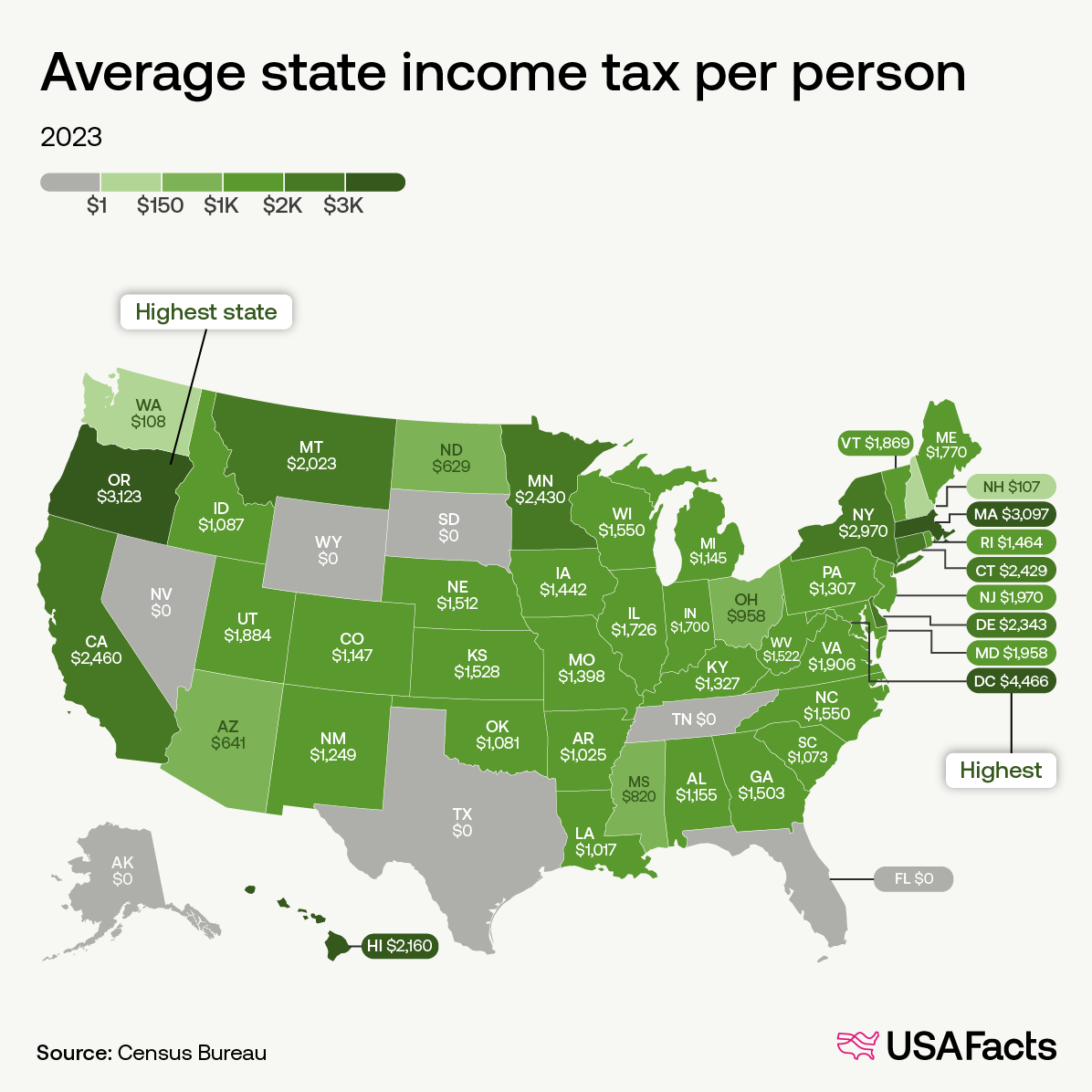
Income taxes are highest in these states


Tuesday, 28 April 2026

Getting started with VoIP.ms


Our long-term customers know this by heart, but if you're just getting started with VoIP.ms, your first step will be adding a DID (a.k.a. phone number).

Here’s how to do it step by step:

  1. Log in to your VoIP.ms portal
    Go to the DID Numbers section and select “Order DID.”
  2. Search for a number
    Choose your country, region, then browse available options.
  3. Select and configure
    Pick your number and assign it to a destination (SIP account, IVR, or call forwarding).
  4. Confirm your order
    Review pricing and complete the purchase. Your DID is ready to use right away!
  5. Test your setup
    Make a quick test call to confirm routing is working as expected.

That’s it! You now have a live number ready for inbound calls.

Interactive Communications

Interactive Communications
Interactive Communications VOIP and VPN

eComTechnology RG Richardson Communications

eComTechnology since 2003. I am a business economist with interests in international trade worldwide through politics, money, banking and secure VOIP and Mail Communications. The author of RG Richardson City Guides has over 300 guides, including restaurants and finance. RG Richardson City author has over 300 travel guides. Let our interactive search city guides do the searching, no more typing, and they never go out of date. With over 13,900 preset searches, you only have to click on the preset icon. Search for restaurants, hotels, hostels, Airbnb, pubs, clubs, fast food, coffee shops, real estate, historical sites and facts all just by clicking on the icon. Even how to pack is all there. Finance, Money, Banking, and Economics definitions interactive dictionary.

Canvas cyberattack shuts down schools’ sites

   Canvas cyberattack shuts down schools’ sites Getty Images Procrastinating Intro to Romantic Lit students at thousands of schools were gra...