eComTechnology

eComTechnology
Interactive services

Sunday, 2 August 2026

American Tech Companies Are Suddenly Sweating Bullets as China Catches Up on AI

 

American Tech Companies Are Suddenly Sweating Bullets as China Catches Up on AI

Reality is setting in.
A photo illustration of a businessman biting his nails anxiously.
Illustration by Tag Hartman-Simkins / Futurism. Source: Shutterstock

The head start that the US companies enjoyed in the AI race is quickly vanishing. Chinese competitors are now nipping at their heels, and it’s causing a wave of anxiety in the American sector.

Over a year ago, DeepSeek spurred an existential crisis — and a mass stock selloff — in the US tech industry when it released a competitive AI model created for a fraction of the cost of the leading American models.

If that was a wakeup call, then the release of GLM-5.2 last month is loudly banging on the front door. The model, from the Chinese start-up Z.ai, has been hailed as nearly or just as powerful as frontier US systems, especially when it comes to its coding capabilities and cybersecurity applications — while being significantly cheaper to use. 

It’s generated heaps of discussion in tech circles. Marc Andreessen, one of Silicon Valley’s foremost venture capitalists, tweeted that “AI insiders are saying GLM-5.2 is the first Chinese AI model to match and often beat the American big lab public AI models with no compromises.”

Perhaps betraying their sense of a weakening grip on the field, US companies are crying foul about China’s AI ascension. Earlier this year, Anthropic accused China’s DeepSeek, Moonshot, and MiniMax of using a technique called distillation to illegally gather data to imitate its models, which is essentially claiming that they cheated their way to the front of the pack.

In distillation, a weaker “student” model is trained on the outputs of a more advanced “teacher.” AI labs routinely use this to create smaller and more efficient versions of the their largest systems, but Anthropic says Chinese firms are abusing the trick in a mass coordinated effort involving tens of thousands of accounts that probe its models for data that it can extract and use to train their own AI models, thereby effectively pilfering Anthropic’s tech. These claims were relitigated last month, when Anthropic sent a letter to US senators accusing Chinese titan Alibaba of also engaging in this practice.

“These distillation attacks are carried out illicitly, systematically and at industrial scale to harvest US AI capabilities across frontier labs and repackage them as their own,” Anthropic told the senators, per the New York Times.

But Anthropic may be wasting its breath. Distillation is an open secret among rivals in the US tech sector. And as the NYT notes, it’s not even clear if it’s illegal. Unless some court rulings go their way, US firms will have to rely on their own countermeasures to stop it. (Anthropic was caught trying to do this by secretly embedding code in its Claude Code model that allowed it to spy on Chinese users, creating alarm among its customer base.)

American firms could also benefit for some geopolitical strong-arming, such as the US cutting off China’s access to its powerful AI chips, or even blocking Americans from accessing Chinese models (which isn’t as far-fetched as it may sound, when you consider that the US threatened banning TikTok as a way of forcing China’s ByteDance into divesting its US operations, or that it’s also effectively banned Chinese electric vehicles, which are far cheaper than American ones, with prohibitively high tariffs).

Chinese firms may very well have used surreptitious measures to help catch up to the US, but according to the NYT, many experts believe that a distillation crackdown would be meaningless, as building a model as advanced as Z.ai’s can’t be explained by distillation alone. US firms may simply have to accept that their Chinese counterparts are now on equal footing. The complaining about distillation is a convenient distraction at a time when their coding products are under more scrutiny for being too expensive to use as they get deployed in corporate settings — or perhaps a desperate plea for the US government to intervene and rescue them from the horrors of global, free market competition.

More on AI: Bank of America Warns That AI Investors Are in for a Nasty Reality Check

Saturday, 1 August 2026

Prepare to pay a fortune for your next iPhone


Friday, 31 July 2026

Xbox starts major layoffs to save its lagging biz

  Xbox starts major layoffs to save its lagging biz

Moody photograph of an xBox controller, colored in shades of blue.

Morning Brew Inc, Photo: Getty Images

One of the biggest names in gaming could use an infinite money glitch right now. With revenue falling and a string of acquisitions not paying off, Microsoft-owned Xbox will slash about one-fifth of its staff and divest from some development studios, CEO Asha Sharma said yesterday.

Sharma called it “the most significant restructure” in the company’s history. Xbox will…

  • Lay off 1,600 people this week and another 1,250 over the next year.
  • Sell or spin off four to five game studios that it acquired within the past decade, which will cut another 350+ people from Xbox’s staff (games that are already announced won’t be canceled, Sharma said).

“Our business today is not healthy,” Sharma wrote in a memo, acknowledging the company’s measly 3% profit margin. Its quarterly revenue recently declined 5% year-over-year.

The Game Pass gamble

One big reason for Xbox’s slowdown appears to be its struggling subscription service, Game Pass.

TL;DR: To build up an enticing Game Pass library, Xbox bought production giant Activision Blizzard for $69 billion in 2023 and ZeniMax Media, the parent company of Skyrim-maker Bethesda, for $8.1 billion in 2021.

Those splurges didn’t pan out. (Xbox is keeping both companies, but the fifth studio it wants to divest is part of ZeniMax.):

  • Game Pass currently has 30 million subscribers, a far cry from the 77 million that Xbox projected it would reach this year.
  • In a normal year, the company lost 64 cents for every dollar it invested, Sharma wrote.

But now…Sharma, who became CEO in February, said Xbox will return to growth in 2027. Since taking the helm, she has moved to reduce the number of games Microsoft publishes and reprioritize its most popular franchises, like Minecraft, Fallout, and Candy Crush. This streamlining comes as the AI boom sends memory chip prices soaring, pushing Xbox and its competitors to raise console prices.

Zoom out: Xbox’s layoffs are part of 6,400 planned job cuts across Microsoft, whose massive AI spend is spooking investors. It’s the worst-performing megacap tech stock so far this year.

Thursday, 30 July 2026

You can now make money off your 500 followers

You can now make money off your 500 followers

Niv Bavarsky

If your dream career involves a ring light, but you can’t get millions of people to like and subscribe, your moment has arrived. Big brands are increasingly looking to do business with small-time influencers, the Wall Street Journal reports.

Research firm Emarketer forecasts that US-based influencers will earn $21 billion this year and…Around 45% of brand spending on influencer marketing will go to creators with less than 20,000 followers, compared with 19.5% in 2021.
Nearly 20% of spending will go to “nanoinfluencers” with less than 5,000 followers, compared with a measly 3.1% five years ago.

It’s not just brands with tiny budgets going micro: Companies like Target, American Eagle, and Soul Cycle are among those working with smaller creators—some with as few as 500 followers, per WSJ.
Why are brands thinking small?

Like everything suddenly becoming pistachio-flavored, you can blame it on the algorithm. Since most of what you see in your feed now doesn’t come from accounts you follow, sponsoring a creator with a big following no longer guarantees views.

Meanwhile, the little guys are driving engagement in a big way. Growth marketing firm ATTN found that microinfluencers average a 3.2% engagement rate, while those with 1+ million followers average a 1.1% rate. Accounts with big followings can generate significantly more revenue for brand partners, but they also cost as much as 18x more to partner with, according to Bloomberg.

But maybe don’t quit your day job yet: Evangelizing a brand to your small but mighty band of followers probably isn’t a shortcut to livestreaming from inside a private jet. Compensation for smaller influencers can often just be discounts, $10 gift cards, or some freebies, the WSJ noted. And unlike a steady but less glamorous office job, the size of your paycheck from influencing can vary each month. More than half of the 3,000 full-time creators surveyed by Influencer Marketing Hub last year said they earned below a living wage.

Wednesday, 29 July 2026

You probably just need some alone time

 You probably just need some alone time

Two colleagues working at computers facing each wearing headphones

Unsplash

On Tuesdays, the Brew’s Matty Merritt brings you the news you need to make life a little easier during your 9-5, 5-9, or OOO.

It turns out the greatest workplace perk is some gosh darn peace and quiet. Consulting group Superteams Inc. surveyed 6,000 workers across different industries and found that members of the most successful teams all reported having uninterrupted time to work solo.

When asked which amenities they had available to them—including collaborative workspaces, free coffee, gyms, etc.—individuals identified as members of “superteams” (i.e. more productive, collaborative, minimal tense Slack DMs) were 52% more likely than teams considered average to have access to spaces for quiet, focused work.

It might not matter where that space is. This research suggests that the debate over remote work or RTO may not be as important as whether employees can find a silent spot and a chunk of time to tackle all the stuff they’ve been brainstorming during the team huddle.—MM

Tuesday, 28 July 2026

Turning living rooms into movie theaters

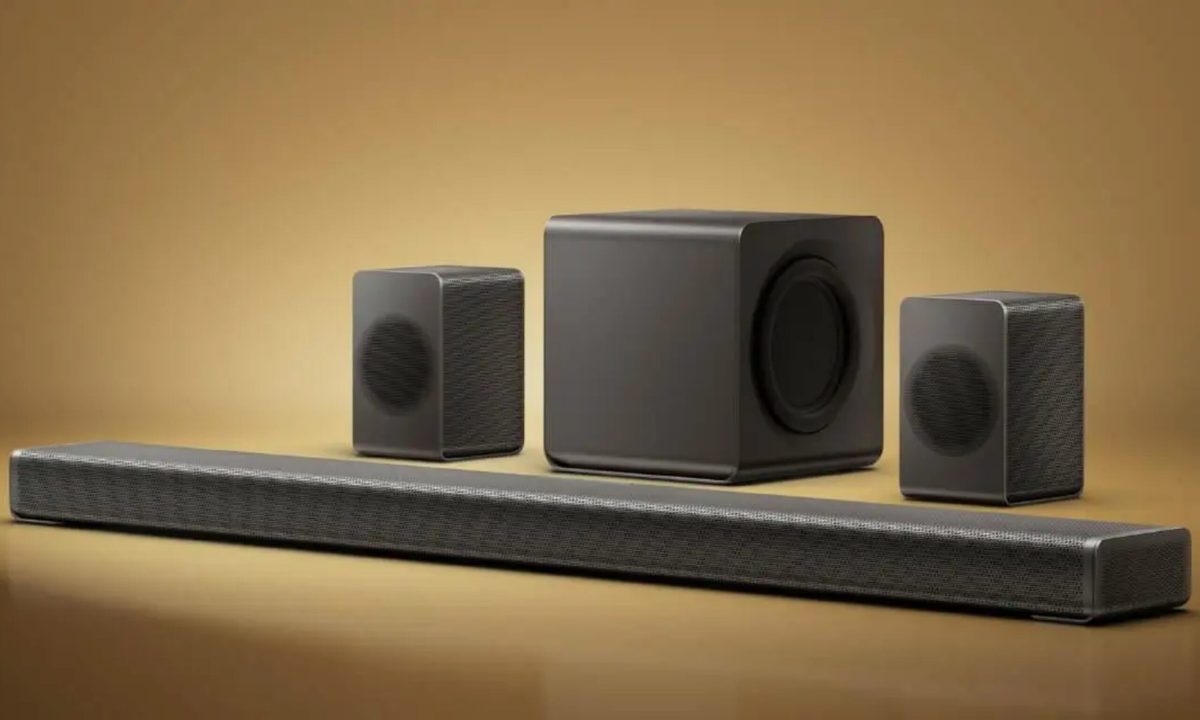
  TCL built a 22-speaker soundbar for turning living rooms into movie theaters, but it’s skipping the US

Here's everything inside TCL's new flagship Q95K soundbar, from its Bang & Olufsen tuning to its 360-degree sound tech.
By Shikhar Mehrotra Published July 27, 2026 11:45 AM

TCL

I’ve used enough soundbars to know most “360-degree audio” claims are marketing fluff dressed up as innovation. TCL’s new flagship might actually have the hardware to back that claim up for once.

The Q95K is TCL’s new flagship soundbar. It’s built around an 11.1.4 channel Hi-Fi architecture and tuned in collaboration with Bang & Olufsen. To me, it sounds like a serious attempt to compete with premium home theater setups.TCL
So what’s actually inside this thing?

The system spreads 1420W of peak power across 22 independent speaker units. The exceptional output is split between a main bar handling seven horizontal channels, two overhead channels, and a subwoofer channel, along with wireless surround speakers covering rear, rear-side, and rear-overhead audio.

This is the kind of speaker layout that doesn’t only make things louder, but also excels at creating a convincing sense of sound moving around you, especially while watching movies.

A three-way acoustic design covers a wide 30Hz to 20kHz frequency range while still keeping distortion under 1%. The device uses neodymium magnets and aluminum diaphragms for clarity in the mids and highs.

Bass comes from a dual-engine subwoofer with opposing 7-inch drivers designed to cancel out cabinet resonance, while 12 separate amplifier chips drive individual speakers to cut down on crosstalk. These additions address the biggest problems with high-powered soundbars: muddy bass and messy audio separation.TCL
What about the rest of the lineup, and can you buy it yet?

TCL’s 360-degree sound field tech leans on software, adapting via the TCL app regardless of your wall layout. Connectivity covers HDMI 2.1 with eARC, Wi-Fi 6, and AirPlay 2, and the floating base design works for both desktop and wall-mounted setups.

TCL also launched two smaller siblings: the Q85K (16 units, 1180W) and Q75K (14 units, 580W). Unfortunately, none of the soundbars are available in the United States right now. The company already sells its flagship TVs and other audio products in the region.

All three are currently China-only, priced at 7,999 yuan (~$1,181), 5,999 yuan (~$886), and 4,699 yuan (~$694) respectively, with no confirmed global release yet.


Shikhar Mehrotra
News Writer
instagramlinkedin
For more than five years, Shikhar has consistently simplified developments in the field of consumer tech and presented them…

Monday, 27 July 2026

Chinese AI labs keep releasing open-weight models while US firms lock theirs down


Chinese AI labs keep releasing open-weight models while US firms lock theirs down

A wave of open-weight AI models from Chinese labs is putting fresh pressure on Silicon Valley and drawing pointed reactions from Washington. In the span of just a few weeks, Z.ai released GLM 5.2, Moonshot AI released Kimi K3, and Alibaba released the latest version of its Qwen line, all with open weights, all benchmarking close to the best Western models, and all optimized for the agentic coding tasks that have become the year's dominant AI trend. K3 in particular has drawn the sharpest attention: Trump AI adviser David Sacks called its performance "concerning," Commerce Secretary Scott Bessent floated the idea of sanctions on Chinese AI companies, and White House science and technology policy director Michael Kratsios alleged that Moonshot AI distilled Anthropic's Fable model to build K3, calling it "stealing proprietary US technology."

The episode is drawing comparisons to the DeepSeek moment of January 2025, and for good reason. It reinforces a widening divergence between how American and Chinese labs think about openness. Anthropic kept its most capable Mythos model restricted to approved collaborators for months over hacking concerns, then briefly had to take both Mythos and Fable 5 offline after White House export controls were issued following a wider release. OpenAI delayed the launch of GPT 5.6 after receiving a White House request. Chinese labs, by contrast, have moved in the opposite direction, betting that free, downloadable, customizable models attract more users, collaborators, and goodwill than the locked-down approach American frontier labs have increasingly adopted.

Alibaba's Monday announcement is the clearest signal yet that this strategy is holding. Earlier this year, rumors had circulated that the company might pivot toward closed-source development after reorganizing its AI teams, but its decision to release Qwen 3.8 with open weights suggests it is not changing course. The open-versus-closed debate, once largely a philosophical argument within the AI community, is now inseparable from the geopolitical competition between the United States and China, and the gap between the two camps appears to be growing.

Read More

Sunday, 26 July 2026

Judge approves a $1.5B Anthropic settlement over pirated books

 Judge approves a $1.5B Anthropic settlement over pirated books used to train the Claude chatbot


Thriller novelist Andrea Bartz is photographed in her home, in the Brooklyn borough of New York, Sept. 4, 2025. (AP Photo/Richard Drew, File)
Updated 11:01 AM GMT-7, July 21, 2026
Leer en español


 27


SAN FRANCISCO (AP) — A federal judge has approved a $1.5 billion copyright settlement in which artificial intelligence company Anthropic will pay thousands of authors about $3,000 per book after using pirated copies of their works to train its Claude chatbot.

District Judge Araceli Martínez-Olguín said in a Monday ruling that the class-action settlement provides “meaningful relief” to affected authors and publishers.

About 91% of the more than 482,000 books covered by the ruling have been claimed by authors or publishers who are now due payment.

Plaintiff attorney Justin Nelson said in a statement that the settlement was “the largest known copyright recovery in history. We look forward to making distributions to the Class as promptly as possible.”

U.S. District Judge William Alsup issued the preliminary approval in San Francisco federal court last September and has since retired. Alsup had dealt the case a mixed ruling last summer, finding that training AI chatbots on copyrighted books wasn’t illegal but that Anthropic wrongfully acquired millions of books through pirate websites.

Anthropic’s deputy general counsel, Aparna Sridhar, highlighted that ruling Friday as a landmark showing “that training AI on books is fair use under copyright law.”

“We are pleased that more than 91% of authors and publishers covered by the settlement have claimed their share of the payment, and we’re looking forward to bringing this matter to a close,” Sridhar said in a written statement.


Bestselling thriller novelist Andrea Bartz first brought the suit with two other authors in 2024. It’s the first major settlement in dozens of AI copyright lawsuits that are still working their way through courts.

Friday, 24 July 2026

A Chinese AI Model Just Shot to Number One on the Charts

 A Chinese AI Model Just Shot to Number One on the Charts, Sending Shockwaves Through the American Tech Industry

US tech execs are shaking in their boots.


By Joe Wilkins


Published Jul 17, 2026 11:54 AM EDT
Add Futurism(opens in a new tab)More information


Illustration by Tag Hartman-Simkins / Futurism. Source: Shutterstock



Sign up to see the future, today


Can’t-miss innovations from the bleeding edge of science and tech

Email addressSign Up

While Wall Street was fast asleep, a Chinese-made large language model quietly leapfrogged 16 other models to become number one on the AI charts.

The model is called Kimi-K3, developed by Beijing-based firm Moonshot AI. On Thursday, the AI benchmark platform Arena.ai announced that Kimi had gone from number 17 in the “Frontend Code Arena” — a measure of an LLM’s ability to perform multi-step web development tasks — to number one, surpassing the buzzy Claude Fable 5 and GPT-5.6 Sol by a mile.

In the “Text Arena,” a measure of an LLM’s ability in text-to-text tasks like creative writing, Kimi-K3 earned the number nine spot, a significant improvement from Moonshot AI’s previous model, Kimi-K2.6, which held number 38.

The news comes as investors are facing a major reckoning, with US semiconductor stocks plummeting on Friday morning and the tech-heavy Nasdaq composite sliding by 1.4 percent. Those losses are extending a horrible week for tech stocks, which had been driven by concerns over an all-American AI bubble.

The moniker, “Moonshot,” might be an understatement. The major catch here is that not only did a Chinese AI model surpass every US-designed model in front-end coding in a benchmark, it did so using a dramatically different approach.

Just like DeepSeek, a similar Chinese AI model that rankled the US stock market last year, Kimi is an open-weight model, meaning its inner workings are viewable to the public. Compared to proprietary models like GPT-5.6 that are kept under lock and key, open models cost users on average six times less, though their performance has historically been ever-so-slightly worse than their closed counterparts.

Responding to the news, Xiaoyin Qu, former Meta senior product manager turned AI entrepreneur, posed an important question: “When the best open weight model exceeds the best closed-source model, how does [Anthropic] justify its Fable pricing? Why would anyone pay for that?”

Even before Kimi-K3 dropped, the proposition of paying up to six times more for the slight performance boost offered by closed models was already pushing US companies toward Chinese AI. Now that the performance gap is closing fast, there’s even less reason for companies or individuals to pay exorbitant prices associated with Silicon Valley’s frontier models.

That simple math is bad news for the US tech industry, which has spent years insisting that it will take trillions of dollars to make AI work.

As Qu observed, “Kimi’s most recent funding round values the company at $20 Billion as of two months ago. Anthropic is worth almost 1 trillion, 50x. Why?”

More on AI: Chinese Court Rules That a Worker Cannot Be Replaced by AI


Joe Wilkins
Correspondent


I’m a tech and labor correspondent for Futurism, where my beat includes the role of emerging technologies in governance, surveillance, and labor.

Thursday, 23 July 2026

Musk Leaves Room For a Potential SpaceX-Tesla Merger

  Musk Leaves Room For a Potential SpaceX-Tesla Merger

First came xAI-SpaceX. Now brace yourselves for SpaceXAI-Tesla.
BY ECE YILDIRIMPUBLISHED JULY 22, 2026, 11:39 PM ET

READING TIME 2 MINUTES

Elon Musk © FotoField / Shutterstock
READ LATER COMMENTS (31)


Elon Musk has a lot of companies, and lately his hobby has been mergers.

Earlier this year, the billionaire’s space company SpaceX acquired his artificial intelligence company xAI (now SpaceXAI) in a $1.25 trillion deal. The joint entity, known just as SpaceX, went public in a record $75 billion IPO earlier this summer (though its stock has been trending down since).


On the heels of that financial success, people are largely expecting Musk to further capitalize on that hype and merge his electric vehicle company Tesla with SpaceX. The two companies already work together on a lot, including the integration of SpaceXAI’s Grok chatbot into Tesla’s vehicles and a giant join-venture chip factory in Texas called the Terafab.

When asked about it by analysts in Tesla’s earnings call on Wednesday, Musk avoided answering the question.

“Well, I mean, as you can tell from all the many collaborations on so many fronts with SpaceX, there’s more and more overlap, especially with the Terafab, that’s really going to be a gigantic project,” Musk answered. “But obviously, you know, we can’t talk about combining companies, that kind of thing, on earnings calls.”

Then Musk went on what sounded like a sales pitch for how he thinks SpaceX can further Tesla’s mission. He said SpaceX’s Starlink can ensure better and more expansive connectivity for Tesla’s autonomous vehicles like the Cybercab, even in any “Bermuda triangles with lack of cellular connectivity,” and promised the merits of integrating SpaceXAI’s Grok into Tesla’s Optimus robots, a plan that he debuted earlier this year in a project called “Digital Optimus.”

Following Musk’s answer, analysts seem to have upped their bets that a merger is indeed on the horizon.

“Going into the call, I thought there was an 80% chance the two companies come together in the next few years,” investment company Deepwater’s co-founder and managing partner Gene Munster said in a post on X. “I’m raising that to 90%.”

This latest earnings report left investors with more questions than answers. The company’s stock was down after the report dropped, as the company’s increasing expenses poured into AI have started to weigh on its financials. Even though revenue came above expectations, the company’s earnings per share (a metric that shows how much profit a company makes per share of its stock) was down way below market expectations.

Tesla is expecting to spend more than $25 billion this year, largely due to AI. That financial commitment helped drive the company’s free cash flow negative this past quarter.

“This is a massive capex year, but I’m confident that all the things that we’re investing in will yield incredible returns,” Musk said at the call, in an effort to justify the numbers.

Musk said he specifically asked his team to spend money “as fast as we can without it being too wasteful,” because aiming for “extremely high efficiency” spending would allegedly only slow down the amount of innovation and production that the company has been aiming for.

“We’re bringing an incredible amount of construction and production growth in so many different arenas simultaneously,” Musk claimed. “I think probably this is the fastest industrial scale up since World War II in America.”

Google Ordered to Give A.I. Rivals More Access on Android Smartphones

Google Ordered to Give A.I. Rivals More Access on Android Smartphones

The decision by European Union regulators is a response to fears that Google will use its vast Android user base to gain an edge in A.I.

Listen · 3:43 min

Share full article

Google’s Android operating system powers about 60 percent of all smartphones in the European Union.Credit...Poppy Lynch for The New York Times


By Adam Satariano


Reporting from London
July 16, 2026

See more of our coverage in your search results.Add The New York Times on Google


Google was ordered by European Union regulators on Thursday to lift restrictions that limit how rival A.I. companies can reach users of Android smartphones, a sign of increased government scrutiny of the booming business of artificial intelligence.

The decision is a response to fears that Google will leverage the enormous user base of Android, which powers about 60 percent of all smartphones in the European Union, to gain an edge in the growing A.I. market and undercut competitors like OpenAI and Anthropic.

As the daily use of artificial intelligence grows across society, an emerging commercial battleground is how to reach users through their smartphones. A.I. companies believe that the more deeply an A.I. service is integrated into a person’s hand-held device — including email, photos and other apps — the more a chatbot can serve as a personal assistant. Think of asking a chatbot to order a car service, suggest a response to a text message or provide information about a recently visited location.

Google and Apple are seen as having a major advantage because the companies make the world’s most used smartphone software, allowing them to set the rules for app developers trying to reach mobile users.


On Thursday, E.U. regulators said the company would be required to give rival A.I. services “equal footing,” including through voice commands and the ability to delegate actions in apps. The decision is binding, and Google is required to carry out the changes by next July.

Google was also ordered to begin sharing anonymized search engine data with rivals, including makers of A.I. chatbots, by January, in an attempt to create more competition.

Google did not say if it planned to challenge the decisions in court. The company said European regulators risked creating new security and privacy vulnerabilities because outside developers would get access to sensitive information kept on a person’s smartphone or search history.

“Today’s decisions risk undermining vital privacy and security guardrails for millions of Europeans,” Kent Walker, Google’s general counsel, said in a statement.

The European Union has long been the world’s most aggressive regulator of tech industry business practices and is now expanding its scrutiny into artificial intelligence. Authorities view the technology as the new entry point for people to gain access to digital services and the online world.


An E.U. competition law, the Digital Markets Act, requires large tech companies like Google and Apple to make their products interoperable. That means outside developers should be allowed to offer competing A.I. digital assistants instead of Google’s Gemini and Apple’s Siri.

The competition law is creating friction. In June, Apple said it would withhold the release of new A.I. features for Siri in the European Union because it could not reach an agreement with regulators.

At the same time, A.I. companies are taking steps to develop their own devices to loosen Apple’s and Google’s grip. Last year, OpenAI hired Apple’s former top designer, Jony Ive, to lead its efforts to develop new A.I.-centric hardware products.

Last week, Apple sued OpenAI, accusing it of stealing company secrets. OpenAI denied the accusations.


Adam Satariano is a technology correspondent for The Times, based in London.

Tuesday, 21 July 2026

Americans’ money-saving hack: not buying groceries


Americans’ money-saving hack: not buying groceries

Woman shopping in a the produce section of a grocery store

Robert Nickelsberg/Getty Images

A “positive attitude” might start counting as something to legitimately bring to a dinner party. Food prices are rising so much that US shoppers are simply buying fewer groceries: Grocery unit sales, which refer to individual items sold, fell 1.8% in June compared to the same time last year, according to a new analysis from Bain & Company using NielsenIQ grocery data, reported by CNBC.

In June 2025, grocery unit sales actually increased 0.1%, compared to 2024. The recent drop suggests that prolonged inflation, which has hovered between 2% and 4% year over year for the past few years, has finally forced shoppers to make changes to their shopping trips:

  • Grocery prices are about 33% higher than they were seven years ago.
  • About 66% of US shoppers think groceries are unaffordable, according to a Washington Post/Ipsos poll published yesterday. That’s a steep increase from the 45% of respondents who thought so in February.

Americans are trying every trick in the book to lower the bill. More shoppers said they’re couponing, deal-hunting, or swapping out name brands for private labels, per the survey. Even credit card rewards points, typically used to fund vacations, are increasingly being deployed to pay for everyday staples, a separate survey shows.

Big picture: Even though June’s inflation data was softer than economists’ expectations, energy prices, which got some relief last month, are expected to continue rising amid renewed tensions with Iran.

Monday, 20 July 2026

Big VPN upgrades


Interactive Communications

Interactive Communications
Interactive Communications VOIP and VPN

eComTechnology RG Richardson Communications

eComTechnology since 2003. I am a business economist with interests in international trade worldwide through politics, money, banking and secure VOIP and Mail Communications. The author of RG Richardson City Guides has over 300 guides, including restaurants and finance. RG Richardson City author has over 300 travel guides. Let our interactive search city guides do the searching, no more typing, and they never go out of date. With over 13,900 preset searches, you only have to click on the preset icon. Search for restaurants, hotels, hostels, Airbnb, pubs, clubs, fast food, coffee shops, real estate, historical sites and facts all just by clicking on the icon. Even how to pack is all there. Finance, Money, Banking, and Economics definitions interactive dictionary.

Google will pay £260m to settle a UK class action over Play Store fees

Google will pay £260m to settle a UK class action over Play Store fees Google has agreed to pay £260m to settle a class action brought for U...