Monday, 15 June 2026

Proton Mail mobile apps


Sunday, 14 June 2026

Ring of Fire Push Pits Critical Minerals Against Carbon Peatlands

Ring of Fire Push Pits Critical Minerals Against Carbon Peatlands, Indigenous Rights
May 25, 2026
Reading time: 9 minutes

Kylie Brezden - Stephen Lewis Climate Journalism Fellow


Camp site within the Ring of Fire, 2025/Trevor Hesselink as supplied by Wildlands League


In northern Ontario, hundreds of kilometres from the nearest highway, a vast stretch of peatlands and boreal forest is being positioned as central to Canada’s economic future.

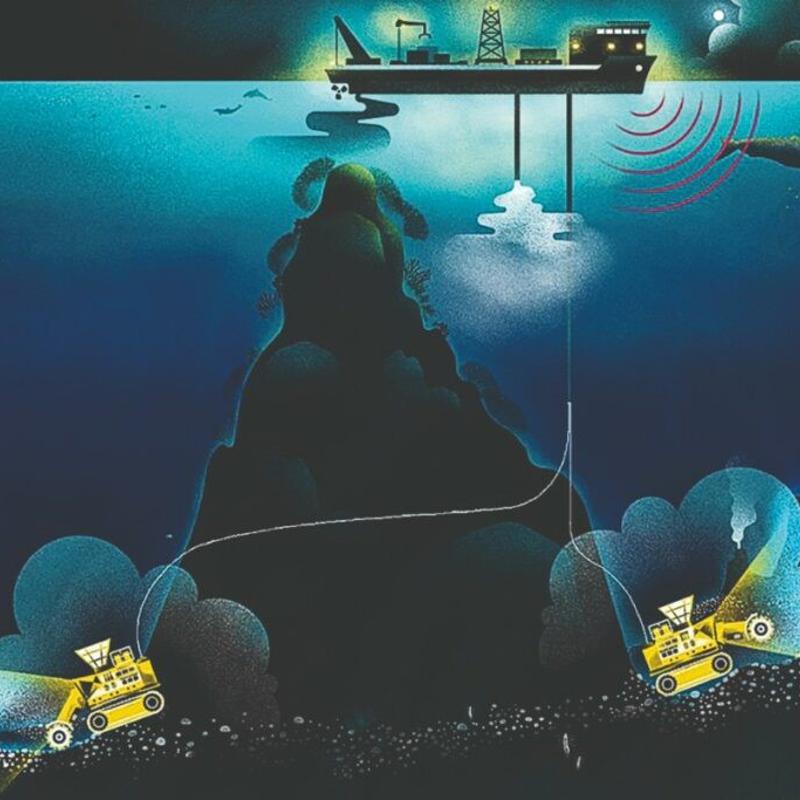
Beneath the dense peatlands of the James Bay Lowlands lies the Ring of Fire, a 5,000-square-kilometre section of mineral-rich geological formation in the McFaulds greenstone belt, mapped as a crescent of nickel, chromite, copper, platinum, and titanium deposits that could be used in cell phones, computers, medical devices, and electric vehicles. Above those underground treasures, the world’s largest intact peatland ecosystem stores vast amounts of carbon and supports Indigenous communities that have lived there for generations.

The push to develop the region has brought these realities into tension. The Ontario government has framed the Ring of Fire as essential to Canada’s economic growth, citing projections of C$22 billion in economic output over 30 years and 70,000 jobs tied to development in the region. However, scientists, Indigenous leaders, and policy experts say the environmental, social, and economic implications of disturbing the region remain deeply uncertain.
How We Got Here

The Ring of Fire region has been in discussion for nearly two decades.

Interest in the region took off in 2007 when Noront Resources, now owned by Wyloo Minerals, announced the Eagle’s Nest discovery of nickel, copper, and platinum near McFaulds Lake. These were followed by chromite discoveries in areas known as Black Thor and Blackbird, and vanadium-titanium deposits in areas known as Thunderbird. The discoveries triggered an urgency and quickly turned into some of Canada’s most talked-about mining prospects.

By the early 2010s, the region was widely promoted as a transformative economic opportunity, with early estimates placing its value in the billions of dollars. Those figures were later questioned because they failed to account for the costs of extraction or project feasibility. Activities stalled with high infrastructure costs, volatile commodity markets, and unresolved questions around access and consultations hampering development for more than a decade.

Cliffs Natural Resources, an Ohio-based mining company, invested heavily in the region before abandoning the endeavour and selling its chromite assets at a loss, citing mounting costs and logistical challenges.

At the same time, tensions surfaced on the ground. In 2010, members of nearby First Nations communities blockaded access to exploration sites, citing a lack of consultation and concerns about environmental impacts, as documented by Ginoogaming First Nation.

Today, momentum has returned. Ontario has announced plans to accelerate development timelines, positioning the region as critical to securing domestic mineral supply chains. But many of the same questions remain: not just whether the minerals can be feasibly extracted here at enormous infrastructure costs, but whether the plan to do so aligns with Canada’s climate commitments and its obligations to Indigenous peoples.
A Place Few Get to Visit

For most Ontarians, the Ring of Fire exists more as a concept than a place. For others, it is known as the Breathing Lands, where the land supports [pdf] hundreds of plant, mammal, and fish species.

More than 90% of Ontario’s population lives in the south, while the north accounts for most of its land mass. The Ring of Fire sits roughly 500 kilometres northeast of Thunder Bay, without permanent road access and disconnected from the provincial power grid.

The region lies within Treaty 9 territory and is home to one of the largest Indigenous populations in Ontario. Approximately 30,000 Indigenous people, including 34 First Nations, live in the broader area, according to a planning report co-written by First Nations partners and the Impact Assessment Agency of Canada that establishes the terms of reference for assessing the environmental, social, and economic impacts of development in the region.

“This area is one which First Nations people have always relied on, cared for, and known by their own names,” the report states.

This region is not simply a remote resource deposit but a living land that all Ontarians are connected to.
What Sits Above the Minerals

The minerals beneath the ground are only part of the story.

The Hudson Bay Lowlands host one of the largest peatland complexes in the world. These peatlands form over hundreds to thousands of years, as waterlogged conditions slow the decomposition of plant material, allowing carbon to accumulate and remain stored.

“Peatlands are one of the most important carbon stores on the planet,” Adam Kirkwood, a peatland conservation scientist with Wildlife Conservation Society Canada, told The Energy Mix. “Globally, they hold roughly twice as much carbon as all the world’s forests combined.”

Scientists say the concern is not limited to the environmental impacts of mining itself. Roads, transmission lines, and other infrastructure required to support development could also disrupt these waterlogged systems, potentially increasing carbon releases and wildfire risks. Peatlands in the Ring of Fire store approximately 550 million tonnes of carbon, equivalent to two billion tonnes of carbon dioxide if fully decomposed, Kirkwood added.

Local First Nations say [pdf] the peatlands and wetlands in the region are closely tied to their traditional knowledge, food systems, and cultural practices.

“People in northern communities still rely on the land and local animals for food security, especially when boil water advisories can last for years and the cost of basic goods in remote stores is so high,” Ramon Kataquapit, founder of the Okiniwak Indigenous Youth Movement, told The Mix in an interview.

Framed as key to Canada’s low-carbon transition, mineral extraction in the Ring of Fire carries its own climate costs: “This isn’t just a local issue,” said Anna Baggio, conservation director at the Wildlands League. “It has broader climate and economic implications, especially when you consider the role of peatlands as a major carbon sink.”
Why Here, Why Now?

The renewed push for development is tied to growing demand for critical minerals. But whether the Ring of Fire is necessary to meet that demand remains an open question. The United States Geological Survey [pdf] stated in February 2026 that known global chromite resources in the ground are “sufficient to meet conceivable demand for centuries.”

“There are real questions about whether the Ring of Fire is necessary for the clean energy transition, especially when similar minerals are available in other parts of Ontario with existing infrastructure,” said Janet Sumner, executive director of the Wildlands League.

Ontario [pdf] already has mines and advanced projects in regions near Sudbury and Timmins, where infrastructure is established.

“The question isn’t just about accessing critical minerals,” Sumner told The Mix. “It’s whether doing it here creates greater environmental and community risks than the alternatives.”

There are also uncertainties around the economic case.

“We still don’t have a current full feasibility study for the project, so there are significant unknowns around how viable these deposits actually are,” said Jamie Kneen, national program co-lead at MiningWatch Canada.

Mining companies typically conduct feasibility studies to assess whether a project is economically and technically viable enough to attract investment and move forward. While previous studies were completed on some Ring of Fire deposits more than a decade ago, Kneen said, “they are now outdated.”
Who Decides the Path Forward?

Beyond economics and environmental risk, developing the Ring of Fire is also a question of governance.

Two Indigenous communities, Marten Falls and Webequie First Nations, support the construction of roads in the region, citing the need for improved community access, reduced isolation, and economic opportunities associated with development. At the same time, concerns remain around consultation, environmental impacts, and Indigenous jurisdiction.

Related Story: As Canada Warms, First Nations Lose Vital Ice Roads

Fourteen First Nations in Ontario have brought forth a constitutional challenge against Ontario’s Bill 5, which allows the province to designate “special economic zones,” where certain laws and regulatory requirements could be streamlined or set aside to accelerate development. Ontario Premier Doug Ford said last June that he would make the Ring of Fire a special economic zone “as quickly as possible.” The court challenge also targets the federal government’s Bill C-5, which is designed to fast-track major projects deemed to be in the national interest.

According to Kate Kempton, senior counsel at Woodward & Company LLP and counsel for the First Nations involved in the challenge, both laws allow cabinet or ministers to make decisions without regard for existing laws, potentially bypassing environmental assessments and human rights protections, and cutting off meaningful engagement with Indigenous communities.

“If environmental assessment and other process requirements are not applied, there’s a huge risk that impacts to ecosystems and communities won’t be understood before decisions are made,” she said.

“How can governments fast-track development while weakening the protections and treaty obligations meant to safeguard our communities and future generations?” Kataquapit added.

For many First Nations in the region, the issue is not only whether development proceeds, but whether they have a meaningful role in shaping how it happens.
Next Steps

Wyloo has continued developing the Eagle’s Nest project, while discussions around transportation and infrastructure corridors remain ongoing. In March 2026, Ontario announced an accelerated plan to complete roads to the Ring of Fire five years ahead of schedule, signalling increasing political momentum behind development in the region.

Large-scale mining projects would typically require environmental assessments, infrastructure approvals, consultation and engagement processes, and updated feasibility studies assessing economic and technical viability. Uncertainty remains over whether—and to what extent—Ontario’s Bill 5 and the federal Bill C-5 could accelerate approvals for major projects, a prospect that concerns Kneen.

“There hasn’t been enough discussion about the full environmental, social, and community impacts of development in this region,” he said.

For now, the push to open up the Ring of Fire continues, the province pressing ahead with its roads, legislation, and development plans.

Ontario ministries and several First Nations communities contacted for this story did not respond to requests for comment by time of publication.
This story is part of The Energy Mix’s partnership with the Small Change Fund.


Kylie Brezden

Stephen Lewis Fellow


Kylie Brezden is a freelance climate and environment writer focused on climate adaptation and how infrastructure, policy, and systems shape responses to climate risk in Canada. She holds a master’s degree in climate change and has experience across the public and private sectors.

Saturday, 13 June 2026

The labor market has a teeny problem

  The labor market has a teeny problem

A teenage employee wipes a restaurant counter.

Albany Times Union/Hearst Newspapers/Getty Images

Your angry neighbor may have a tough time finding a teenage service worker to scream at this summer. That’s because teen employment is on pace for its lowest level in decades.

It’s not just because teenagers are busy with extracurricular activities and social media—summer jobs are getting as hard to find as lightning bugs. Outplacement agency Challenger, Gray & Christmas projects:

  • Teens will be hired for 790,000 jobs in May, June, and July this year.
  • That’s down from 801,000 jobs last summer and 1,077,000 jobs in 2024.

Where’d the jobs go? Some are disappearing because of AI-driven automation, while others are being taken by older workers, who’ve increasingly put off retirement, the agency said. But hiring in the teen-filled entertainment and leisure sector (theme parks, hotels, activity centers, etc.) is also down 70% from last year, due to higher costs from inflation and gas prices, per Challenger, Gray & Christmas.

It’s not all bad: If a teen wants to be like Wendy Peffercorn, lifeguard job postings are up 78% this year, the Wall Street Journal reported, citing Indeed. And more teens are landing in retail, workforce platform Revelio Labs’ data shows, according to Barron’s.

Meal ticket: Teens are also finding work via Uber and DoorDash. Workers aged 17 to 25 are the fastest-growing age group on gig-work apps, and Gen Z registrations are up 8.4% year over year, according to mobile app researcher Apptopia.

Friday, 12 June 2026

Starbucks Scraps Disastrous AI Tool


Starbucks Scraps Disastrous AI Tool

The AI never had its coffee.
Starbucks Coffee circular sign with the iconic twin-tailed mermaid logo, mounted on a green bracket attached to a building. The background is an orange grid pattern. The sign is black and white with bold text.
Illustration by Tag Hartman-Simkins / Futurism. Source: Getty Images

Hold onto your pumpkin spice lattes, because Starbucks is canning its AI tool after it turned out to be a total disaster, Reuters reports, less than year after it debuted.

The tool, which was deployed across its North American stores, was designed to automate inventory management with the goal of providing accurate real-time information that could help Starbucks address ingredient shortages at its locations. 

But according to previous Reuters reporting, the error-prone AI frequently miscounted and mislabeled items, confusing different types of milk and sometimes forgetting to count them altogether.

Now, it’s getting the axe.

“Starting today, Automated Counting will be retired,” read an internal company newsletter from Monday obtained by the news agency. “Beverage components and milk will now be counted the same way you count other inventory categories in your coffeehouse.”

Having lasted just nine months, the AI experiment stuck around longer than some of the coffee chain’s seasonal drink offerings, but didn’t approach anywhere near the level of permanent revolutionary impact the tech promises, or indeed the company was hoping for. You also have to wonder if a human employee who couldn’t do the bare minimum of counting stuff would be shown anywhere near the same amount of leeway the AI got at the chain infamous for its union busting.

In any case, it’s a quick reversal from Starbucks. It was only in February that it told Reuters that the AI already helped improve product availability. On Thursday, it only explained that the AI program’s termination was part of a decision to “standardize how inventory is counted across coffeehouses as we continue to focus on consistency and execution at scale.” 

The tool, built by NomadGo, was intended to allow employees to “count everything in your inventory… with just a wave of a smartphone or tablet,” its website claims. In practice, employees held up a company tablet in front of shelves stocked with ingredients like syrups and milks, and the app scanned it with lidar and a camera, per Reuters

Also in practice: it didn’t always work. In an embarrassing augury of things to come, it failed to recognize a peppermint syrup bottle in an official video Starbucks uploaded when the collaboration was announced.

This is only the latest questionable example of restaurants, an industry far-removed from tech, trying to embrace AI that ultimately backfires. Earlier this week, one of Pizza Hut’s largest franchisees sued the pie-slinging chain over its mandatory deployment of an AI-powered kitchen management system, alleging that it dramatically slowed down delivery times and caused over $100 million in losses.

This also isn’t Starbucks first foray with the tech. Last month, it collaborated with OpenAI to allow customers to place orders through ChatGPT, a feature that quickly became a laughingstock online.


Thursday, 11 June 2026

Is your wearable device’s stress detection accurate?

 Is your wearable device’s stress detection accurate?

Person wearing fitness tracker smartwatch

Unsplash

In the never-ending race to put a doctor on your arm, Garmin, Samsung, Fitbit, and Oura each purport to offer stress-tracking based on physiological signals, like heart rate variability and sleep. That all sounds great, but in practice, these features aren’t necessarily reliable, and all this health monitoring can actually make you feel more anxious.

A recent study on Garmin’s stress-tracking found that wearables can often cry wolf:

  • A quarter of participants were told they were stressed or not stressed when they actually felt the opposite.
  • Stress scores didn’t significantly increase for any participants when they did feel stressed.
  • The study’s author noted that his own Garmin has mistaken heart-rate-raising activities, like exercise or excitedly talking to a friend, for stress.

To stress-tracking’s credit, some hardware junkies say their wearable devices have helped them regulate their nerves, but drawing conclusions from biometrics can also backfire. If you’re already an anxious person, for example, getting frequent notifications of stress, possible hypertension, or an irregular heartbeat could worsen your anxiety.

Wednesday, 10 June 2026

Proton community update


Interactive Communications

Interactive Communications
Interactive Communications VOIP and VPN

eComTechnology RG Richardson Communications

eComTechnology since 2003. I am a business economist with interests in international trade worldwide through politics, money, banking and secure VOIP and Mail Communications. The author of RG Richardson City Guides has over 300 guides, including restaurants and finance. RG Richardson City author has over 300 travel guides. Let our interactive search city guides do the searching, no more typing, and they never go out of date. With over 13,900 preset searches, you only have to click on the preset icon. Search for restaurants, hotels, hostels, Airbnb, pubs, clubs, fast food, coffee shops, real estate, historical sites and facts all just by clicking on the icon. Even how to pack is all there. Finance, Money, Banking, and Economics definitions interactive dictionary.

Proton Mail mobile apps

  More privacy essentials in the next-gen Proton Mail mobile apps ...