Wednesday, 5 August 2026

CXMT’s founder is giving 40% of his new fortune to his workers

CXMT’s founder is giving 40% of his new fortune to his workers

Zhu Yiming became one of China's richest men on Monday, when the memory chipmaker he runs closed its Shanghai debut up 466%. He has promised to hand 40% of that fortune to his staff. The pledge is real, it is written into the prospectus, and it starts paying out in three years.

July 27, 2026 - 12:17 pm
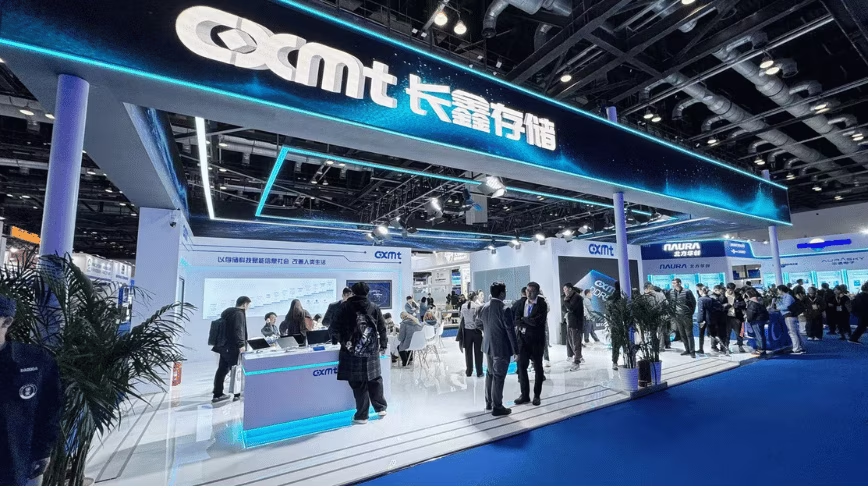

Image by: CXMT


Zhu Yiming got about $10bn richer on Monday. He has promised to give roughly $5.6bn of it away, and not to charity.

The chairman of CXMT saw his fortune climb nearly 300% to $13.9bn when the memory chipmaker closed its Shanghai debut up 466%, according to the Bloomberg Billionaires Index. About 40% of that is earmarked for his employees, Bloomberg reported.

The promise is not new. It is the price tag that is.
What he actually pledged

Zhu committed the shares in CXMT’s IPO prospectus in May, well before anyone knew what Monday would do. He promised to transfer 767.9 million shares into employee incentive programmes.



The 💜 of EU tech

The latest rumblings from the EU tech scene, a story from our wise ol' founder Boris, and some questionable AI art. It's free, every week, in your inbox. Sign up now!


At the debut close of 49 yuan, those shares are worth about $5.6bn. Had the stock merely held its 8.66 yuan sale price, the same pledge would have been worth under $1bn.

He also agreed to restrictions on selling his own stock for 10 years. Bloomberg notes that both commitments are unusual in the history of mainland-listed Chinese companies.
The catch, and there are several

Nobody is getting paid soon. The bonus only begins paying out in three years, and payments are then phased across a decade.

CXMT also has not said who qualifies. The prospectus does not specify whether some or all staff benefit, and the company did not respond to Bloomberg’s request for comment.

The headcount gives a sense of scale. CXMT had 19,298 employees at the end of 2025. Split evenly, which the company has not said it will be, $5.6bn is roughly $290,000 a head.

That figure is not far off what the competition already pays. Samsung chip workers received an average bonus of about $340,000 this year, and SK Hynix has made comparable payouts.
This is a talent war, not a gift

Chinese founders now have to satisfy the state and hold on to engineers at the same time. The second problem is the one money can solve.

“This is very much a newly emerging phenomenon,” said Meng Shen, director at investment bank Chanson & Co. “Talent retention is definitely a key factor.”

Shen added that no single founder can drive success alone in high-growth tech, and that it takes a large influx of top talent.

The argument is familiar from the other side of the same industry. Jensen Huang recently said companies should pay workers as much as possible. In Korea, the same logic has produced its own problems, from appliance staff rallying over bonuses that went to chip divisions, to warnings that the payouts are an inflation risk.
He has done this before

Zhu has form on symbolic sacrifice. In 2018 he stepped back from GigaDevice Semiconductor, his first successful public venture, to run CXMT in partnership with the Hefei municipal government.

At the time he pledged not to draw a single yuan in salary until the project turned a profit. It was a multibillion-dollar bet on a company with no product.

That bet worked. CXMT is now China’s largest maker of DRAM, the memory that feeds server databases and AI workloads, and the fourth largest in the world.

He is also not alone. Yan Junjie of MiniMax has pledged to take no salary until his firm hits an AI milestone, while handing his own shares to long-serving staff.
Who actually owns CXMT

There is a larger shareholder in this story than Zhu, and it is the state.

Before the IPO, the Hefei municipal government held more than 30% through local state vehicles. China’s Big Fund II held over 8%. The Big Fund, formally the China Integrated Circuit Industry Investment Fund, exists to buy the country semiconductor self-sufficiency.

Set against what Zhu and the state made on Monday, $5.6bn is a modest slice. The generosity is real, and it is also affordable.
Whether it happens

A pledge that starts in three years and runs for ten is a long promise. Shen, who called the trend genuinely new, was also the one to say so.

“Whether these promises will actually be fulfilled, and to what extent, depends entirely on how binding the commitments really are,” he said.

He put the founder’s side of it more bluntly. “For founders at this stage, wealth eventually becomes nothing more than a number,” he said, adding that it can be a number with negative side effects.

Zhu spent seven years not taking a salary to build this company. He has now committed to a decade of not selling it, and to giving away a share of it beginning three years from now. On Monday the market decided what that share is worth. It picked $5.6bn.

Tuesday, 4 August 2026

EU: Meta’s apps are so addictive they violate the law


EU: Meta’s apps are so addictive they violate the law

Row of teen boys using their phones

Matt Cardy/Getty Images

A European Union investigation has determined that Meta’s Facebook and Instagram apps are too addictive, presumably after regulators lost half a day watching cooking reels and clips of 20-year-old TV shows. Now, the European Commission wants Zuck and company to make some changes, or face massive fines.

What happened? EU investigators announced yesterday that Meta is currently in breach of the bloc’s Digital Services Act. Regulators said Meta didn’t fully consider how some of its app features fuel compulsive use by sending users, especially younger ones, into a zombified “autopilot mode.” Meta will now have time to propose remedies before a final judgment—and fines—are handed down. The European Commission has some suggestions:

  • Disable autoplay and infinite scroll.
  • Implement screen time breaks.
  • Make its recommendation algorithm less “engagement-oriented.”

Fine line: If the preliminary findings are upheld, Meta could get fined up to 6% of its annual global revenue. The company said it disagrees with the report, pointing to its recent efforts to strengthen parental controls, but that it will “continue to engage constructively” with regulators.

And elsewhere in the Meta-verse…the company removed its controversial new Muse Image feature from Instagram, following days of complaints from users and Hollywood agencies and unions over how all IG accounts were opted in for their images to be used in the tool.

Monday, 3 August 2026

Private spreadsheets for sensitive work - Proton


Sunday, 2 August 2026

American Tech Companies Are Suddenly Sweating Bullets as China Catches Up on AI


American Tech Companies Are Suddenly Sweating Bullets as China Catches Up on AI

Reality is setting in.
A photo illustration of a businessman biting his nails anxiously.
Illustration by Tag Hartman-Simkins / Futurism. Source: Shutterstock

The head start that the US companies enjoyed in the AI race is quickly vanishing. Chinese competitors are now nipping at their heels, and it’s causing a wave of anxiety in the American sector.

Over a year ago, DeepSeek spurred an existential crisis — and a mass stock selloff — in the US tech industry when it released a competitive AI model created for a fraction of the cost of the leading American models.

If that was a wakeup call, then the release of GLM-5.2 last month is loudly banging on the front door. The model, from the Chinese start-up Z.ai, has been hailed as nearly or just as powerful as frontier US systems, especially when it comes to its coding capabilities and cybersecurity applications — while being significantly cheaper to use. 

It’s generated heaps of discussion in tech circles. Marc Andreessen, one of Silicon Valley’s foremost venture capitalists, tweeted that “AI insiders are saying GLM-5.2 is the first Chinese AI model to match and often beat the American big lab public AI models with no compromises.”

Perhaps betraying their sense of a weakening grip on the field, US companies are crying foul about China’s AI ascension. Earlier this year, Anthropic accused China’s DeepSeek, Moonshot, and MiniMax of using a technique called distillation to illegally gather data to imitate its models, which is essentially claiming that they cheated their way to the front of the pack.

In distillation, a weaker “student” model is trained on the outputs of a more advanced “teacher.” AI labs routinely use this to create smaller and more efficient versions of the their largest systems, but Anthropic says Chinese firms are abusing the trick in a mass coordinated effort involving tens of thousands of accounts that probe its models for data that it can extract and use to train their own AI models, thereby effectively pilfering Anthropic’s tech. These claims were relitigated last month, when Anthropic sent a letter to US senators accusing Chinese titan Alibaba of also engaging in this practice.

“These distillation attacks are carried out illicitly, systematically and at industrial scale to harvest US AI capabilities across frontier labs and repackage them as their own,” Anthropic told the senators, per the New York Times.

But Anthropic may be wasting its breath. Distillation is an open secret among rivals in the US tech sector. And as the NYT notes, it’s not even clear if it’s illegal. Unless some court rulings go their way, US firms will have to rely on their own countermeasures to stop it. (Anthropic was caught trying to do this by secretly embedding code in its Claude Code model that allowed it to spy on Chinese users, creating alarm among its customer base.)

American firms could also benefit for some geopolitical strong-arming, such as the US cutting off China’s access to its powerful AI chips, or even blocking Americans from accessing Chinese models (which isn’t as far-fetched as it may sound, when you consider that the US threatened banning TikTok as a way of forcing China’s ByteDance into divesting its US operations, or that it’s also effectively banned Chinese electric vehicles, which are far cheaper than American ones, with prohibitively high tariffs).

Chinese firms may very well have used surreptitious measures to help catch up to the US, but according to the NYT, many experts believe that a distillation crackdown would be meaningless, as building a model as advanced as Z.ai’s can’t be explained by distillation alone. US firms may simply have to accept that their Chinese counterparts are now on equal footing. The complaining about distillation is a convenient distraction at a time when their coding products are under more scrutiny for being too expensive to use as they get deployed in corporate settings — or perhaps a desperate plea for the US government to intervene and rescue them from the horrors of global, free market competition.

More on AI: Bank of America Warns That AI Investors Are in for a Nasty Reality Check

Saturday, 1 August 2026

Prepare to pay a fortune for your next iPhone


Friday, 31 July 2026

Xbox starts major layoffs to save its lagging biz

  Xbox starts major layoffs to save its lagging biz

Moody photograph of an xBox controller, colored in shades of blue.

Morning Brew Inc, Photo: Getty Images

One of the biggest names in gaming could use an infinite money glitch right now. With revenue falling and a string of acquisitions not paying off, Microsoft-owned Xbox will slash about one-fifth of its staff and divest from some development studios, CEO Asha Sharma said yesterday.

Sharma called it “the most significant restructure” in the company’s history. Xbox will…

  • Lay off 1,600 people this week and another 1,250 over the next year.
  • Sell or spin off four to five game studios that it acquired within the past decade, which will cut another 350+ people from Xbox’s staff (games that are already announced won’t be canceled, Sharma said).

“Our business today is not healthy,” Sharma wrote in a memo, acknowledging the company’s measly 3% profit margin. Its quarterly revenue recently declined 5% year-over-year.

The Game Pass gamble

One big reason for Xbox’s slowdown appears to be its struggling subscription service, Game Pass.

TL;DR: To build up an enticing Game Pass library, Xbox bought production giant Activision Blizzard for $69 billion in 2023 and ZeniMax Media, the parent company of Skyrim-maker Bethesda, for $8.1 billion in 2021.

Those splurges didn’t pan out. (Xbox is keeping both companies, but the fifth studio it wants to divest is part of ZeniMax.):

  • Game Pass currently has 30 million subscribers, a far cry from the 77 million that Xbox projected it would reach this year.
  • In a normal year, the company lost 64 cents for every dollar it invested, Sharma wrote.

But now…Sharma, who became CEO in February, said Xbox will return to growth in 2027. Since taking the helm, she has moved to reduce the number of games Microsoft publishes and reprioritize its most popular franchises, like Minecraft, Fallout, and Candy Crush. This streamlining comes as the AI boom sends memory chip prices soaring, pushing Xbox and its competitors to raise console prices.

Zoom out: Xbox’s layoffs are part of 6,400 planned job cuts across Microsoft, whose massive AI spend is spooking investors. It’s the worst-performing megacap tech stock so far this year.

Thursday, 30 July 2026

You can now make money off your 500 followers

You can now make money off your 500 followers

Niv Bavarsky

If your dream career involves a ring light, but you can’t get millions of people to like and subscribe, your moment has arrived. Big brands are increasingly looking to do business with small-time influencers, the Wall Street Journal reports.

Research firm Emarketer forecasts that US-based influencers will earn $21 billion this year and…Around 45% of brand spending on influencer marketing will go to creators with less than 20,000 followers, compared with 19.5% in 2021.
Nearly 20% of spending will go to “nanoinfluencers” with less than 5,000 followers, compared with a measly 3.1% five years ago.

It’s not just brands with tiny budgets going micro: Companies like Target, American Eagle, and Soul Cycle are among those working with smaller creators—some with as few as 500 followers, per WSJ.
Why are brands thinking small?

Like everything suddenly becoming pistachio-flavored, you can blame it on the algorithm. Since most of what you see in your feed now doesn’t come from accounts you follow, sponsoring a creator with a big following no longer guarantees views.

Meanwhile, the little guys are driving engagement in a big way. Growth marketing firm ATTN found that microinfluencers average a 3.2% engagement rate, while those with 1+ million followers average a 1.1% rate. Accounts with big followings can generate significantly more revenue for brand partners, but they also cost as much as 18x more to partner with, according to Bloomberg.

But maybe don’t quit your day job yet: Evangelizing a brand to your small but mighty band of followers probably isn’t a shortcut to livestreaming from inside a private jet. Compensation for smaller influencers can often just be discounts, $10 gift cards, or some freebies, the WSJ noted. And unlike a steady but less glamorous office job, the size of your paycheck from influencing can vary each month. More than half of the 3,000 full-time creators surveyed by Influencer Marketing Hub last year said they earned below a living wage.

Wednesday, 29 July 2026

You probably just need some alone time

 You probably just need some alone time

Two colleagues working at computers facing each wearing headphones

Unsplash

On Tuesdays, the Brew’s Matty Merritt brings you the news you need to make life a little easier during your 9-5, 5-9, or OOO.

It turns out the greatest workplace perk is some gosh darn peace and quiet. Consulting group Superteams Inc. surveyed 6,000 workers across different industries and found that members of the most successful teams all reported having uninterrupted time to work solo.

When asked which amenities they had available to them—including collaborative workspaces, free coffee, gyms, etc.—individuals identified as members of “superteams” (i.e. more productive, collaborative, minimal tense Slack DMs) were 52% more likely than teams considered average to have access to spaces for quiet, focused work.

It might not matter where that space is. This research suggests that the debate over remote work or RTO may not be as important as whether employees can find a silent spot and a chunk of time to tackle all the stuff they’ve been brainstorming during the team huddle.—MM

Tuesday, 28 July 2026

Turning living rooms into movie theaters

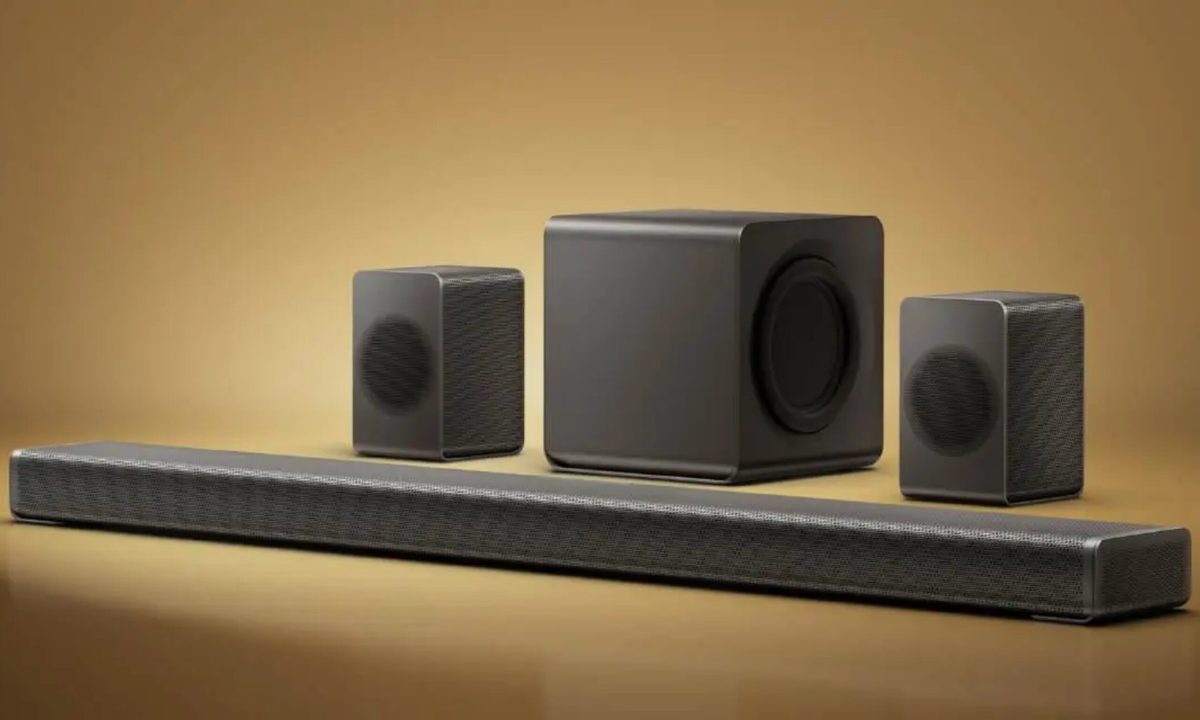
  TCL built a 22-speaker soundbar for turning living rooms into movie theaters, but it’s skipping the US

Here's everything inside TCL's new flagship Q95K soundbar, from its Bang & Olufsen tuning to its 360-degree sound tech.
By Shikhar Mehrotra Published July 27, 2026 11:45 AM

TCL

I’ve used enough soundbars to know most “360-degree audio” claims are marketing fluff dressed up as innovation. TCL’s new flagship might actually have the hardware to back that claim up for once.

The Q95K is TCL’s new flagship soundbar. It’s built around an 11.1.4 channel Hi-Fi architecture and tuned in collaboration with Bang & Olufsen. To me, it sounds like a serious attempt to compete with premium home theater setups.TCL
So what’s actually inside this thing?

The system spreads 1420W of peak power across 22 independent speaker units. The exceptional output is split between a main bar handling seven horizontal channels, two overhead channels, and a subwoofer channel, along with wireless surround speakers covering rear, rear-side, and rear-overhead audio.

This is the kind of speaker layout that doesn’t only make things louder, but also excels at creating a convincing sense of sound moving around you, especially while watching movies.

A three-way acoustic design covers a wide 30Hz to 20kHz frequency range while still keeping distortion under 1%. The device uses neodymium magnets and aluminum diaphragms for clarity in the mids and highs.

Bass comes from a dual-engine subwoofer with opposing 7-inch drivers designed to cancel out cabinet resonance, while 12 separate amplifier chips drive individual speakers to cut down on crosstalk. These additions address the biggest problems with high-powered soundbars: muddy bass and messy audio separation.TCL
What about the rest of the lineup, and can you buy it yet?

TCL’s 360-degree sound field tech leans on software, adapting via the TCL app regardless of your wall layout. Connectivity covers HDMI 2.1 with eARC, Wi-Fi 6, and AirPlay 2, and the floating base design works for both desktop and wall-mounted setups.

TCL also launched two smaller siblings: the Q85K (16 units, 1180W) and Q75K (14 units, 580W). Unfortunately, none of the soundbars are available in the United States right now. The company already sells its flagship TVs and other audio products in the region.

All three are currently China-only, priced at 7,999 yuan (~$1,181), 5,999 yuan (~$886), and 4,699 yuan (~$694) respectively, with no confirmed global release yet.


Shikhar Mehrotra
News Writer
instagramlinkedin
For more than five years, Shikhar has consistently simplified developments in the field of consumer tech and presented them…

Monday, 27 July 2026

Chinese AI labs keep releasing open-weight models while US firms lock theirs down


Chinese AI labs keep releasing open-weight models while US firms lock theirs down

A wave of open-weight AI models from Chinese labs is putting fresh pressure on Silicon Valley and drawing pointed reactions from Washington. In the span of just a few weeks, Z.ai released GLM 5.2, Moonshot AI released Kimi K3, and Alibaba released the latest version of its Qwen line, all with open weights, all benchmarking close to the best Western models, and all optimized for the agentic coding tasks that have become the year's dominant AI trend. K3 in particular has drawn the sharpest attention: Trump AI adviser David Sacks called its performance "concerning," Commerce Secretary Scott Bessent floated the idea of sanctions on Chinese AI companies, and White House science and technology policy director Michael Kratsios alleged that Moonshot AI distilled Anthropic's Fable model to build K3, calling it "stealing proprietary US technology."

The episode is drawing comparisons to the DeepSeek moment of January 2025, and for good reason. It reinforces a widening divergence between how American and Chinese labs think about openness. Anthropic kept its most capable Mythos model restricted to approved collaborators for months over hacking concerns, then briefly had to take both Mythos and Fable 5 offline after White House export controls were issued following a wider release. OpenAI delayed the launch of GPT 5.6 after receiving a White House request. Chinese labs, by contrast, have moved in the opposite direction, betting that free, downloadable, customizable models attract more users, collaborators, and goodwill than the locked-down approach American frontier labs have increasingly adopted.

Alibaba's Monday announcement is the clearest signal yet that this strategy is holding. Earlier this year, rumors had circulated that the company might pivot toward closed-source development after reorganizing its AI teams, but its decision to release Qwen 3.8 with open weights suggests it is not changing course. The open-versus-closed debate, once largely a philosophical argument within the AI community, is now inseparable from the geopolitical competition between the United States and China, and the gap between the two camps appears to be growing.

Read More →

Interactive Communications

Interactive Communications
Interactive Communications VOIP and VPN

eComTechnology RG Richardson Communications

eComTechnology since 2003. I am a business economist with interests in international trade worldwide through politics, money, banking and secure VOIP and Mail Communications. The author of RG Richardson City Guides has over 300 guides, including restaurants and finance. RG Richardson City author has over 300 travel guides. Let our interactive search city guides do the searching, no more typing, and they never go out of date. With over 13,900 preset searches, you only have to click on the preset icon. Search for restaurants, hotels, hostels, Airbnb, pubs, clubs, fast food, coffee shops, real estate, historical sites and facts all just by clicking on the icon. Even how to pack is all there. Finance, Money, Banking, and Economics definitions interactive dictionary.

U.S. skiers latest to be fined for entering closed backcountry

U.S. skiers latest to be fined for entering closed backcountry in Rogers Pass Published 4:40 pm Wednesday, November 4, 2026 By Evert Lindqui...