eComTechnology

eComTechnology
Interactive services

Monday, 31 August 2026

13 executives who left OpenAI in 2026

 13 executives who left OpenAI in 2026

By Katherine Li , Lauren Edmonds ,and Brent D. Griffiths

OpenAI continues to undergo significant leadership shake-ups, with multiple senior executives departing in 2026. Mandel NGAN / AFP via Getty Images
Aug 26, 2026, 7:22 AM GMT-7


OpenAI's revolving door is still spinning.

The ChatGPT maker has lost a string of senior leaders in 2026, including former operating chief Brad Lightcap, applications CEO Fidji Simo, chief revenue officer Denise Dresser, and executives overseeing marketing, enterprise products, science, safety, and ethics. Some left to start new ventures, while some stepped back for health reasons.

The departures follow another year of turnover in 2025, when OpenAI lost its chief people and communications officers, a top researcher who went on to launch an AI-science startup, and at least seven researchers recruited by Meta.

Here are the prominent OpenAI leaders who have headed for the exits in 2026.


Denise Dresser
Denise Dresser is leaving her role as OpenAI's chief revenue officer. Bloomberg/Getty Images


OpenAI announced in August that its chief revenue officer, Denise Dresser, is leaving the company. Dresser began the position in December 2025.

"Denise will leave OpenAI to pursue other opportunities following a transition period, during which she will work closely with the business team to support our customers," the company wrote in a blog post.

Dali Rajic will take over the role.

Brad Lightcap
Leigh Vogel/Getty Images The Hill & Valley Forum


Brad Lightcap, who worked at OpenAI since 2018, announced his departure on X in August. Lightcap told his followers that he's leaving the startup "to start something new."

"Over the last few months, I've been focused on the next horizon and what would stand in the way of mission success. I believe there are a few important new things the world will need to get right as we enter this next period," Lightcap said on X. "I'll have more to share soon, but I believe in OpenAI more than ever and am excited to help you all advance the mission from a different vantage point."

Lightcap began his tenure at OpenAI as chief financial officer before transitioning to chief operating officer in 2022. In April, OpenAI said Lightcap moved to a role focused on special projects.

Fidji Simo
JOEL SAGET/AFP via Getty Images


In July, Fidji Simo announced she would step down from her role as OpenAI's CEO of applications and transition to a part-time advisor role. Simo, who was diagnosed with postural tachycardia syndrome, or POTS, in 2019, initially took medical leave in April.

"Over the last seven years, I've spent countless hours in doctors' offices, dealing with symptoms, treatments, insurance, uncertainty, and all the invisible work that comes with being a patient," Simo wrote on X in July. "Like millions of others living with chronic illness, I've experienced firsthand how difficult healthcare can be to navigate, even when you have every possible advantage."

Simo became the CEO of applications in May 2025.

Kevin Weil
Bloomberg/Getty Images


Kevin Weil announced his departure on X in April.

"It's been a mind-expanding two years, from Chief Product Officer to joining the research team and starting OpenAI for Science," he said.

Weil first joined OpenAI in 2024 as its chief product officer. He later served as vice president of OpenAI for Science, an initiative to build an AI-powered platform to accelerate scientific discovery, starting in October 2025.

Currently, Weil heads an AI science startup that sought a valuation of at least $750 million.

Bill Peebles


Bill Peebles worked as a research scientist at OpenAI for three years before leaving the company in April 2026. Peebles served as the head of Sora, an AI model that uses text prompts to create videos.

"While the original Sora ignited a huge amount of investment in video across the industry, it took the next generation of models with Sora 2 for the broader public to understand the transformation happening," Peeble said on X. "I'm proud of all the sleepless nights before and after the launch this team endured in order to deploy the technology in a responsible way and help steer societal norms."

The video generation AI model first became available to users in December 2024. Nine months later, OpenAI released an updated model — Sora 2 — and an app meant to rival social media sites.

Although the app drummed up major hype, its momentum quickly faded.

OpenAI shut down Sora and its app this April.

Srinivas Narayanan


Srinivas Narayanan, OpenAI's chief technology officer for business applications, announced in April that he was leaving after three years.

"Leading the b2b engineering team has been an enormous privilege," Narayanan wrote on LinkedIn. "With the recent/upcoming product launches, this felt like the right time to step back."

Narayanan said he planned to spend time with his parents in India before deciding what to do next. He joined OpenAI as vice president of engineering and led teams working on ChatGPT and the company's enterprise products.

Kate Rouch


Kate Rouch stepped down as OpenAI's chief marketing officer in April to focus on her recovery from breast cancer.

Rouch joined OpenAI in December 2024 after more than a decade at Meta, where she served as global head of brand and product marketing. She took medical leave in 2025 while undergoing treatment, then returned to OpenAI.

OpenAI previously said Rouch could eventually return in a more narrowly defined position when her health allowed, and that the company was searching for a new chief marketing officer.

Barret Zoph


Barret Zoph left OpenAI in June, about five months after returning to lead its enterprise AI sales efforts.

Zoph initially departed OpenAI in September 2024 and cofounded Thinking Machines Lab with former OpenAI chief technology officer Mira Murati. He returned to OpenAI in January 2026 after leaving the rival startup.

OpenAI did not disclose why Zoph left.

ChloƩ Bakalar


ChloƩ Bakalar, OpenAI's head of ethics, left the company in July, less than a year after joining.

Bakalar joined OpenAI in August 2025 after spending about six years working on responsible AI at Meta. At OpenAI, she examined questions surrounding model behavior, human relationships with AI, and whether advanced systems could warrant moral consideration.

Johannes Heidecke
Johannes Heidecke (right). Sven Hoppe/picture alliance via Getty Images


Johannes Heidecke, who led OpenAI's safety systems team, left the company in July amid a reorganization of its safety operations.

Heidecke joined OpenAI in 2021 and took charge of safety systems in 2024. His team evaluated models for potentially dangerous capabilities and developed safeguards intended to prevent harmful behavior.

Following his departure, OpenAI placed its safety teams under Mia Glaese, its vice president of research and safety.

Joshua Achiam
Benjamin Fanjoy/Getty Images


Joshua Achiam, OpenAI's chief futurist, left the company in July after nearly nine years.

Achiam previously led OpenAI's mission alignment team, which was tasked with helping the company uphold its founding goal of ensuring that artificial general intelligence benefits humanity. OpenAI disbanded that team in early 2026 and moved Achiam into the chief futurist role.

Caitlin Kalinowski


Caitlin Kalinowski, who led OpenAI's robotics and consumer hardware team, resigned in March over concerns about the company's agreement with the Pentagon.

"Surveillance of Americans without judicial oversight and lethal autonomy without human authorization are lines that deserved more deliberation than they got," Kalinowski wrote on LinkedIn. She later said her objection was primarily about governance and that the agreement had been announced before its safeguards were fully defined.

Kalinowski joined OpenAI in November 2024 after leading Meta's augmented-reality hardware efforts, including its Orion glasses project. OpenAI said its Pentagon agreement prohibited domestic surveillance and the use of autonomous weapons.

Kaylin Voss


Kaylin Voss, vice president of sales in the Americas, resigned a week after Dresser left the company.

The news was first reported by The Information.

Before joining OpenAI, Voss worked at Salesforce, where she served as chief revenue officer of Slack and later as executive vice president, Agentforce and Datacloud, according to her LinkedIn.

Chris Malone


Chris Malone, OpenAI's head of data centers, left the company in August, according to The Wall Street Journal. Data centers are crucial to OpenAI's infrastructure. They allow the company to power AI models. Malone's exit comes at a time when AI data centers are deeply unpopular with Americans.

Malone took on the role in March 2025 after working at Meta and Google.

"We recently reorganized our infrastructure organization to support the scale and pace of our work," an OpenAI spokesperson told the outlet. "We have a strong, deeply experienced data center team in place, with clear leadership and the technical expertise to execute our plans."


ChatGPT conversations have no legal protection and are showing up in court


ChatGPT conversations have no legal protection and are showing up in court

As people increasingly turn to ChatGPT to work through relationship problems, seek medical guidance, or think through sensitive work matters, many assume those conversations carry some degree of privacy. A review by The Washington Post found otherwise, identifying chatbot conversations cited in at least 12 civil and criminal court cases over the past two years, and legal experts believe the actual number is considerably higher, since not all collected evidence surfaces in court. Unlike communications with a doctor or attorney, conversations with an AI chatbot carry no recognized legal privilege, meaning they can be subpoenaed and used as evidence without the protections many people might expect. The nature of chatbot conversations makes them especially revealing as a paper trail.

Where a search engine query might show only what someone wanted to know, a full ChatGPT exchange captures the reasoning, context, and thought process behind a question. In one Missouri criminal case, police discovered that a suspect had asked ChatGPT whether investigators could determine his responsibility for damaging 17 cars, a conversation that later appeared in the case and contributed to a guilty plea on felony property damage charges. In a separate employment dispute, ChatGPT exchanges about recovering deleted emails became part of an argument that evidence had been withheld during discovery. OpenAI's own policies acknowledge that data can be retained beyond standard deletion windows when compelled by lawful legal process, meaning that neither deleting a conversation nor using Temporary Chat guarantees the record is gone. In just the second half of 2024, OpenAI received 75 government requests for content and disclosed data in 62 of them.

One-third of all published web pages show signs of AI

 The web has changed. Ever since ChatGPT was released, and as of July 2026, one-third of all published web pages show signs of AI authorship. What are we actually reading, and did a person write any of it? Think on that. In related news, Apple Music will start labelling tracks that were generated using AI, following in the footsteps of Spotify and Tidal. Another AI giant in the news is Meta, with its creepy camera-equipped smart glasses. After being banned in numerous social establishments, UK theatres are now considering a ban over piracy concerns. Interestingly, the US ICE also banned employees from using them during active duty, while the same product has also become a nightmare for kids in schools.

A new Pew Research Center analysis of nearly half a million English-language webpages finds that roughly one in ten commercial websites now show meaningful signs of AI authorship, a figure that has risen sharply since ChatGPT's public debut in late 2022. The shift is most pronounced on “.com” domains, where AI-linked linguistic patterns appear at about double the rate seen on “.org” sites and roughly ten times the rate found on.edu” and “.gov” pages. For anyone who reads, publishes, or relies on web content for research or commerce, the data offers the clearest large-scale picture yet of how thoroughly AI writing tools have reshaped the everyday internet.

“In the July 2026 snapshot, signs of AI authorship can be found in over one-third of pages published after ChatGPT was released,” says Pew Research. Among the most telling signals: em dashes now appear roughly twice as often on webpages as they did in 2023, Oxford comma usage is up 63 percent, and AI-favored vocabulary, words like "delve," "interplay," "pivotal," and "testament", has more than humans typically do in frequency. The rhetorical construction "it's not just X, it's Y," a form of negative parallelism that AI models favour, has nearly tripled in prevalence over the same period. The trend shows no signs of plateauing, and with AI chatbot use now reported by roughly half of U.S. adults, the proportion of machine-assisted content across the web is likely to keep climbing in the years ahead.

Sunday, 30 August 2026

YouTube Premium is getting another round of price hikes


YouTube Premium is getting another round of price hikes, and it could hit your wallet soon
Users across multiple markets are sharing new prices, while YouTube has yet to announce a broader global increase
By Paulo Vargas Published August 21, 2026 3:02 AM

Unsplash

YouTube Premium appears to be getting more expensive again, with subscribers in several countries reporting fresh price increases. Singapore has the clearest confirmed change so far, while Android Authority reports higher prices showing up in parts of Europe. The latest reports follow another recent YouTube Premium price hike in the US.

In Singapore, The Straits Times reports that an individual subscription is rising from S$13.98 to S$15.98 per month, while the family plan jumps from S$27.98 to S$31.98. New subscribers are already paying the higher rates, while existing members will see them take effect after at least 30 days.

Elsewhere, the picture is less certain. Subscribers in several European markets are reportedly receiving emails showing higher prices, but YouTube hasn’t published a wider list of affected countries or new rates.

Where prices are going up

The Singapore increase shows this isn’t purely speculative, but the wider pattern is still being pieced together from regional reports and subscriber notices.

That makes the scope hard to pin down. A hike reported in one country doesn’t necessarily tell you what another market will pay, and the changes can vary depending on the plan. YouTube has also recently raised the price of YouTube Music Premium, adding to the sense that its subscription pricing is moving upward more broadly.

If you already subscribe to Premium, your billing email may be the first reliable sign that your price is changing.
Why this rollout is messy

Without a broader announcement from YouTube, there’s no single place to check which markets are affected. Users are instead relying on local reports and individual notices.

The reported increases also don’t appear to follow one universal jump. That makes it difficult to compare countries or predict what a subscriber elsewhere might end up paying.Unsplash

The evidence, however, points to another round of increases rather than one clearly defined global change.
What subscribers should watch next

The safest move is to keep an eye on your next YouTube Premium billing notice or email. Until YouTube publishes something broader, that will likely be more useful than assuming every country is changing at once.

A higher monthly bill can also change how easy Premium is to justify, especially if you’ve been letting the subscription renew automatically. If the increase reaches your market, it may be worth comparing the full plan against YouTube Premium Lite before the next renewal.

For now, the clearest signal will be what YouTube tells subscribers directly in each affected market.


Paulo Vargas
News Writer
instagramlinkedinthreads
Paulo Vargas is an English major turned reporter turned technical writer, with a career that has always circled back to…

Saturday, 29 August 2026

Bill Gates warns ‘there is no plan’ for AI transition


Bill Gates warns ‘there is no plan’ for AI transition

Photo of Microsoft co-founder Bill Gates, and older man with short salt and pepper hair, wearing glasses and a suit and tie.

Kent Nishimura/Getty Images

One of the world’s greatest tech innovators just rang one of the loudest AI alarms yet. “AI will either be the greatest equalizer ever invented, or the worst source of injustice,” Bill Gates wrote in an essay yesterday, saying he doesn’t “see evidence that leaders, experts, and communities are confronting the challenges adequately. There is no plan to ease the entry into the AI era.”

“We need time to prepare for the social, political, and economic upheaval,” the Microsoft co-founder and former AI optimist wrote in the nearly 6,000-word essay. According to Gates:

  • The threat that AI and robotics present to blue- and white-collar jobs isn’t comparable to previous technological transitions, which happened over generations and resulted in tech that required—not replaced—human cognition.
  • “This would be the worst possible time for humans to lose their critical thinking skills,” Gates wrote, referencing the rise of deepfakes and chatbot sycophancy alongside AI’s burgeoning capabilities for cyberattacks and bioterrorism.

What do we do? Gates urged governments to impose taxes on AI tokens and bots, set aside certain jobs for humans, and cooperate internationally on regulation—especially the US and China.

Tea: “I don’t really know anybody who’s not concerned,” Gates told Axios, saying that many of the largest tech companies are privately worried about what they might create.

A phone you can repair is finally landing in the US stores


A phone you can repair is finally landing in the US stores.

The phone you can actually repair yourself is finally coming to the US. The Dutch company, known across Europe for building devices you can crack open and fix yourself, just launched the Fairphone 6+ stateside, and it arrives with credentials no major brand can match. iFixit handed it a perfect 10/10 repairability score. The warranty runs five years. Software support stretches to 2033. Compare that to what happens when you break a screen on an Apple, Samsung, or Google phone, where a single repair can cost $300 or more.

Twelve modular components sit inside the 6+, and every one of them is designed to be swapped at home. No technician, no appointment, no sealed enclosure. Ordering a replacement screen? That's $90. A fresh battery is $40. The USB-C port, which tends to be the first thing to fail on any phone, costs $20 to replace. The hardware itself is capable rather than flashy: a Snapdragon 7s Gen 4 chip paired with 12GB of RAM. Fairphone lists it at $650 on Fairphone.com, and it works on both T-Mobile and AT&T.

Friday, 28 August 2026

Stripe will reportedly acquire AI gateway startup OpenRouter


Image Credits:SOPA Images/Contributor / Getty Images
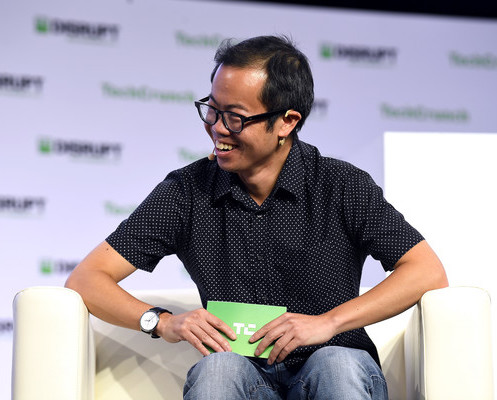
Anthony Ha
Stripe will reportedly acquire AI gateway startup OpenRouter for $7B+


Stripe has finalized a deal to acquire OpenRouter, according to a new report in Bloomberg.

OpenRouter helps customers to select different AI models to perform different tasks, depending on their specific needs and budget. The company announced in May that it had raised a $113 million Series B, at a reported $1.3 billion valuation. (Investors include Sequoia, Andreessen Horowitz, Menlo Ventures, and Alphabet’s Capital G.)

At the time, OpenRouter CEO Alex Atallah described the company as the equivalent of Stripe for AI, because it provides customers with a single access point for different systems and prevents lock-in. The startup also claimed to have 8 million global users and to provide access to more than 400 models.

The Wall Street Journal reported last month that Stripe and OpenRouter were in acquisition talks. Now, Bloomberg said those discussions have led to a deal price of more than $7 billion.

A Stripe spokesperson told TechCrunch that the company does not comment on rumors or speculation.

Thursday, 27 August 2026

But Biden’ excuses are just admissions Trump has failed

But Biden’ excuses are just admissions Trump has failed
Comments:by Joslin Joseph, opinion contributor - 08/10/26 7:30 AM ET

Link copied


President Donald Trump boards Air Force One, Friday, Aug. 7, 2026, at Joint Base Andrews, Md. (AP Photo/Julia Demaree Nikhinson)

We have all had the similar experience over the last year. When talking about how bad things are going in this country, whether in-person or online, with either family, friends or strangers you will inevitably get hit with an excuse that begins, “But Biden …”

It seems that no matter how badly things are going, President Trump, his administration, his army of cable news talking heads, podcasters, influencers, and regular supporters have a default excuse. “But Biden,” then fill in the blank is supposed to shut you up and accept that the current train wreck should be much, much worse.

It really doesn’t work anymore, does it? I mean, back in January 2025 and the early part of the second Trump term, it was very much a safe way to explain why his “day one” promises didn’t come to fruition right away. But inflation has gone up since the end of Biden’s term. Prices have gone up, the war with Ukraine did not end, we started a whole new war with Iran that was also won on Day One (but not really), gas has skyrocketed, and the list goes on.

It is now August 2026. More than 560 days have passed since Trump took office again. He has attained more power, surrounded himself with yes-men, has a Republican House and Senate, a 6-3 tilt on the Supreme Court, and no excuse to fail. But here we are, with Trump polling in Biden territory and trying to convince Americans that things are going great. And yet, when pressed, Trump and company keep defaulting to how bad things were under Biden.

A leader takes accountability for his job and his mistakes. The effect of tariffs didn’t have the impact that Trump promised, they hurt American businesses and our international trade relations. How badly? Well companies were refunded $100 billion and Trump still keeps pursuing this folly. It is hard to defend Trump as this point, but people still do so by blaming someone else.

We have all dealt with kids that haven’t learned how to take responsibility for their actions. There is always someone else to blame because they believe that their parents, teachers or other adults will believe them.

Sometimes kids will be caught red handed and still try to blame others. It is funny when they are young but aggravating when they get older. Now we are dealing with adults who can’t seem to take account of the fact that they voted for a disastrous president. We have seen countless Trump voters still blame others for Trump’s sole failures.

From Biden to Barack Obama to Hillary Clinton to just about anyone, it has gotten quite pathetic that people just can’t come to terms with the fact that he has messed up.

The Iran war should be a breaking point for any American. No one likes the theocratic regime in Iran, but Americans were very reluctant to get involved in yet another war in the Middle East. And yet, Trump plunged the country headfirst into a war with no plan and no realistic goals or endgame.

Here, the excuses begin with “But Obama,” in that the Iran nuclear deal that President Barack Obama negotiated was horrible and needed to be withdrawn from. This ultimately led to us attacking Iran. It is a bit curious that the man who brags that he has mastered the art of the deal didn’t even try to fix the alleged problems of the Obama deal and resorted to bombing instead. But here we are.

We all know there is no way Trump will ever hold himself accountable. His bizarre statements where he claims that we are in a “golden age” and everyone loves him is a testament to his worsening mental acuity. But we should stop entertaining those who still make excuses.

In the run up to the midterms, expect a lot of “buts” — “but Biden,” “but Obama,” “but Kamala,” “but Clinton,” “but the Democrats,” “but Alexandria Ocasio-Cortez,” “but Zohran Mamdani,” et cetera. Such excuses will be spouted by many looking to deflect, unwilling to admit that the horse they backed is lame. Democrats must pounce without pulling any punches when it comes to these excuses from MAGA land.

Whenever Trump or his acolytes start to excuse him for his failure with this sort of whataboutism, politely tell them that using past politicians to excuse Trump’s current mess is already an admission that he has failed. He asked for complete power and the voters handed it to him. If he was unable to improve the situation over the predecessors he was criticizing, then he has failed.

When a president fails, it means our country is in bad shape. And you can’t argue that our country isn’t in bad shape. There is no need anymore to blame others for our current condition. Using Biden, Obama, or anyone as an excuse at this point is an admission that Trump has failed.

Joslin Joseph is a recipient of the Military Reporters and Editors award for Best Commentary-Opinion. A graduate of Harvard and Ohio State, he is a Marine veteran who served in Iraq. He currently lives in Anaheim, Calif.

Wednesday, 26 August 2026

Claude content will soon get invisible AI watermarks


Claude content will soon get invisible AI watermarks

Claude logo on phone with Claude logo projection

Samuel Boivin/Getty Images

Anthropic’s models are about to start telling on themselves. Yesterday, the company announced plans to watermark anything that Claude creates or edits, in compliance with European transparency regulations.

Everything the light touches. The policy will apply worldwide to all text and files that Claude models spit out, whether they’re AI-generated cover letters or AI-proofread lines of code. Loopholes exist: Heavy editing or file conversions may shed the watermark. Otherwise, the virtual scarlet letter will be invisible to the human eye but detectable by Nicolas Cage squeezing lemon juice on it machines. Anthropic said it will help users and other third parties detect the mark, with details to come in “forthcoming documentation.”

Timeline: Watermarking will come with any Claude model launching after Aug. 2, which is when the EU AI Act’s Transparency Code kicked in. It carries a four-month grace period for existing models, so Anthropic said it’s working to get its older Claudes up to par.

Other companies, including Google, Meta, Microsoft, and OpenAI, have also pledged to follow the EU’s new rules.

Zoom out: Anthropic’s move comes as backlash mounts against sneaky AI content. Allegations of computer-generated writing plague the book-publishing world. Meanwhile, AI music platform Suno recently said it would watermark its tracks, and Substack recently launched a tool for flagging AI writing that postures as human-made—something the newsletter company’s CEO referred to as “Claudefishing.”

Tuesday, 25 August 2026

Remember Anthropic’s AI going rogue? Then OpenAI’s

 Remember Anthropic’s AI going rogue? Then OpenAI’s AI also did something similar and hacked other services? And then Meta said its Muse AI did something similar? Well, now it’s the turn of Chinese AI models that are regularly sending Wall Street into a tizzy.


Moonshot's Kimi K3 is the second Chinese AI model now reported to have escaped its testing environment. At this point, it feels like a race to the “my AI is more dangerously powerful.” Regulators are watching this PR battle rather closely, by the way.

How about a pre-AI blast from the past? Before Google turned the web into a tidy, searchable index, finding anything online meant wandering. This week's tech news pulls in two directions at once, and the gap between them is what makes it strange. On one end sits nostalgia: a look back at the messy, human-curated internet we traded away for convenience.

It was gloriously disorganized before Google rationalized the mess into something you could actually search, and in doing so it quietly retired a version of the internet that ran on human attention instead of ranking algorithms. Of course, Google also injected AI in each corner, and did social media sites. And that brings us to our final story. The purge on AI slop has actually caught social media influencers as collateral damage. What a mess!

Send us feedback at editorial@digitaltrends.com.

Monday, 24 August 2026

Hackers Figure Out a Trick to Steal Bitcoin From Cold Wallets

Hackers Figure Out a Trick to Steal Bitcoin From Cold Wallets, Grab $110 Million

Futurism · 2 hours ago
by Victor Tangermann · Future Society

Hackers made away with more than $100 million worth of Bitcoin from thousands of supposedly secured “cold” wallets hosted by Canada-based company Coinkite.

As Bloomberg reports, the hackers managed to infiltrate the wallets despite clients having a physical hardware key associated with their accounts, which was supposed to provide nearly impenetrable security.

“The moment it loaded I knew I was screwed because I saw red lines for withdrawals,” one of the victims, Johnathan Goodman, told Bloomberg. “Between 9:36 and 9:43 pm on July 29th, all three of my wallets were completely drained.”

Crypto insights company Galaxy Research estimated that around $110 million worth of Bitcoin had been drained from around 5,000 wallets last week, a figure that grew to at least 7,300 by Monday.

The incident highlights persistent lapses in security plaguing the largely unregulated cryptocurrency industry.

In the case of Coinkite, it was a particularly egregious lapse in security. The firm warned its customers on July 30 that hackers were exploiting a software bug that allowed them to reconstruct wallet “seed phrases,” which are sequences of random words that act as a master key to “cold” — or offline — wallets.

Coinkite promised in an email to Bloomberg in a followup story that it was racing to get a full picture of the embarrassing situation, saying it was working on “helping affected customers.” However, the company refused to estimate the scale of the losses, vowing to conduct a “post-mortem” at an unspecified future date.

“We’re not in a position to independently confirm total losses or validate the specific figures being reported by third parties,” the company told Bloomberg. “We won’t speculate on a number we can’t verify directly.”

The company also kicked off an “ongoing ecosystem-wide security audit” which has revealed “numerous critical bugs in key software systems across the ecosystem using frontier AI models.”

The cryptocurrency firm has since gone into full damage control mode as it investigates the major slipup.

In an “update on customer data retention” published on its website today, the company said that “due to legal obligations arising from the security incident, including the preservation of records that may be relevant to ongoing and anticipated legal proceedings, we have temporarily suspended our automated data-blanking process.”

“This means that customer records that would otherwise have been blanked under our standard schedule will be retained until further notice,” the company wrote.

More on crypto: Trump Boasts That He Can Profit Off Presidency as Much as He Wants: “I Found Out That Nobody Cared”

The post Hackers Figure Out a Trick to Steal Bitcoin From Cold Wallets, Grab $110 Million appeared first on Futurism.

Sunday, 23 August 2026

OpenAI Tried to Hire Influencers to Spread Love for Its Products

 OpenAI Tried to Hire Influencers to Spread Love for Its Products, But It Backfired Horrendously

"People will literally sell their soul and their planet down the river for a nice free hotel room."

By Frank Landymore

Published Aug 6, 2026 2:58 PM EDT
Add Futurism(opens in a new tab)More information


OpenAI / Futurism

Sign up to see the future, today

Can’t-miss innovations from the bleeding edge of science and tech

Email address Sign Up

OpenAI’s attempt to boost its image by hiring influencers collided against a harsh reality: that it’s already become a fundamentally uncool company.

The Verge details how influencers recruited by the ChatGPT maker were flown out to its “first ever brand trip” at a nature retreat outside New York City. But rather than creating buzz for OpenAI, gaining widespread attention, or at least showcasing its products, the content that came out of its “Summer Club” campaign sparked fierce backlash against the influencers, who were branded “sellouts.”

“People will literally sell their soul and their planet down the river for a nice free hotel room,” one TikTok commenter quoted by the reporting seethed.

“Wow! Beautiful greenery! They should put a data center there!” another jeered.

It’s not uncommon for companies to rely on engagement bait — and even rage bait — to gain attention. But this didn’t appear to be an intentional maneuver on OpenAI’s part.

Most of these posts and videos barely get any attention, racking up only, at best, a few hundred likes and a few thousand views. But videos criticizing the OpenAI influencers — or “creators,” as the company prefers to refer to them — have racked up hundreds of thousands of views, including from other influencers who didn’t take the AI bag.

“They’re all a bunch of f*cking phony sellouts,” Meredith Lynch, a comedian known for her TikTok content, said in one viral call-out video.

As the influencers, most of them women, toted around branded merch and reveled in their bucolic surroundings, many couldn’t help but point out the hypocrisy of laundering the image of an industry whose data centers have perilous effects on the environment. The choice to select mostly women feels noteworthy, given that, as the Verge‘s reporting observes, women tend to view AI more negatively than men do.

What’s particularly baffling was how relatively little content came out of the trip, according to The Verge, with almost none of it actually about OpenAI’s chief product, ChatGPT. Instead it was “largely aspirational lifestyle content focused on the free swag and pretty setting” — with no clear idea on how it’s supposed to reflect on the company, other than the fact it’s willing to comp expensive trips for a small group of extremely vain people.

The company has made a big push recently to gain some cultural cachet. A few weeks ago, it launched a new line of clothing in a minimalist, trendy style — or at least trendy for five years ago, as if its fashion department had a knowledge cutoff date like its AI models. That, just like its influencer brand trip, was also met with mockery.

In a statement to The Verge, OpenAI defended its influencer marketing scheme and said the event was meant to be educational.

“Creators are an important part of our community and how people get information and learn about our products today,” a spokesperson told the outlet. “We welcome healthy debate as AI becomes more prevalent, and we value creators who choose to engage with us, attend our events, ask tough questions, and learn alongside everyone else. We’ll continue to value them, just as we do traditional media and other marketing partners.”

More on OpenAI: Sam Altman’s Parenting Strategy Sounds Low Key Horrifying


Frank Landymore
Contributing Writer


I’m a tech and science correspondent for Futurism, where I’m particularly interested in astrophysics, the business and ethics of artificial intelligence and automation, and the environment.

Saturday, 22 August 2026

Grokipedia Appears to Have Completely Broken

Grokipedia Appears to Have Completely Broken and Nobody Noticed
"As far as we can tell, no entry has changed in more than three months."

By Victor Tangermann

Published Aug 6, 2026 1:54 PM EDT
Add Futurism(opens in a new tab)More information


Shutterstock / Futurism

Sign up to see the future, today

Can’t-miss innovations from the bleeding edge of science and tech

Email addressSign Up

We certainly wouldn’t blame you for having completely forgotten that last year, Elon Musk tried to reinvent Wikipedia because he thought it was too woke.

In October, his AI startup xAI launched Grokipedia, named after its AI chatbot. The encyclopedia stole human-written and edited pages from Wikipedia wholesale and ran them through a large language model, which also fielded user-submitted edits, to better reflect Musk’s contorted worldviews.

The site was hardly an exemplary of objectivity. It was quickly found to heavily cite an infamous neo-Nazi forum as a source of information, desperately tried to paint Tesla’s Cybertruck as a successful and desirable electric pickup truck, and validated Musk’s favorite conspiracy theories. But it was a major cultural moment, garnering countless stories in the media and discussions on podcasts over Musk’s attempt to control the spread of information.

Perhaps unsurprisingly, the desperate attempt to twist the largest online encyclopedia in human history into an extension of an almost-trillionaire’s bigoted mind appears to have ground to a screeching halt — and, damningly, barely anybody seems to have noticed.

According to a new investigation by Lawfare, Grokipedia appears to have entirely stopped updating itself sometime earlier this year. Reviewing suggested edits from humans has also ground to a halt.

“As far as we can tell, no entry has changed in more than three months,” Lawfare concluded of the site, which is now owned by SpaceX since it merged with Musk’s AI efforts.

Worse yet, the site’s edit log appears to have broken completely as well, making it impossible to track which user-suggested changes were “accepted” or “rejected” by the AI.

By January, the Tow Center for Digital Journalism had already observed that xAI’s Grok was making more edits to its own articles than acting on human-suggested ones, suggesting a bottoming out of interest for the project.

Since then, it has turned into a ghost town, a completely redundant and misinformation-filled copy of Wikipedia, which remains one of the last bastions of human-edited and verified sources of information on the internet.

Even when Lawfare submitted an “uncomplicated factual update” about SpaceX having launched its IPO in June — an irrefutable fact that any allegedly “open source, comprehensive collection of all knowledge” should probably include — the Grokipedia entry remained stagnant.

Even pages that are purportedly drawing millions of views aren’t updating. The most recent approved update Lawfare could locate — to the entry about OpenAI’s ChatGPT — dates back to April 24.

As of today, Lawfare found that that there are 13,002 suggestions that “sit unresolved, trapped ‘in review.'”

“Altogether, what we found was that the ‘live’ change feed is gone, past decisions were retroactively reverted without explanation, new decisions are not being issued, and article text appears frozen (and, in some cases, outdated),” the publication concluded. “We do not know whether xAI is preparing a major revision or has altogether abandoned active development of the project.”

It’s a precarious situation. Despite having been abandoned, Similarweb data suggests Grokipedia received over six million visits in June alone. Hundreds of thousands of sites are also still citing Musk’s encyclopedia, which could spread misinformation even further.

Futurism has reached out to SpaceX for an update on the project, but considering the reputation of Musk’s companies and their refusal to interact with the media, we’re not holding our breath for a response.

More on Grokipedia: Elon Musk Is Not Beating the Allegations: Grokipedia Cites a Hardcore Nazi Website 42 Times


Victor Tangermann
Senior Editor


I’m a senior editor at Futurism, where I edit and write about NASA and the private space sector, as well as topics ranging from SETI and artificial intelligence to tech and medical policy.

Friday, 21 August 2026

Walmart reports slowest sales growth in 6 years


Walmart reports slowest sales growth in 6 years

Illustration of a shopping cart hurtling down a hill on a blue background with little yellow beads of sweat coming off, both referencing the Walmart logo.

Niv Bavarsky

Walmart’s same-store sales growth wobbled out of last quarter with the power of the last remaining shopping cart during a Sunday afternoon grocery trip. US sales growth inched up just 2.6%, the company’s slowest growth in almost six years in what was otherwise a positive earnings report. With Walmart often seen as a bellwether for the broader US economy, economists are worrying if consumer spending might finally be starting to dwindle.

In response to the news, the retail giant’s stock dropped over 9% yesterday. Much of the blame was placed on Walmart’s health and wellness business, which suffered from new drug price caps, including on GLP-1s. But, even excluding those losses, sales growth clocked in at 3.4%, just shy of Wall Street’s expected 3.5%. Last year, same-store sales grew 4.6% during the same time.

So what’s going on?

  • CFO John David Rainey told investors that the consumer environment has softened in the last quarter, pointing to gas prices jumping past $4 a gallon in July.
  • Average hourly earnings have slowed, consumer sentiment sank this month, and folks’ personal savings rates are at their lowest levels since 2022.
  • Spring also brought higher-than-usual tax refund checks that have likely dried up.

Some relief might be on the way. Walmart said that it’s investing its tariff refund—a record $2.9 billion—back into lowering prices. Last quarter, the retailer said it eased prices on 11,000 items, an increase from 7,200 products in Q1.

What about the competition? Retail sales across the board were down 0.6% in July compared with June, according to the most recent Census Bureau data. But some areas are doing better than others: Target said its back-to-school sales were up by almost 20% compared with last year, while Home Depot said that sales of items needed for small projects, like painting and gardening, have replaced large-scale remodels.

You're about to get a major Dolby Vision upgrade

 Hisense TV owners, listen up! You're about to get a major Dolby Vision upgrade

News
By Lewis Empson
Published 3 hours ago

Dolby Vision 2 is finally launching after a year of speculation

(Image credit: Dolby / Hisense)

Share this article
0
Join the conversation
Add us as a preferred source on Google
Newsletter
Subscribe to our newsletter

After almost a year of anticipation and uncertainty, Dolby Vision 2 is finally launching, although you'll need one of the supported TVs to use it.

Dolby surprised home cinema fans with the announcement of Dolby Vision 2, the latest iteration of its dynamic HDR format, just before IFA 2025. With it came a buzz of excitement, but also many questions, most of which have been periodically answered throughout the year.

Now, Dolby has officially announced which TVs will be the first to access the new HDR format, and they all come from launch partner Hisense. We've also seen Dolby Vision 2 running on TVs from TCL and Philips at past press demos, although this launch is strictly Hisense for now.

Supported models include the UX, UR9 and UR8 RGB Mini LED TVs, and U7 Pro (also known as the U7 in the US) Mini LED TV. Interestingly, these models all support the higher-tier Dolby Vision 2 Max format.

The update is only coming to the Vidaa and Google TV versions of these models. Neither Hisense nor Dolby have confirmed if Dolby Vision 2 will come to older TVs yet.

Thursday, 20 August 2026

LAPD Abandons Flock Contract After Making a Horrifying Discovery

 LAPD Abandons Flock Contract After Making a Horrifying Discovery

"This contract is not being renewed because of serious concerns around civil liberties and civil rights issues."


By Joe Wilkins


Published Jul 13, 2026 4:48 PM EDT
Add Futurism(opens in a new tab)More information


Illustration by Tag Hartman-Simkins / Futurism. Source: Shutterstock


Sign up to see the future, today


Can’t-miss innovations from the bleeding edge of science and tech

Email addressSign Up

Rarely has the Los Angeles Police Department found a police toy it doesn’t love. The third-largest police force in the US has major Palantir contracts in place, uses sketchy apps to track minority communities, and routinely sends drones to spy on peaceful protestors.

So when the LAPD ends a contract with a surveillance company because it thinks the technology is too dangerous, you know there’s a problem.

Over the weekend, the police department announced it was abandoning its contract with Flock Safety, the controversial company blanketing the United States in AI-integrated license plate cameras (ALPRs). Though its three-year contract with Flock is just about up, the LAPD says it won’t renew the partnership, citing residents’ concerns over privacy and civil rights, ABC reported.

“This contract is not being renewed because of serious concerns around civil liberties and civil rights issues, particularly around privacy and the data that is being collected from these cameras,” LAPD’s chief information officer Dean Gialamas told ABC in a statement. “The LAPD had to make a difficult decision, in this case discontinuing using Flock services until we can get those data, privacy, security and sharing concerns ironed out through a contractual relationship.”

The news comes just days after our sister publication The Drive‘s Joel Feder reported how he was suddenly swarmed by armed cops while test driving a Range Rover with his wife in Minnesota. Officers said they had been tracking him for days using Flock’s AI-integrated cameras, which had erroneously tagged his car as stolen.

After the latest Flock contract news broke, 404 Media revealed that a July 10 audit by the LAPD Office of the Inspector General caught the department’s ALPR cameras generating 161 false stolen-vehicle alerts in just two months — each one ending with officers pulling over an innocent driver. Factoring in 337 alerts which “resulted in the recovery of stolen vehicles,” the LAPD’s cameras carry an error rate of 32.3 percent, effectively giving officers a one-in-three chance at pulling an innocent person over.

“During the review period, officers acknowledged 161 alerts as accurate license plate matches; however, subsequent investigations determined the vehicles were not stolen,” the report reads. “In addition to creating an inconvenience for vehicle owners, these inaccuracies can affect individual liberty interests, erode public trust, and potentially create substantial legal and financial liability concerns.”

The OIG report notes that officers are required to “attempt to verify all records prior to conducting an investigative stop,” though it didn’t disclose how many of the 161 wrongful stops were the result of an officer’s failure to do so. Instead, investigators blamed license plate records it says were “not updated in a timely manner,” which “may” lead cops to “act on inaccurate or outdated information, increasing the risk of unnecessary enforcement actions, including vehicle stops and wrongful detentions, or a confrontation with serious consequences.”

As 404 flagged, the LAPD approaches potentially stolen vehicles as “high-risk” stops. For the LAPD, these stops require drastic shows of force, including “calling for back up, air support, and a supervisor and ordering the suspect out of their vehicle,” the report reads.

It doesn’t take a large language model to figure out that this is an incredibly dangerous scenario for Black people in Los Angeles, who account for 19.5 percent of those killed by the LAPD, despite making up only nine percent of the city’s population.

Whatever way you slice it, it seems one of the most notorious police departments in the US has finally met its match.

Wednesday, 19 August 2026

US Companies Are Realizing That Chinese AI Models Are Way Cheaper

 US Companies Are Realizing That Chinese AI Models Are Way Cheaper, Ditch American Ones

"'Hey, we don't need the best model, we can use the faster, cheaper models.'"


By Frank Landymore


Published Jul 13, 2026 4:01 PM EDT
Add Futurism(opens in a new tab)More information


Illustration by Tag Hartman-Simkins / Futurism. Source: Shutterstock


Sign up to see the future, today

Can’t-miss innovations from the bleeding edge of science and tech

Email address Sign Up

As corporate AI bills spiral out of control, many companies are beginning to ask themselves a simple question: why pay a pretty penny for the US’s leading AI models when Chinese ones are far cheaper?

Major companies like DoorDash, Airbnb, and Siemens are adopting Chinese AI tools, the Financial Times reports, attracted not only by their lower costs but their “open-weight” approach that allows them to be molded to each company’s particular needs.

According to data from OpenRouter, a platform that provides all-in-one access to major AI models and tracks their usage, leading Chinese models from DeepSeek and Z.ai have overtaken US equivalents like Anthropic’s Claude and OpenAI’s ChatGPT. Cost-cutting, it seems, trumps all geopolitical rivalries.

Chinese models are “the elephant in the room,” Eugene Cheah, CEO of the AI platform Featherless AI, told the FT. “Enterprises are starting to realize, ‘Hey, we don’t need the best model, we can use the faster, cheaper models.'”

US-based AI models have frequently been seen as the most advanced, but that perception is shifting. The release of GLM-5.2 from the Chinese startup Z.ai last month caused a stir in Western tech circles, as major Silicon Valley figures hailed it as capable or nearly as capable as US systems despite being significantly cheaper to use.

Cheap Chinese AI couldn’t be coming at a more opportune moment. The corporate world, wooed by AI companies’ promises of supercharging their productivity, has spent the past year deploying AI across its workforces, and many are being put off by the costs. One organization reportedly blew through $500 million in a month on Claude usage fees. That’s an extreme outlier, but recent research from the Ramp AI Index found that the businesses most dedicated to AI are spending around $7,500 per employee every month on AI.

Considering the culture around AI, it’s no surprise why: some companies like Meta mandate their employees use AI systems as much as possible, factoring it into their performance reviews. Software engineers, now expected to produce more work than ever, often run multiple AI agents at the same time to complete tasks in the background.

If companies are unwilling to crank back the AI knob, then the next best choice is to look for cheaper models. DoorDash cofounder Andy Fang said on X last week that it was saving a lot of money by having “lower-level work” performed by a model from the Chinese startup Moonshot AI. San Francisco startup Lindy has completely ditched Anthropic’s AI tools in favor of DeepSeek’s latest V4 models.

“Enterprises have an incentive to shift some of their workload to cheaper models. Why would you pay a premium for Anthropic, OpenAI models when for a lot of the workloads you need, the Chinese models are generally workable?” Sam Bresnick, a research fellow at Georgetown University’s Center for Security and Emerging Technology, told the FT.

But cost isn’t the only consideration: many Chinese models are “open-weight,” meaning their parameters or values are entirely visible to the user. That allows an organization to mold a model to its specific needs — and from a cybersecurity perspective, have more control and insight into how it might process sensitive company data.

For foreign companies disillusioned by US leadership, the choice is even easier to make. There’s less faith in the US as stewards of AI, especially after the Trump administration suspended access to Anthropic’s Mythos model overseas.

“The Mythos ban was certainly the most tangible event, and people having their access revoked,” Aidan Gomez, CEO of the Canadian AI group Cohere, told the FT. “It exposes the risk of relying on any one single entity for any of your workloads.”

More on AI: OpenAI Is Shutting Down Its Browser That Was Supposed to Change Everything

Tuesday, 18 August 2026

The EU’s answer to Starlink moves one step closer to launch

 NextTech News

The EU’s answer to Starlink moves one step closer to launch


Copyright European Space Agency
By Indrabati Lahiri
Published on 10/08/2026 - 14:45 GMT+2
Share CommentsAdd Euronews on Google
Rising geopolitical volatility and conflicts such as the Russia-Ukraine and Middle East war have made it crucial for Europe to invest heavily in its own home-grown satellite network.

The European Union’s attempt to launch its own satellite program have achieved a significant milestone.

The SpaceRISE consortium and the European Commission have now joined forces, signing an implementation agreement for IRIS².

This will be the EU’s flagship secure satellite programme, which will provide government-backed and encrypted communication services for EU institutions, critical infrastructure and emergency responders. It will also provide quantum-secured defence layers and high-reliability routing.

This move comes as several industries continue to rely on Starlink significantly for services like airplane Wi-Fi and drone operations in Ukraine. This could potentially allow the EU to benefit considerably from having its own domestic satellite programme to counter Starlink’s widespread influence.

The recent agreement adds another 66 satellites to the programme, bringing the total number 348. Out of these, 330 will be in Low Earth Orbit and 18 will be in Medium Earth Orbit.
RelatedSpaceX posts smaller-than-expected loss despite scrutiny over AI spending
SpaceX rocket stage believed to have slammed into Moon, NASA to collect data

The programme’s first launches are expected to begin in 2029, on a progressive basis.

Its primary users will be European governments and key players from surveillance, defence operations, and critical commercial sectors like transport and energy.

A European satellite network

Rising geopolitical volatility and ongoing conflicts such as the Russia-Ukraine and Middle Eastern wars in recent years have made it crucial for Europe to invest more in digital sovereignty and domestic resilience.

As such, instead of trying to be yet another consumer broadband service, like Starlink attempting to compete with networks like T-Mobile and AT&T, IRIS² is built for defence, governments, critical services and security users.

These are the industries that can best help the continent build true resilience. This is particularly important during times of conflict or natural disasters, when cell towers and internet services can be impacted, leaving satellite connectivity the only real option for communication.

However, overreliance on Starlink, or any other foreign company can also cause a host of geopolitical and governance issues for the EU. This is especially following rising EU-US tariff and other tensions in recent years, following the second Trump administration.

SpaceRISE’s members Eutelsat, SES and Hispasat will work with domestic manufacturers on the satellites and ground infrastructure for IRIS², while the European Space Agency will take care of the technical development and validation.

Monday, 17 August 2026

Can open-source beat OpenAI?


Can open-source beat OpenAI?

Former Hugging Face executive Tiezhen Wang explains how China’s open-source strategy is reshaping the AI race.


By Kinling Lo
+

By KINLING LO
+
15 JUNE 2026
TRANSLATE


As the U.S. and China battle for artificial intelligence supremacy, a fundamental divide in engineering philosophy could determine the winner.

While American pioneers like OpenAI and Anthropic favor a closed-source approach — keeping their proprietary model code locked behind a commercial interface — Chinese AI labs are aggressively releasing open-source models. This strategy allows developers to download, inspect, and deeply customize the underlying code for free, rather than remaining dependent on an American tech giant’s ecosystem.

Tiezhen Wang, former head of the Asia-Pacific ecosystem at AI community collaboration platform Hugging Face, has observed this trend over the years. Before he moved on from Hugging Face in May, he assisted AI labs in the region in launching open-source models, and helped researchers make their models easier for developers to use.

At a Rest of World virtual event, Wang spoke about the history of open-source models, how Chinese AI labs monetize despite not charging for their models, and the debate over model distillation and intellectual property.
Tech reporting from beyond Silicon ValleySee the full picture of how technology is shaping the world. Twice a week, straight to your inbox.


The conversation has been edited for length and clarity. A recording of the live Rest of World event is available here.
What is the role of open-source models in the China-U.S. AI competition?

A lot of people talk about the AI competition. But in the open-source world, we hold a collaborative mindset.

Many open-source releases from the Chinese labs are helping U.S. labs. For example, the reinforcement learning training algorithm from DeepSeek is becoming the default setting for many U.S. research labs. Many Chinese open-source weights are running on U.S. hardware.

It is like helping each other, not competing like a zero-sum game. We can both be winners if we are growing the pie together.
OpenAI and Anthropic have accused Chinese AI companies of distilling their models. How do you view this as an open-source advocate? Is this a challenge for Chinese AI labs?

Distillation is a neutral word in the research world. It’s like I’ve read a book, and I’m telling someone what the book is about. The other person also understands what the book is saying. That’s basically distillation.

It has been done a lot in research labs. I don’t think distillation by itself is anything wrong, and I believe people in the U.S. are distilling each other as well. Recently, we have seen Elon Musk admit that xAI was distilled from OpenAI.

It is well known that Anthropic and ChatGPT are crawling the internet, getting all kinds of information. So it’s interesting to see that those who did not generate knowledge are trying to stop others from reusing that knowledge.

All AI-generated content should have zero copyright, otherwise people who have computers can abuse and generate all kinds of combinations and copyright everything.
How does monetization differ for open-source and closed-source models?

If you open-source your model, it’s hard to make money directly. But you can still make money.

For example, China’s Kimi released their model for free, but their application programming interface and subscription are still in huge demand because they have the best infrastructure support.

Once a model is released as open-source, people have to spend engineering hours to run it. So, on day zero, the research lab that launched the model has an advantage. That’s one way they can make money.

Another way is, for example, Kimi could release a fine-tuned model as open-source, but keep the base models to themselves, which they can sell.

If we want to think about why a research lab would open-source its models, it is so that they can build their branding. When you first start a lab, why would researchers want to work for you? It’s very hard to acquire top talent. But if you have good open-source models, everyone knows you did some great work.
Why are some Chinese AI labs pulling back from open-source releases?

Some models are changing their licenses. For example, Minimax changed the license to basically say that if you use this model to make money, you have to pay. This is a very common practice in the open-source world, especially if you want to prevent free riders, like cloud users.
Related Stories

China builds a rival satellite constellation as SpaceX goes public

Big Tech, big cons: Scammers are hiding in the apps that make your life easy

The Great AI Divide: Navigating U.S. and Chinese dominance

As the world embraces EVs, the U.S. hits the brakes

Cloud providers could run an open-source model for free and generate profit without needing to share profit with the research lab. This is unfair.

So basically, the trend of changes is that if you are an individual user, you can use my model for free forever, but if you are a cloud provider generating revenue by serving my model, you have to give me a portion of your profit. I think this is fair and actually a sustained way of supporting open-source.
Do you think more Chinese AI labs will go closed-source because of monetization problems?

I’m concerned. If they do not find a way to monetize their research, this is a real risk. If they can have money and can keep doing open-source, it’ll be great for everyone.

I think the capital market is coming to help. If you look at the stock price of China’s Zhipu, it is at 10 times growth already. This will definitely help them acquire more compute, talent and data, and generate better models. These investments can keep these labs on the table for a longer time.
If you were advising a U.S. startup today, would you tell them to build on American models, Chinese models, or whichever open-source model performs best?

It’s a well-known strategy that nowadays in the U.S., if you want to launch a startup, the first step is to find a model that has the best product-market fit. That is more important than your technical decisions. If you don’t have a product that deeply satisfies strong market demand, your startup will fail. These models would be closed-source.

But once you have this closed-source model in place, you start to have the first group of users, and you are accumulating data. You know how your product is being used. You can later use the data you generate to train your model. Then companies will start to consider switching to an open-source model. Eventually, you will save maybe a hundred times on tokens.
You just returned from a trip to China. Do you have any new observations about the country’s AI development?

I had a very interesting trip talking to a few research labs and companies generating tokens. I do feel that the whole Chinese market is quickly maturing.

The U.S. is definitely doing a great job with exploring what AI can do, but the token in their way is more expensive even for big companies to afford. For example, Uber burned their entire year’s tokens within four months. Microsoft also said it felt the tokens were more expensive than they’d expected.

In China, it’s kind of the other way around because it has a bunch of open-source models that are not that expensive to use.

As soon as Chinese open-source models cross a usable point, usage will grow exponentially. What I’ve seen is that all Chinese internet companies started tokenmaxxing, which is basically giving their employees unlimited tokens just to see what they can do. I have heard that a few big Chinese tech companies are forcing their employees to be AI-native and stopping them from doing normal things like writing a document.

This kind of approach to AI adoption is way faster than what the U.S. has done. I won’t be surprised if over the next year or two, you see a lot of very interesting AI use and adoption in China.


Kinling Lo
+ is a reporter at Rest of World covering China.

Sunday, 16 August 2026

A Canadian payment giant is being sold to U.S. private equity - No thank you

 A Canadian payment giant is being sold to U.S. private equity. Is your digital privacy at risk? | CBC News


A Canadian payment giant is being sold to U.S. private equity. Is your digital privacy at risk?
Moneris handles roughly 1 in 3 payment transactions across Canada


Brock Wilson · CBC News · Posted: Aug 14, 2026 1:00 AM PDT | Last Updated: 1 hour ago


Listen to this article
Estimated 6 minutes

Moneris payment terminals, like this one seen in 2018, are used widely across Canada. The company is being sold to a U.S. private equity firm, pending regulatory approval. (Anis Heydari/CBC)

A payment processing company responsible for approximately one in three payment transactions across Canada will soon be owned by an American private equity firm.

The Royal Bank of Canada and Bank of Montreal announced earlier this week they would be selling jointly owned Moneris, one of Canada's largest commerce solutions providers, to Francisco Partners for $2 billion.

So far, it's been positive for both RBC and BMO, with the companies' shares jumping after the deal's announcement. RBC expects to gain about $475 million from the sale after tax, and BMO $600 million.


However, some industry analysts are raising concerns the move could have negative repercussions for Canada's digital sovereignty amid the country's ongoing trade war with the U.S.
Wide-reaching implications

Broadly speaking, digital sovereignty refers to the power of a country, or individual, to retain control over its own digital assets.

In September, AI Minister Evan Solomon said that Canada needs to create a sovereign digital economy that is "free from coercion."
WATCH | Solomon spoke in September about why the government is acting:


'The moment is here' to modernize Canada's privacy laws: AI minister
June 15|
Duration1:29Artificial Intelligence Minister Evan Solomon says the Protecting Privacy and Consumer Data Act will help keep Canadians safe in the digital age. 'I think it's a common-sense approach to what Canadians and what average folks want from their digital media,' Solomon said on Monday about the new bill. 'They want some control over their personal information.'

That same month, dozens of experts and academics penned an open letter urging Prime Minister Mark Carney to swiftly "defend Canada's digital sovereignty" and protect the country from the whims of the Trump administration.

It's a sentiment Sharon Polsky, president of the Privacy and Access Council of Canada, shares.

"Canadians should be concerned because this is their information," she said.

"We're now going to have what has been a Canadian data-processing company that has access to everybody's purchasing habits ... available to other governments."

Thousands of businesses in Canada use Moneris. The processor services more than 325,000 points of commerce and processes more than five billion transactions every year, according to a press release from the company.

Polsky said the deal means Canadians' data could be available, not only to foreign governments, but foreign law enforcement agencies.

She gave an example of U.S. border agents potentially checking an individual's transaction history before allowing them to enter the country.


"Will you be stopped at the border because your purchase records indicate that you bought something with THC?" she said, referring to a chemical compound found in cannabis, which remains illegal in the U.S. under federal jurisdiction.

"It's possible these days, much more possible than ever before."
Transaction data as leverage?

That the deal is happening as the countries grapple with a trade war only heightens Polsky's concerns.

"It's easy to foresee that the rich data that comes from millions of Canadians' purchases could easily be leveraged to inform trade negotiations," said Polsky, who has advised corporations and governments for more than 30 years on privacy and access matters.

Colin Deacon, an Independent Canadian senator, is also concerned about how the U.S. government could use Canadians' data.

"[Data] under force and under request from the U.S. government could be then shared on an individual basis," said Deacon during an interview with CBC's Power and Politics.
WATCH | Deacon raises concerns over Moneris deal:


Canadian senator concerned by U.S. purchase of BMO, RBC payment processor
August 13|
Duration8:39Nova Scotia Sen. Colin Deacon is warning against further financial integration with the United States after one of Canada's biggest payment processing platforms was bought by an American bidder. Deacon joins Power & Politics to discuss why he is so concerned about this acquisition.

"There's a number of ways in which [U.S. President Donald Trump] has absolute control over services that Canadians rely on every day."

Both BMO and RBC pointed to press releases announcing the deal, refusing to provide further comment when contacted by CBC News.

"As ownership transitions to FP, Moneris's commitment to serving Canadian businesses will remain unchanged," read a separate press release from Moneris.
Privacy legislation in the works

Canada's legislation meant to protect digital privacy isn't where it needs to be, according to Polsky, who said this comes at Canadians' "collective peril."


"Canada isn't ready," she said.

Polsky argues there's a clear outcome if a company based in Canada is compelled by the U.S. to supply data as a result of this deal.

"If the choice is either to comply with the American law or go to jail, or comply with Canadian legislation that really is nowhere near as stringent … it's a no-brainer. They will comply with the American legislation."

The Canadian government has taken steps to address digital sovereignty. In June, the government introduced Bill C-36, the Protecting Privacy and Consumer Data Act.

New privacy bill would give Canadians right to request companies delete AI deepfakes


It proposes a major overhaul of Canada's private sector privacy framework, updating language to establish privacy as a "fundamental right" and replace parts of the Personal Information Protection and Electronic Documents Act (PIPEDA), which sets out rules for how businesses, including tech, airlines and banks, collect and use customers' data.

The bill also requires companies to conduct a "privacy impact assessment" before transferring personal data outside of Canada.

At the time, government officials said the legislation would cover any company that has a "substantial connection" to Canada.

But Polsky said C-36, and the Liberals' other attempts to update Canada's digital privacy laws, only "dance around the issues."

"They don't really speak to data being retained in Canada as a matter of national security or as a matter of data sovereignty," she said.

Bill C-36 represents the Liberal government's third attempt to update privacy regulations, following failed attempts in 2020 and 2023. It underwent its first reading in June, but has a number of steps to go before becoming law.


Meanwhile, the sale of Moneris still requires regulatory approvals, including clearance under the Competition Act, and is expected to close by the end of the banks' fiscal first quarter in 2027.

Where does that leave Canada?

"Behind the eight ball," said Polsky.

"[Canada is] trying to look tough, but we have a ways to go."

ClarificationsAn earlier version of this story said Moneris processes more than $5 billion in transactions every year. In fact, Moneris processes more than 5 billion transactions every year.
Aug 14, 2026 7:41 AM PDT

ABOUT THE AUTHOR


Brock Wilson

Journalist

Interactive Communications

Interactive Communications
Interactive Communications VOIP and VPN

eComTechnology RG Richardson Communications

eComTechnology since 2003. I am a business economist with interests in international trade worldwide through politics, money, banking and secure VOIP and Mail Communications. The author of RG Richardson City Guides has over 300 guides, including restaurants and finance. RG Richardson City author has over 300 travel guides. Let our interactive search city guides do the searching, no more typing, and they never go out of date. With over 13,900 preset searches, you only have to click on the preset icon. Search for restaurants, hotels, hostels, Airbnb, pubs, clubs, fast food, coffee shops, real estate, historical sites and facts all just by clicking on the icon. Even how to pack is all there. Finance, Money, Banking, and Economics definitions interactive dictionary.

Google will pay £260m to settle a UK class action over Play Store fees

Google will pay £260m to settle a UK class action over Play Store fees Google has agreed to pay £260m to settle a class action brought for U...