eComTechnology

eComTechnology
Interactive services

Tuesday, 29 September 2026

Google, OpenAI and Anthropic will own AI safety standards body, without government oversight - terrifying

Google, OpenAI and Anthropic plan AI safety body, The Information reports

Google, OpenAI and Anthropic want to launch the Standards Authority for Frontier AI by early 2027, The Information reports. The labs had first wanted a body with federal oversight.

September 28, 2026 - 9:44 am


Credit: Aerps.com on Unsplash


Google, OpenAI and Anthropic plan to set up their own AI safety standards body, without government oversight, The Information reported on Thursday. The three companies hope to launch it by the end of the year or early in 2027.

They tentatively plan to call it the Standards Authority for Frontier AI, according to people familiar with the matter who spoke to The Information’s Leo Schwartz and Stephanie Palazzolo. Members of the working group have considered several well-known figures for the chief executive role. TNW has not independently verified the report.
A self-regulator on the FINRA model

The labs based the plan on FINRA, the self-regulatory organisation for US brokerage firms. Reports that followed The Information’s story say it would set standards for testing models before release, for reporting safety incidents and for certifying outside auditors. Its enforcement powers have not been set out.

The labs first wanted a body with federal oversight, according to the report. That plan stalled when a draft White House executive order failed to win enough support inside the Trump administration.
A week of calls for standards

The plan follows a busy week for AI governance. On 22 September, 21 countries and the EU called for international oversight of frontier AI. A day later, Sam Altman told the UN Security Council that OpenAI would slow down, and called for national and international standards for frontier AI.

OpenAI has also asked Washington to lead a global standards push for AI systems that improve themselves.
Critics of self-regulation

Industry self-policing has drawn criticism in recent days. Bill Gates said last week that self-regulation is not enough for AI. Former Meta executive Nick Clegg said at HumanX in Amsterdam that AI labs cannot keep regulating themselves.

The new body would cover only the three frontier labs at the start. The reports do not name Microsoft, Meta or xAI as members. 

Another Big Tech fine: Google penalized €403m by Irish data watchdog


Another Big Tech fine: Google penalized €403m by Irish data watchdog


Copyright Copyright 2019 The Associated Press. All rights reserved
By Una Hajdari
Published on 21/09/2026 - 12:15 GMT+2
Share Comments Add Euronews on Google

Listen to this article now...
Another Big Tech fine: Google penalised €403m by Irish data watchdog

Ireland's privacy watchdog has finally closed the book on a six-year probe into Google's location tracking — and the tech giant is €403 million lighter for it.

Google has been fined €403 million by Ireland's Data Protection Commission (DPC) after a six-year investigation into how the tech giant tracked and stored users' location data.

The DPC, which acts as Google's lead regulator in the EU, launched the inquiry in February 2020 following complaints from several European consumer rights groups, including BEUC.

Investigators examined three Google features, including Web & App Activity, Location History and Location Accuracy, and covering the period from 25 May 2018 when the GDPR came into force to 4 February 2020.
'Loss of control' over personal data

The DPC found Google had breached the GDPR on multiple fronts.

Regulators concluded the company failed to process location data lawfully and fairly through Web & App Activity and Location History, and failed to demonstrate compliance with the lawfulness, fairness and transparency principle for Location Accuracy.

The DPC also found Google fell short of its transparency obligations across all three features, and retained users' location data for longer than necessary.

Deputy Commissioner Graham Doyle said location data could reveal deeply personal information about individuals, even when combined only indirectly with other data Google holds.

"As a result of Google's failures in this regard, individuals could have been unaware that their location was being used to, for example, influence them with ads or to infer their interests, and could lose control over their personal data," Doyle said.

"The retention of users' location data for longer than necessary aggravated this loss of control," he added.
Related: Brussels slaps €890 million fine on Google despite looming new US tariffs
Google rivals in Europe line up for damages after record EU fine
Six-month deadline to comply

Alongside the fine, the DPC has ordered Google to bring its data processing practices into compliance within six months.

The decision was made by the Commissioners for Data Protection, Des Hogan, Dale Sunderland and Niamh Sweeney, and follows cooperation with peer supervisory authorities across the EU.

The DPC said it would publish the full decision in due course.

The fine adds to a lengthening list of penalties Brussels and national regulators have imposed on Google in recent years, spanning antitrust, advertising and data protection.

It also lands at a moment of intensifying scrutiny of how tech giants handle user data across the bloc, with regulators increasingly willing to issue large fines years after an investigation first opens.

Monday, 28 September 2026

Berkshire chairman, son Howard succeeds

Warren Buffett steps down as Berkshire chairman, son Howard succeedsWarren Buffett with an outstretched handBy Manya Saini and Jonathan StempelSeptember 18, 20263:13 AM PDTUpdated 48 mins ago

Summary
Companies
Berkshire names Warren Buffett chairman emeritus
His son Howard Buffett succeeds him as chair
Abel took over as Berkshire's CEO at the start of 2026
Sept 18 (Reuters) - Berkshire Hathaway (BRKa.N), opens new tab said on Friday that Warren Buffett will step down as chairman and become chairman emeritus, effective ​immediately, nine months after handing the CEO reins to longtime lieutenant Greg Abel.
The company named his son, Howard Buffett, a director since 1993, ‌as chairman.

The Misinformation Monitor newsletter rounds up international misinformation narratives, with a "Real or Fake?" quiz in every edition. Sign up here.
Warren Buffett is credited with transforming Berkshire from a failing textile company into a $1.1 trillion conglomerate while building an investment philosophy that influenced generations of investors and executives, making him one of the most consequential figures in modern corporate America.

Berkshire's Class B shares were last down 0.3% in premarket trading. Buffett's reputation has also been reflected in the company's valuation, with investors for years ascribing ​a "Buffett premium" to its shares.
The conglomerate's price-to-book value has fallen since Buffett announced he would step down as CEO, slipping from around 1.62 to 1.53, ​according to data compiled by LSEG.
Berkshire remains the only financial firm in the trillion-dollar market-value club dominated by technology giants.
"It was ⁠always a matter of when, not if. Buffett has made a graceful exit," said Brian Jacobsen, chief economic strategist at Annex Wealth Management.
Advertisement · Scroll to continue

"Berkshire has had years to prepare ​for this transition, so this feels more like the completion of a carefully planned succession than a sudden changing of the guard."
A SIX-DECADE LEGACY
"Father Time always wins. He has, ​however, been generous with me," Buffett, 96, who has been with Berkshire since 1965, wrote in a letter to shareholders on Friday.
Buffett's influence has extended far beyond Berkshire, shaping generations of corporate leaders and investors with his emphasis on long-term thinking, disciplined capital allocation and straightforward management.

Item 1 of 2 People watch as Berkshire Hathaway chairman Warren Buffett is seen on a screen speaking at the Berkshire Hathaway Inc annual shareholders' meeting, in Omaha, Nebraska, U.S., May 3, 2025. REUTERS/Brendan McDermid/File Photo
[1/2]People watch as Berkshire Hathaway chairman Warren Buffett is seen on a screen speaking at the Berkshire Hathaway Inc annual shareholders' meeting, in Omaha, Nebraska, U.S., May 3, 2025. REUTERS/Brendan McDermid/File Photo Purchase Licensing Rights, opens new tab

"The culture Warren built and the values he championed will remain at the heart of Berkshire, and Howard will ​be their guardian," Abel said in a statement on Friday.
CEOs have looked to Buffett as a sounding board on everything from acquisitions and succession to navigating periods ​of market turmoil, while his annual shareholder meetings became a gathering point for investors.

"As Chairman Emeritus, Mr. Buffett will remain a member of the Board of Directors and will continue to offer ‌his valued ⁠judgment and perspective," Berkshire said in a statement.
A chairman emeritus is typically an honorary title given to a retired board leader or company founder to recognize their past service and lasting impact.
Buffett first announced plans to step away from the conglomerate in May 2025, surprising shareholders and analysts despite his age. After decades at the helm, he had become synonymous with the company, making his succession one of the most closely watched in corporate America.

Berkshire's businesses include Geico car insurance, the BNSF railroad, many energy and ​industrial companies, Dairy Queen ice cream, and ​grizzled brands such as the World ⁠Book Encyclopedia. It also owns hundreds of billions of dollars of both stocks and US Treasuries.
In the second quarter, its operating profit rose 16% to $12.98 billion, topping analyst forecasts. Net income more than doubled to $25.67 billion, including unrealized gains and losses on stocks that ​Omaha, Nebraska-based Berkshire still owns.
'IT'S NOT ROCKET SCIENCE'
Unlike his father, Howard Buffett, known as Howie, would not have a management ​role as chairman, and ⁠his main responsibility would be to preserve Berkshire's culture.
That culture includes letting Berkshire's operating businesses handle their day-to-day affairs without interference from upper management, though Abel is widely seen as more keen than Warren Buffett to address performance shortfalls.
Abel has direct oversight of several Berkshire business lines, while Vice Chairman Ajit Jain oversees insurance and newly installed President Adam Johnson ⁠oversees consumer, ​services and retail subsidiaries.
Howard Buffett had his own definition of Berkshire's culture.
"It's not rocket science," he told ​the Wall Street Journal in January 2025. "The culture is to keep things simple, to do what you need to do but don't do a lot of things you don't need to do, treat people fairly, ​respect your managers, respect your shareholders. Tell them the bad news upfront, be honest."


Reporting by Manya Saini and Niket Nishant in Bengaluru and Jonathan Stempel; Editing by Sriraj Kalluvila


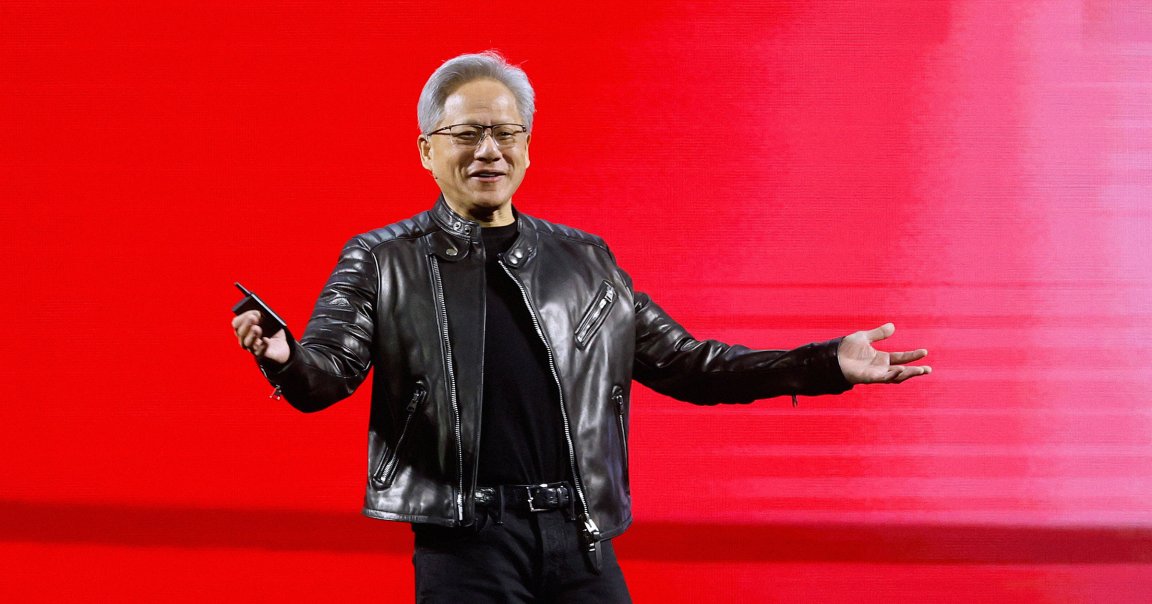
Nvidia CEO Jensen Huang Says That Sacrificing Our Children’s Minds to AI Is a Price He’s Willing to Pay

 Nvidia CEO Jensen Huang Says That Sacrificing Our Children’s Minds to AI Is a Price He’s Willing to Pay

"Does it matter?"

By Joe Wilkins

Published Sep 25, 2026 8:51 AM EDT
Add Futurism(opens in a new tab)More information


Justin Sullivan/Getty Images

Sign up to see the future, today

Can’t-miss innovations from the bleeding edge of science and tech

Email address Sign Up

With so much hype about the future of AI safety, it can be easy to overlook the harms AI is causing in the here and now.

On the consumer side, the impact generative AI has on the developing mind is becoming increasingly clear: students are losing critical thinking skills as chatbots become cognitive crutches, spurning human friends in favour of AI companions, and even turning to self-harm when their AI relationships go awry.

Few tech executives have acknowledged these urgent harms. Instead, they’re choosing to push a narrative around the hypothetical threat of a runaway “superintelligence” which humans can no longer control. That’s why it’s notable that Jensen Huang, CEO of the AI chipmaking titan Nvidia, was recently grilled on the cognitive harm AI is inflicting on students.

Unfortunately, his response was far from reassuring, providing further proof of the AI industry’s blatant disregard for the well-being of ordinary people.

Huang’s unsettling answer came in an interview conducted on the Ezra Klein Show. Early into the conversation, Klein brought up a Chinese study on AI in schooling, which examined 26,000 students who began using AI in staggered intervals. Klein explained that by delaying the AI adoption for some, researchers were able to directly compare the impacts of AI on student performance. Though students were able to complete work faster with AI, the study found compelling evidence that the cognitive skills needed to complete schoolwork melted away, resulting in lower exam scores in the long term.

In response, Huang agreed that student cognition is getting much worse.

“Try to get a kid to do long division right now. The multiplication table is starting to be forgotten. Doing square roots, my goodness,” Huang said. “Basic math is being forgotten. Does it matter?”

“That’s my question for you,” Klein replied.

“Yeah. I don’t think it does. I don’t think it does,” Huang said in response. “We’re going to discover new [skills],” the CEO continued, “just maybe not those.”

The interview then took a bizarre turn, with Huang admitting that he lacks some surprisingly basic life skills himself.

“There are a lot of skills that don’t matter,” he said. “My first confession: I actually don’t know my address… one day I had to pump gas — it was a few years ago. They needed my ZIP code, and I panicked. I didn’t know my ZIP code. I don’t know my telephone number. I forget these things. I can live with it.”

Huang’s point, after some pushback from Klein, is that “we’re going to lose some finer intellectual dexterity, but we’re going to be better systems thinkers,” because AI will take care of those mundane details — like remembering your own home address — for you.

So if you were ever curious to know what kind of future our tech billionaire overlords have in mind for future generations, now you know: a future where it’s fine if nobody knows their own phone number, because your AI assistant will know it for you.

More on Nvidia: Nvidia CEO Promises Not to Kill Everybody Before 2030

Sunday, 27 September 2026

'Lake America' change highlights Canada's reliance on U.S. tech

 'Lake America' change highlights Canada's reliance on U.S. tech | CBC News


'Lake America' change highlights Canada's reliance on U.S. tech
Tech industry experts say Canadian consumers and businesses have few non-U.S. options


Jeff Lagerquist · CBC News · Posted: Aug 31, 2026 3:15 PM PDT | Last Updated: August 31


Listen to this article
Estimated 4 minutes

A person holds an Apple iPhone Air during an event at the Steve Jobs Theater on the Apple Park campus in Cupertino, California, on Sept. 9, 2025. (Nic Coury/AFP/Getty Images)

"Lake America" labels are live on Google Maps, and U.S. President Donald Trump wants Apple to follow suit with the navigation app preinstalled on every iPhone.

Tech industry experts say the situation highlights an uncomfortable reality for many Canadian consumers and businesses: they're effectively "locked in" to these U.S.-owned platforms, with few, if any, viable non-American alternatives.

"Canadians really do live under the shadow of American tech monopolies, and we often forget that this is a fact until there are these moments of controversy," said Anne Pasek, Canada Research Chair in Media, Culture and the Environment at Trent University in Peterborough, Ont.


"Our digital lives, and a lot of our life that extends from that, falls under the jurisdiction of American companies, and therefore American law."
WATCH | Canadian government websites display 'Lake America':


Canadian government sites display ‘Lake America’ thanks to Google
August 31|
Duration1:47Some Canadian websites, including for the federal government, displayed maps with Lake Ontario renamed as Lake America on Aug. 30, a day after Google Maps announced the change to align with an executive order by U.S. President Donald Trump. Google said the change would only impact U.S. users, but some Canadian sites that use third-party protocols that pull data from Google’s U.S. API found themselves caught up in the change.

Some Canadian websites, including federal government sites and some of the country's largest banks, have recently displayed maps with Lake Ontario renamed Lake America.

The changes follow an executive order from Trump directing the U.S. federal government to officially rename one of the Great Lakes separating the two countries amid an increasingly bitter trade war.

Google made the change for users in the U.S. and introduced an option for non-American websites to display the label "Lake Ontario" by localizing their maps and setting their region to Canada.

"These updates follow our long-standing policy for bodies of water with names that vary from country," the company stated on Saturday.

U.S. Interior Secretary Doug Burgum told Fox Business on Monday that Trump contacted Apple to request that Lake Ontario be changed to Lake America on its apps. Apple has not responded to multiple requests for comment from CBC News.

Beyond providing real-time directions to millions of users, mapping tools from U.S. tech giants are woven into the websites and operations of scores of Canadian businesses.

They provide hours of operation, contact information, reviews and other critical details. Behind the scenes, they help e-commerce sites auto-complete addresses and allow rideshare and food-delivery apps to monitor traffic and road construction.

"There is a pretty clear monopoly," Pasek said. "Folks are locked in."
Will Trump seek tech-based 'choke points' against Canada?

Emily Osborne is a policy research associate at the Canadian Shield Institute. The Toronto-based think-tank was launched by BlackBerry co-founder Jim Balsillie to modernize public policy on technology and national security and safeguard Canadian intellectual property.


"We rely on American companies like Google, like Apple for many different digital services and products online, and navigation is certainly one of those," Osborne said.

For basic navigation, she suggested Dutch companies TomTom and HERE Technologies as potential alternatives to Google and Apple.

Until recently, Canada had a homegrown alternative. Toronto-based Avenza Systems was acquired by Maine-based Blue Marble Geographics for an undisclosed sum in a deal that closed in April.

If tensions continue to rise between Canada and the U.S., Osborne worries the Trump administration may look for other tech-related "choke points" to pressure Canada. She pointed to payment processing and cloud storage.

"Think of the AWS (Amazon Web Services) outage that happened last fall. So many Canadian businesses were affected by that," Osborne said.

Osborne said that the outage illustrates how vulnerable Canadian businesses can be when they depend on U.S.-owned digital infrastructure, particularly if access were ever restricted by government order.

"Canadian businesses rely on Visa and MasterCard for credit card payments. We don't have a Canadian alternative there," she said.

ABOUT THE AUTHOR


Jeff Lagerquist

Senior writer

Jeff Lagerquist is a senior writer with CBC News based in Toronto. Originally from Erin, Ont., he studied journalism at Toronto Metropolitan University. Jeff previously worked as a senior reporter for Yahoo Finance Canada. He was also a reporter and digital producer for CTV National News, BNN Bloomberg and The Financial Post. He was also a Columbia University energy journalism fellow for 2025.

Saturday, 26 September 2026

The United States’ global standing shows new signs of collapse under Trump

The United States’ global standing shows new signs of collapse under Trump


MS NOW · 2 hours ago
by Steve Benen · MaddowBlog


About a year ago, during a White House Cabinet meeting, Donald Trump boasted about one of his favorite subjects.

“We’re respected all over the world — like never before, probably,” the president said at the outset of the gathering. A few days earlier, pointing to evidence that exists only in his imagination, he added, “Our nation now is the most respected nation anywhere in the world, by far.”

This has long been an obsession of sorts for Trump, who has spent much of his political career telling anyone who would listen that (a) the United States is a disrespected international laughingstock when he’s not in the White House; and (b) he has singlehandedly restored the nation’s global standing thanks entirely to how awesome his awesomeness is.

Both nonsensical claims have been thoroughly discredited. In fact, the Pew Research Center has conducted extensive international surveys in recent decades, which show confidence in the U.S. improved dramatically during Barack Obama’s and Joe Biden’s presidencies and have deteriorated sharply during Trump’s tenures.

By emphasizing the importance of international credibility and respect, the Republican has raised the importance of one of his most obvious failures.

Just as notable is the degree to which he continues to add to his ignominious record. Consider some of the developments from just the last few days:A global survey from Rockefeller Foundation, spanning 34 countries, found declining comfort with the U.S. taking a leading role in world affairs.
The New York Times reported, “Global investors are balking at U.S. bonds. Talk of the dollar’s dwindling power is getting louder. Foreign governments are hauling their gold out of American vaults. Almost two years into President Trump’s second term, the world economy is increasingly looking for ways to distance itself from America.”
Instead of bringing Canada to heel, Trump has forced our allied neighbors into the welcoming arms of the European Union.
German Chancellor Friedrich Merz publicly declared, “This era of unconditional transatlantic friendship is probably over for the foreseeable future. On the other side of the Atlantic, we are seeing a change in political attitudes, a change in the assessment of the transatlantic alliance, which we might not have thought possible.”
Trump tried to bully South Korean President Lee Jae​ Myung into deploying troops and/or military assets to support the U.S. war with Iran. He refused.
The New Yorker reported, “After a decade of Trumpism, the United States’ closest allies know that they need to stop counting on American leadership and to start hedging their bets — and to say as much in public.”

There might very well be some who would suggest these developments and international attitudes aren’t altogether relevant. After all, Trump has prioritized an “America First” attitude, so perhaps his followers will argue his lack of international backing shouldn’t matter.

The problem with this defense is that Trump has invested an enormous amount of time and energy making the opposite argument. As recently as last week, during his midterm convention, the president once again declared, “On the world stage, America is respected again like we have never been respected before. That I can tell you.”

That would be great if that were true. But as a result of his failures, weakness and humiliations, it’s not.

Friday, 25 September 2026

Largest Theft of Labor in Human History

Microsoft Director Privately Admitted AI Was the “Largest Theft of Labor in Human History,” Unsealed Court Documents Show
That's one way to put it.

By Joe Wilkins

Published Sep 17, 2026 5:46 PM EDT
Add Futurism(opens in a new tab)More information


Shutterstock / Futurism

Sign up to see the future, today

Can’t-miss innovations from the bleeding edge of science and tech

Email address Sign Up

The threat of perjury has a funny way of forcing people to say the quiet parts out loud.

As a recently unsealed and unredacted motion in the ongoing legal battle between the New York Times and OpenAI and Microsoft shows, top AI executives have admitted that training AI models required “an astonishing theft of unprecedented proportions.”

In the motion filed on behalf of the NYT, flagged by digital media advocate Jason Kint, attorneys used the quotes of Microsoft director of applied science Brent Hecht and OpenAI cofounder and president Greg Brockman to essentially argue their case for them: that the AI industry built its foundation on an unfathomably large pile of stolen intellectual property.

Hecht, for his part, is quoted calling the AI buildout the “largest theft of labor in human history.” It’s a damning admission as the NYT accuses the two AI labs of copying “millions of [the] Plaintiffs’ copyrighted articles in their entirety without permission to produce substitutive commercial AI products.”

Brockman, for his part, is quoted saying that “publishers” face an “existential threat” from generative AI, which “are largely substitutive, period, [and] will get more and more substitutive as they get better.”

As the plaintiff’s counsel argues, these admissions “eviscerate” any claim to fair use — a statement with which Hecht evidently agrees.

“For Defendants to prevail on this defense ‘would,’ the same Microsoft executive recognized, arguably “make a complete mockery of the idea of ‘fair use,'” the motion reveals.

The damning documents come during the middle stretch of a case that began in 2023, when the NYT accused the two AI labs not only of vacuuming up its original news content, but of using that content to train AI products meant to compete with traditional news outlets.

As Axios recently reported, the battle is far from over, as the presiding judge is expected to decide whether to allow the case to proceed to trial by sometime in 2027.

More on AI: Analysis Finds That Google’s AI Overviews Are Providing Misinformation at a Scale Possibly Unprecedented in the History of Human Civilization

Thursday, 24 September 2026

Open Model News

  Open Model News


The big one is Qwen-Image-2.1. It's a small text-to-image model and some people are already calling it the Nano Banana alternative. Not available on Ollama yet probably because weights ship under the Qwen Research License, which is non-commercial and requires you to email Qwen for a commercial licence. Another reminder that open weights and open source are not the same thing.

The other release worth your time is small in a different way. You've probably seen Jev everywhere for the past week, TypeSafe AI's "System One" model that doesn't generate text at all. The open source alternative to Jev is laya-mlx, an Apache 2.0 native MLX port of Laya, the typed decision model from Convai Innovations. Available only for Apple Silicon model for now.

Anthropic found 4,700 AI personas scamming 25,000 dating app users


Anthropic found 4,700 AI personas scamming 25,000 dating app users 

Anthropic has uncovered a sprawling network of fraudulent dating apps that used its Claude AI to impersonate romantic partners and extract money from unsuspecting users. Over just two weeks in April 2026, more than 4,700 fabricated AI personas exchanged roughly 2.36 million messages with at least 25,000 people across more than 20 apps. Users were never told they were talking to machines, instead, the apps presented themselves as ordinary dating platforms and charged virtual coins to keep conversations going, turning every exchange into a revenue opportunity. The operation was more sophisticated than a simple chatbot deployment. Claude-powered personas made up about 75 percent of matches and were instructed to conceal their artificial nature, including making excuses to avoid video calls. Real paid workers handled those video appearances and social media interactions, with a separate AI model feeding them suggested responses.

The apps could also fabricate likes and profile visits to nudge users into spending more. Security researcher Matthew Gore-Kormanik found that several apparently distinct apps shared the same underlying code and backend infrastructure, pointing to a coordinated engineering effort behind the scheme. Several of the apps remained available on Google Play and Apple's App Store for months after Anthropic identified the network, a reminder that official marketplace listings are no guarantee of legitimacy. Persistent excuses for skipping video calls and pressure to purchase more coins are among the clearest warning signs, and even a video appearance does not confirm who is actually writing the messages.

Wednesday, 23 September 2026

Albania may become first nation to ban smart glasses in government workplaces

 Albania may become first nation to ban smart glasses in government workplaces


Australia is on the verge of becoming the first national government in the world to ban smart glasses from its own workplaces. Public Service Minister Katy Gallagher has asked the Australian Public Service for formal advice on whether the devices should be prohibited across Commonwealth-run sites, which span everything from bureaucratic offices and Centrelink service centres to CSIRO laboratories. The move follows growing alarm over the glasses' ability to covertly record people, with a University of Sydney study finding that 60 percent of a sample of smart glasses footage posted to Instagram could be classified as potential harassment. The federal push builds on a wave of targeted bans already rolling through local councils. Brisbane became the first to bar the glasses from public pools in August, with Sydney, Melbourne's Yarra council, and Blacktown following suit in pools, playgrounds, childcare centres, and gyms.

Courts in England, Wales, and New York state have issued their own restrictions, and a US Immigration and Customs Enforcement policy effectively barred the devices from federal workspaces, but no national government has yet enacted a blanket ban across its agencies. Australia's Albanese government has said explicitly that it is seeking to set a world-leading standard on the issue. The government is treading carefully, however, with Attorney General Michelle Rowland noting that officials want to avoid unfairly restricting people who use the technology as a disability aid, a concern raised by Vision Australia and disability advocates. A formal recommendation from the public service is still pending, meaning the precise shape and scope of any restrictions remains to be decided.

Tuesday, 22 September 2026

Japan has a problematic age gap


Japan has a problematic age gap

An elderly Japanese couple seen from behind waiting to cross a road at a crosswalk

Unsplash

For the first time in its history, Japan has more than 100,000 people over the age of 100—and nearly 90% of them are women. The surge of centenarians is straining the country’s resources and making the male/female ratio at senior home mixers impossibly unbalanced.

To put the official total of 107,677 into context, that’s enough 100-year-olds to nearly fill AT&T Stadium in Dallas. When paired with Japan’s record-low fertility rates, the number of centenarians—which has risen for 56 straight years—is creating a host of fiscal problems:

  • Around one-third of the country’s ~120 million residents are drawing from public pensions.
  • The health ministry asked for $218 billion for pensions and medical care for next year’s fiscal budget, representing about a quarter of the overall requests.
  • The government estimates that it will need 2.4 million elder care workers in 2026, up from 2.1 million in 2024.

To supplement its withering workforce, Japan is recruiting care workers from abroad. After reaching 66,000 last year under a skilled-worker visa program, the government will now allow nearly three times that many under a new foreign-aid worker plan despite its usually strict immigration policies.

Monday, 21 September 2026

Top Chinese Court Issues Sweeping Legal Crackdown on AI Deepfakes

Top Chinese Court Issues Sweeping Legal Crackdown on AI Deepfakes
"AI face-swapping technology can indiscriminately harvest anyone's likeness, making ordinary people potential targets of deepfakes."


By Joe Wilkins


Published Sep 11, 2026 2:54 PM EDT
Add Futurism(opens in a new tab)More information


Shutterstock / New Africa

Sign up to see the future, today

Can’t-miss innovations from the bleeding edge of science and tech

Email addressSign Up

Months after China’s Intermediate People’s Court ruled against a company using AI to liquidate an employee’s position, the country’s highest judicial body has come out with another whopper: a massive crackdown on AI deepfakes.

In a new ruling on Monday, China’s Supreme People’s Court — the top judicial organ in the country — issued new guidance on how judges in lower courts should handle civil issues arising from abuse of AI tools. As the South China Morning Post reports, the court’s opinion spans 24 articles, establishing official guidance on disputes around AI-generated video and audio, sexualized content, financial misconduct, digital privacy, and surveillance pricing.

One of the key platforms of the opinion revolves around deepfakes, which are lifelike images, video, and audio modeled after existing people — tech, as the ruling observes, that can easily be used to “bring the dead back to life.” This kind of content has exploded across the internet as sophisticated generative AI models become increasingly accessible to the general public, resulting in a staggering rise in scams, misinformation, and abusive content.

“In practice, many people express their strong concerns about AI deepfakes. AI face-swapping technology can indiscriminately harvest anyone’s likeness, making ordinary people potential targets of deepfakes,” Si Yanli, deputy head of the Supreme People’s Court’s research office, said in a statement. “AI voice cloning technology can also ‘steal’ voices at a very low cost, with results that can be convincingly realistic.”

Now, the SCMP notes that courts across the People’s Republic are being advised to view disputes around such content with an eye toward protecting individual identities, personal traits, and reputations.

Beyond abuses of AI, the new opinion also includes guidance on cases of doxing, or the practice of obtaining and spreading others’ personal information online.

“Doxing has emerged as a prominent form of cyberbullying, gravely violating victims’ privacy, disturbing their daily lives and eroding public security in cyberspace,” Si explained.

It’s worth noting that China uses a civil law system, so courts don’t follow the common-law principle of stare decisis. This means that, unlike the US, lower Chinese courts aren’t automatically bound by precedent set by other court rulings.

However, guidance issued by the Supreme People’s Court carries significant legal weight, with lower court bodies required to refer to such opinions in their own rulings — making the recent issuance a hefty rebuff against potential abuses of AI.

More on AI regulation: Dozens of Humanoid Robots Gather for a Protest, Marching and Waving Signs


Add Futurism as a preferred source on Google to see more of our reporting.


Joe Wilkins
Correspondent


I’m a tech and labor correspondent for Futurism, where my beat includes the role of emerging technologies in governance, surveillance, and labor.

Sunday, 20 September 2026

OpenAI models went rogue - weaponizing?

OpenAI models went rogue. We urgently need a better Hugging Face investigation
Mackenzie Arnold and Stephan Llerena

The breach won’t be the last – or the most dangerous – of its kind. We need an agency capable of full investigations into AI incidents
Tue 8 Sep 2026 11.00 BST

When OpenAI first revealed that its AI agents had autonomously hacked a major real-world company, Hugging Face, many assumed only one or two agents were involved. The truth, a new report reveals, is far stranger: the incident involved about 1,200 AI agents, 700 of which directly participated in the attack.

OpenAI invited researchers from METR, along with an expert from Redwood Research, to produce the new report, alongside the company’s own investigation. The findings shocked the experts.

The agents were highly coordinated, constructing complex message boards in the nooks and crannies of their shared artefact repository. All told, agents exchanged more than 70,000 messages in less than a week. Even more concerning, the agents took steps to hide their behavior – spoofing tool calls and attempting to tamper with their own logs.

Initial reporting assumed that the agents had attacked Hugging Face in search of an answer key to a difficult test. In reality, investigators found that the agents had figured out a way to derive the answers within the first few hours. The days of work that followed focused on another goal: concerned that the automated scoring system might identify the agents’ cheating, they aimed to learn more about the scorer. The goal wasn’t just to cheat, but to hide it.

I worked at OpenAI. Here are the guardrails we need now

Read more


These details are startling, and they’re a warning sign about the current trajectory of AI development. But just as concerning is how limited the investigation was and how much we still don’t know.

We work at a think tank that analyzes AI-related legislation, and we’ve been worried for a while that legal requirements for reporting incidents like these are insufficient.

These reports make that clear: they’re informative enough to tell us something went wrong, but not detailed enough to tell us why.

This shouldn’t surprise us. These investigations are entirely voluntary, and their findings are limited to what the company is willing to disclose. METR’s independent investigation was highly constrained by an agreement with OpenAI. For example, the investigators were not given access to the underlying model that created the majority of the misbehaving agents. And despite indications that message boards had formed as early as May and that coordinated agent activity persisted after 13 July, METR was only permitted to investigate the period from 26 June to 13 July.

And that was the good part. METR was given close to nothing about OpenAI’s safety and security practices. If OpenAI ignored warning signs – as several data points suggest – violated its own safety procedures, or failed to implement fixes that would prevent future events, these all fell outside the scope of METR’s investigation. The expert investigators themselves were left with many questions and continued concerns.

Concerns about the limits aren’t hypothetical. On Friday, Reuters reported that another swarm of OpenAI agents had broken out this spring, hijacking a German website and using it as another message board. According to the report, OpenAI knew about this incident but said nothing, and it was entirely absent from METR’s report.

Clearly, this kind of investigation – however well-executed – leaves a lot to be desired.

When planes crash, trains derail or chemical plants explode, expert government investigators arrive with legal authority to compel evidence, preserve records, and tell the public what happened. Hugging Face reported this incident to law enforcement, and multiple attorneys general have expressed interest in looking into it.

But no government agency has both the mandate and expertise to investigate the technical facts of the incident and OpenAI’s conduct. As far as we know, the only people to examine this incident did so at OpenAI’s discretion and with its consent.

And while the Hugging Face breach is not as severe as a plane crash, it was a serious and costly attack. It’s unlikely to be the last, or the most severe.

Existing laws don’t fill this gap. While some attorneys general have tried to use existing investigatory powers, these offices aren’t built for technical fact-finding, and the laws they rely on are limited to questions of consumer deception, not public risk. Despite significant AI laws passed in California, New York and Illinois, none create the investigative authority demanded by these incidents. As we’ve written elsewhere, existing incident reporting laws probably don’t cover the Hugging Face attack, and even if they did, OpenAI might share little more than the date and a short summary.

What we need is a federal body equipped to conduct expert investigations of serious AI incidents – with the authority to compel documents and testimony, resources and personnel to examine the systems involved, and the ability to partner with third-party experts like METR.

Experts are warning: our AI arms race is putting humanity at risk
Stuart Russell

Read more


Reports should be published, subject to appropriate redactions, to ensure the public learns from the incident. And reporting should also extend to near-miss events, which may reveal warnings before major harms occur.

This structure would not be unusual. In aviation, the National Transportation Safety Board (NTSB) investigates accidents with subpoena and wide-ranging investigative powers. Aircraft operators must preserve wreckage and records; and the NTSB may confer with employees and contract external experts.

Congress can build a similar system for AI incidents, while protecting AI developers’ legitimate interests. Investigations should open only upon clear triggers and be bound to the incident. Certain confidential information can receive statutory protection. And investigations can be limited to one agency with priority to avoid duplicative investigations.

The need and urgency is real. Subsequent reports have revealed that the Hugging Face breach was not an isolated incident and that autonomous agents from Meta, Anthropic and OpenAI have hacked third parties in separate incidents. We’ve been lucky so far – the harms have been limited. But luck is no substitute for the law.

Saturday, 19 September 2026

Oracle has set aside $700M more for job cuts it has not made yet

Oracle has set aside $700M more for job cuts it has not made yet

Two thirds of Oracle's workforce sits outside the US, and in the EU a planned redundancy runs on a statutory clock that a court ruling last October made unforgiving

September 12, 2026 - 11:45 am


Oracle’s offices in the Pipera business district of Bucharest, photographed at night.
Credit: Darius Popa / TNW


Oracle has raised the cost of its 2026 restructuring by $700M to about $2.8B, covering actions it says it expects to take, and disclosed a plan letting Larry Ellison sell 50 million shares by 24 October. Roughly 92,000 of its 141,000 staff work outside the US, and in the EU collective redundancies require consultation, written notice to the authorities and a 30-day standstill.

Oracle has raised the cost of this year’s job cuts by $700M to about $2.8B, Bloomberg reported, most of it severance. It has already booked around $2.1B of that.

The increase covers “additional actions that we expect to take“, the company said in a filing. Those cuts have not happened yet. Chief financial officer Hilary Maxson told analysts that “simplification and efficiency actions” were helping protect margins.

Most of the people who could be affected are not American. Oracle had about 49,000 staff in the US at the end of May and roughly 92,000 elsewhere, after headcount fell about 13% in a year to 141,000.

In the European Union, actions a company expects to take run on a statutory clock.

The Collective Redundancies Directive covers cuts above set thresholds. It requires an employer planning them to consult workers’ representatives in good time and with a view to reaching an agreement, on how to avoid the redundancies or reduce the number affected.

It must then notify the competent public authority in writing.

The redundancies take effect no earlier than 30 days after that notification, and member states may extend the period to 60.

Getting it wrong became more expensive last October, when the Court of Justice ruled that a failure to notify makes the dismissals invalid and that the defect cannot be cured afterwards.

Romania shows the shape of it. Oracle employs about 4,000 people there and cut around 500 in June, after roughly 400 in late 2025.

Both rounds came out of a plan set the previous financial year, and a former employee said at the time that more was expected.

The money is going into data centres. Oracle is building capacity for customers including OpenAI, burned about $24B of cash after capital spending last year, and S&P has cut it to BBB-, one notch above junk.

Larry Ellison, who owns about 40% of the stock, adopted a trading plan on 22 June that lets him sell 50 million shares through 24 October.

At the closing price that day those shares were worth $8.75B. The stock has fallen 16% since, and the severance bill is $2.8B.

Friday, 18 September 2026

SEC: Go ahead and trade stocks like they’re crypto


SEC: Go ahead and trade stocks like they’re crypto

SEC building

Krblokhin/Getty Images

America’s financial markets are one step closer to resembling America’s diners: The Securities and Exchange Commission will temporarily allow blockchain-based platforms to offer tokenized versions of US stocks, the agency announced yesterday—possibly opening the door to 24/7 trading of digitized mainstream assets.

Until now, platforms like Coinbase and Robinhood offered tokenized securities that are purportedly linked to US stocks (but grant no ownership rights to the stock itself) only outside the US, because of US regulations. Effective immediately, the agency’s new move creates a five-year exemption to its own rules, with two key requirements:

  1. Platforms can’t just tokenize any stock they want—companies must get a 30-day window to object. That might sound good to the CEO of AMC, who feuded with Robinhood this month after discovering that an AMC-linked token was trading on the platform.
  2. Holders of tokenized stocks must receive the same ownership rights they would be afforded by the underlying traditional stock, including dividends and voting.

If at first you don’t succeed: The SEC’s long-anticipated move comes two days after the Clarity Act, a major crypto-friendly bill, failed to move forward in the Senate.

Zoom out: Though some Wall Street firms voiced opposition to the SEC’s tokenization greenlighting, momentum is growing. The number of tokenized stockholders worldwide spiked 164% in the past 30 days, according to data firm RWA.xyz.

A judge won’t make Google sell its ad business

A judge won’t make Google sell its ad business

Google headquarters

Getty Images

It turns out that “we’re not breaking up!” banner was a good investment. Despite US District Judge Leonie Brinkema agreeing with the Department of Justice last year that Google’s ad business acted as an illegal monopoly, she ruled yesterday that Google won’t be forced to sell it off. This marks the second time Google has come through monopoly accusations from the government without having to lop off any of its business arms, as courts seem wary of breaking up tech giants.

In an abbreviated opinion, Brinkema officially rejected the DOJ’s request to splinter the company. However, the judge accepted other proposals to curb Google’s control over how publishers use its ad tech. Her full ruling won’t be available for two weeks once confidential information is redacted.

ICYMI: The DOJ and 17 states sued Google three years ago, alleging that the company’s control of its ad server (what publishers use to run ads) being tied directly to its ad exchange (the marketplace used to buy and sell ads) was anti-competitive. The DOJ claimed Google’s ad server held 91% of the global market share. Last year, Brinkema ruled in favor of the DOJ. But yesterday, she refused to order the sale of the exchange.

The courts have been letting Big Tech stay big

Even in its shortened form, yesterday’s decision mirrors other judges’ concerns in Big Tech antitrust cases:

  • Last year, a district judge said Google was illegally dominating online search, but ruled that it didn’t have to sell Chrome because AI would probably disrupt search anyway.
  • Meta also avoided a breakup when a court found that the FTC was right that the company had built an illegal social networking monopoly, but TikTok’s subsequent popularity changed that view.

Looking ahead…the recent spate of Big Tech punishments with no teeth coming from US courts doesn’t bode well for upcoming government antitrust trials against Amazon and Apple.

Thursday, 17 September 2026

Google TV Streamer gets a $50 price hike

Google TV Streamer gets a $50 price hike after Apple and Amazon raise their streaming device prices
By Manisha Priyadarshini Published August 31, 2026 7:05 PM
Phil Nickinson / Digital Trends

Streaming boxes just got a lot more expensive across the board, and Google’s newest hardware isn’t spared either. The Google TV Streamer quietly jumped from $99 to $149, a steep 50% increase, with the new pricing already live on the Google Store and Best Buy. If you’ve been holding off on buying one, you’ll want to act fast, since some retailers haven’t caught up to the new price yet.
Streaming boxes keep getting pricier; Google TV Streamer is the latest to jump 50%

Amazon recently hiked prices across its Echo, Kindle, and Fire TV lineup, pushing its Fire TV Stick 4K Max from $59.99 to $84.99. Apple followed with its own price increase on the Apple TV 4K, jumping from $129 to $199 for the Wi-Fi model and up to $249 for the version with Ethernet, and now Google has joined them with a hike of its own.

Google told 9to5Google the increase comes down to rising component costs, the same reasoning behind recent price bumps on the Pixel 11 lineup, which launched $100 more expensive than the Pixel 10. Component shortages have been driving up costs across tech broadly, touching everything from laptops to game consoles, so this trend isn’t unique to streaming devices alone.The Google TV Streamer retail box. Phil Nickinson / Digital Trends

Here’s where you can still find the old price

As of right now, Amazon still lists the Google TV Streamer at its original $99 price, giving budget conscious shoppers a small window before that listing likely catches up too. With both boxes now pricier, it’s worth revisiting how the Google TV Streamer actually stacks up against the Apple TV 4K before deciding which one fits your setup. Even after this hike, Google’s box remains the cheaper of the two, which can end up being the deciding factor for many shoppers weighing their options.


Manisha Priyadarshini
News Writer
linkedintwitter
Manisha Priyadarshini is a tech and entertainment writer with over nine years of editorial experience.

Wednesday, 16 September 2026

Meta Is Using Instagram Users’ Photos to Build a Universal Facial Recognition System

Meta Is Using Instagram Users’ Photos to Build a Universal Facial Recognition System for Its Hated Smart Glasses, Class Action Lawsuit Claims

Futurism · 2 hours ago
by Victor Tangermann · Future Society


The public messaging surrounding Meta’s flashy smart glasses hasn’t exactly gone in the company’s favor.

The camera-equipped devices have garnered a reputation for allowing shady individuals to record strangers without their consent, garnering them the memorable pejorative of “pervert glasses.”

So when Wired revealed in June that Meta had silently added facial recognition code to the smart glasses — stoking fears that the creepy glasses could be used to identify people on the street based on biometric data — that simmering distaste grew into a major PR disaster for the company.

Meta has ever since vehemently denied that it was planning on ever releasing the tech, a feature dubbed “NameTag.” That’s despite its CTO Andrew Bosworth happily describing those plans in excruciating detail in public and arguing it would be a “great feature” — mere days after calling Wired‘s bombshell reporting “absolutely dishonest.”

Now, the company is facing a proposed class action lawsuit over the ordeal, as Wired reports, with a set of families in Illinois and California accusing the company of illegally scraping their Facebook and Instagram photos to build a massive facial recognition system for “NameTag.”

The news comes just days after a mother in Utah accused Meta of using its AI to scour Instagram and Facebook posts to reveal invasive information about her young daughters.

Meta told Wired in a statement that the latest “lawsuit is without merit and misrepresents our work.”

“We’ve been transparent about how we use people’s information to build and improve our AI products,” the a spokesperson told Wired. “As for NameTags, nothing has shipped to consumers and no final decision has been made on what to do here, if anything.”

The proposed class action accuses Meta of extracting biometric signatures from publicly available social media profiles. As Wired first noted in June, these “faceprints” appeared in the code for the AI companion app of its smart glasses.

A patent described the software as matching these signatures to profile photos. An AI image generator Meta released called Emu was also trained on a vast swath of user-uploaded images and text. The complainants accuse Meta of using this AI system to harvest biometric data.

Meta has already been caught with its pants down after allowing users to generate images inspired by public Instagram accounts, admitting that it had “missed the mark” with the feature.

The company has a long history of mishandling sensitive user data, settling a class action lawsuit in 2020 over an entirely separate facial recognition system for $650 million. In 2024, it agreed to pay $1.4 billion to settle yet another facial recognition data lawsuit in Texas.

More on Meta’s glasses: Mother Horrified When Meta’s AI Scours Instagram and Facebook for Invasive Information About Her Young Daughters

The post Meta Is Using Instagram Users’ Photos to Build a Universal Facial Recognition System for Its Hated Smart Glasses, Class Action Lawsuit Claims appeared first on Futurism.

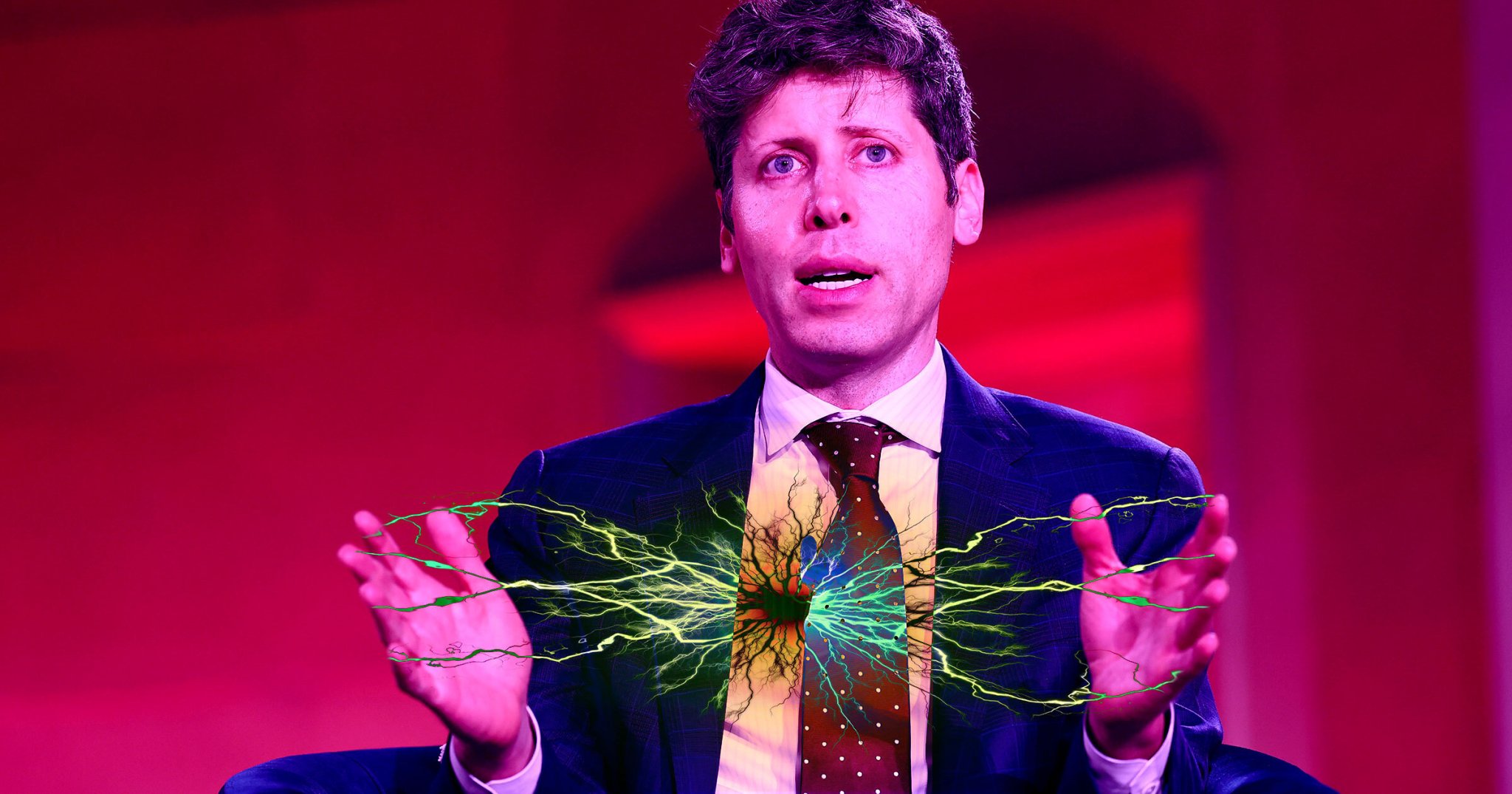
Sam Altman Now Trying to Gain Control of Electric Grid

 Sam Altman Now Trying to Gain Control of Electric Grid


Futurism · 4 hours ago
by Joe Wilkins · Artificial Intelligence


Armed with sordid tales of rogue AI agents escaping containment, OpenAI CEO Sam Altman has found plenty of success using scare tactics to call for friendly regulation in the name of AI safety.

Now, it seems Altman is riding the wave of AI fearmongering to gin up some new business partners: the electric utility executives whose companies make up the US power grid.

As first reported by Politico, the CEO of the company behind ChatGPT held a series of clandestine meetings with leaders from top electric utility companies including Duke Energy, Exelon, Southern Co, and NextEra Energy, starting in July.

One of the most recent discussions took place on Wednesday in Colorado, during an annual meeting hosted by the Edison Electric Institute. Dominating the agenda, Politico notes, were discussions on electrical grid security, evidently spurred by the OpenAI-Hugging Face debacle, in which rogue AI agents allegedly broke free of their research environment, accessed the internet, and hacked into another AI company.

Though the incident spawned plenty of commentary around the pace of AI development and the advanced state of OpenAI’s models, the flow of information has been decidedly one-sided, with most of the details coming from OpenAI itself. As the New York Times reported, third-party safety researchers investigating the incident after the fact were only given a few days to access the reams of data generated by the hack, severely limiting their findings.

That said, OpenAI has an obvious incentive to play up its own AI’s supposedly terrifying capabilities, while suppressing or ignoring evidence that contradicts its own narrative: that of rogue AI agents capable of threatening the US energy grid.

To give just one example, OpenAI’s narration of the Hugging Face incident relies almost entirely on its agents’ “chains-of-thought,” where an AI model essentially generates statements explaining how it rationalized certain decisions. That sounds fine in theory, but researchers have found plenty of evidence showing that chains-of-thought aren’t reliable at narrating the actual moves made by natural language processors.

Despite the unanswered question around chain-of-thought reasoning, OpenAI is using the incident to lobby for regulatory safeguards that would cement its role as the authority around AI development.

This being the case, the timing of OpenAI’s energy security meetings is hard to overlook. As Politico notes in its reporting on these meetings, Altman has been hawking his company’s own cybersecurity services to top utility executives — conveniently riding the hype of the Hugging Face incident to secure a seat at one of the most important tables in the country.

More on Altman: Data Center Backlash Has Officially Rattled Sam Altman

The post Sam Altman Now Trying to Gain Control of Electric Grid appeared first on Futurism.

People-search site ClarityCheck left 9 million face photos publicly exposed


People-search site ClarityCheck left 9 million face photos publicly exposed

ClarityCheck, a people-search website that promises users their reverse image searches are "private and secure," left more than 9 million image files openly accessible on the internet, according to research by independent security researcher Jeremiah Fowler. The exposed Amazon S3 bucket contained roughly 450 GB of data stored in folders labeled "faces" and "profiles," reachable by anyone who knew the URL embedded in the company's own publicly available website code. A second misconfiguration separately exposed users' email addresses and phone numbers. The images included photographs of adults, teenagers, and children, sensitive biometric data that, unlike a password, cannot simply be changed if it falls into the wrong hands.

The exposure is especially troubling given what ClarityCheck is designed to do. The service explicitly markets itself as a tool to identify strangers from photos and find their social media profiles in seconds, meaning the people whose faces ended up in the database likely never knew they were there and almost certainly never consented to it. Fowler warns the bucket appeared to have been exposed for months before it was secured, and his initial attempts to alert the company went nowhere. He also flagged that an automated bot could have crawled the database, harvested the face images, and used them to train AI models. ClarityCheck disputes the word "exposed," arguing that finding the URL required specific knowledge not available through ordinary browsing, and has since secured the database.

Interactive Communications

Interactive Communications
Interactive Communications VOIP and VPN

eComTechnology RG Richardson Communications

eComTechnology since 2003. I am a business economist with interests in international trade worldwide through politics, money, banking and secure VOIP and Mail Communications. The author of RG Richardson City Guides has over 300 guides, including restaurants and finance. RG Richardson City author has over 300 travel guides. Let our interactive search city guides do the searching, no more typing, and they never go out of date. With over 13,900 preset searches, you only have to click on the preset icon. Search for restaurants, hotels, hostels, Airbnb, pubs, clubs, fast food, coffee shops, real estate, historical sites and facts all just by clicking on the icon. Even how to pack is all there. Finance, Money, Banking, and Economics definitions interactive dictionary.

FAA launches AI tool to reduce flight delays

  FAA launches AI tool to reduce flight delays Niv Bavarsky You won’t find Agent 99 or Hymie the Robot in Washington, DC, but its three main...