
|
|
|
|
|

Worldwide news and secure communications, including VOIP, e-mail, chat, websites and hosting.
|
|
|
|
|
Kindle users get crafty as old models stop working

Niv Bavarsky
Paperback diehards who claim to love lugging around Ron Chernow doorstoppers are getting vindicated. Today, Amazon is ending support for Kindle e-readers released before 2013—which prompted some users to load up on books or alter their devices. While the titles already loaded on the gadget your parents gifted you in 2010 aren’t going anywhere, the owners of the ~2 million older Kindles still in use won’t be able to acquire new books from the Kindle Store.
But some aren’t rushing to Amazon.comMany scrappy bookworms are now sidestepping the Amazon ecosystem by sideloading titles onto their vintage Kindles from designated apps on their computer. Others are altering their Kindle’s software—a more technically involved process known as jailbreaking that may violate Amazon’s terms of service (though not always the law). This allows them to install alternative reading apps with more features and download books in formats that aren’t compatible with ordinary Kindles. You can see how people are doing it here. Many users are angry…accusing Amazon of practicing planned obsolescence and exacerbating the issue of e-waste, with some saying they’ll switch to competing e-readers. Amazon currently controls 72% of the e-reader market. |
You’ll Never Guess Trade Unions’ Position on AI Data Centers
NOAA Issues Stark Warning About Upcoming El Niño
Beware. Getty / Futurism

Futurism · 3 days ago
by Joe Wilkins · Artificial Intelligence
For tech companies racing to be the king of the AI hill, there are few things more precious than raw, original data.
To keep the large language models underlying our favorite AI chatbots up to date, tech companies have to feed them reams of fresh inputs. As one study found, the amount of data being used to train AI has doubled every nine months since 2010 — exponential growth which may soon hit a wall as stores of clean data run critically low.
When there’s no more original content to pilfer, companies have started paying workers to generate fresh training data, offering them low-quality contracts to train AI in hyper-specific tasks like running weekly payroll for Broadway musicians. Others have been hired for to film themselves doing degrading or menial chores like folding laundry or distinctly adult activities.
Predictably, this growing workforce behind the AI boom has started cutting corners en masse, turning to other AI chatbots to supply the data meant to feed AI chatbots. Talking to New Scientist, numerous insiders said this practice of AI cannibalism — a method experts have long warned can destabilize LLMs — is shockingly commonplace.
“It’s very widespread,” a worker identified as Alice told NewSci. “Every company I’ve worked for has had explicit guidelines around it and they clearly do try to catch people out, so I think they do care. But I don’t think they can stop it.”
In other words, AI companies are learning an ironic lesson: after purloining everybody else’s content without permission to create a product that threatens employment across the economy, the new precariat they’ve created are using the same tech to do the few human tasks they still need in as lazy a fashion as possible.
Though workers have to be careful not to be too obvious, Alice says it isn’t hard to pass AI-generated data off as her own, provided she scrubs the obnoxious linguistic tics of chatbots like ChatGPT before she submits it. “It’s only the sloppiest of users that get caught,” the AI contractor told NewSci. “Anyone with a modicum of awareness around AI hallmarks can tell their output not to use them, and at that point what are you going to do?”
“If these companies want quality data, then they should offer quality contracts,” Alice continued. “Instead they’re low-balling struggling people, employing them for the barest possible amount of time and tossing them aside as projects are finished with no warning.”
Other contractors told NewSci they use LLMs in order to avoid making mistakes and losing their gig entirely.
“I was terrified of not having an income source, and then after that, it just became easier to run everything through LLMs,” one explained. “For a lot of the projects that I do now, it’s creating scenarios, so I will use one LLM to help me create the scenario and then I’ll use a different LLM to help me create the files that go along with the scenario. I do feel guilty but like I said, in the beginning it was more about trying to make sure I wasn’t making any errors.”
Whatever the reason, it’s clear workers aren’t above feeding AI companies a taste of their own slop — a situation which could have drastic consequences for the AI race as a whole.
More on AI: Cop Accused of Using AI to Fake Evidence
The post AI Companies Are Learning an Ironic Lesson as the People They Pay to Improve Their Chatbots Are Just Feeding AI Slop Into Them appeared first on Futurism.

A Vancouver Company’s Role in the Race to Mine the Seabed | The Tyee

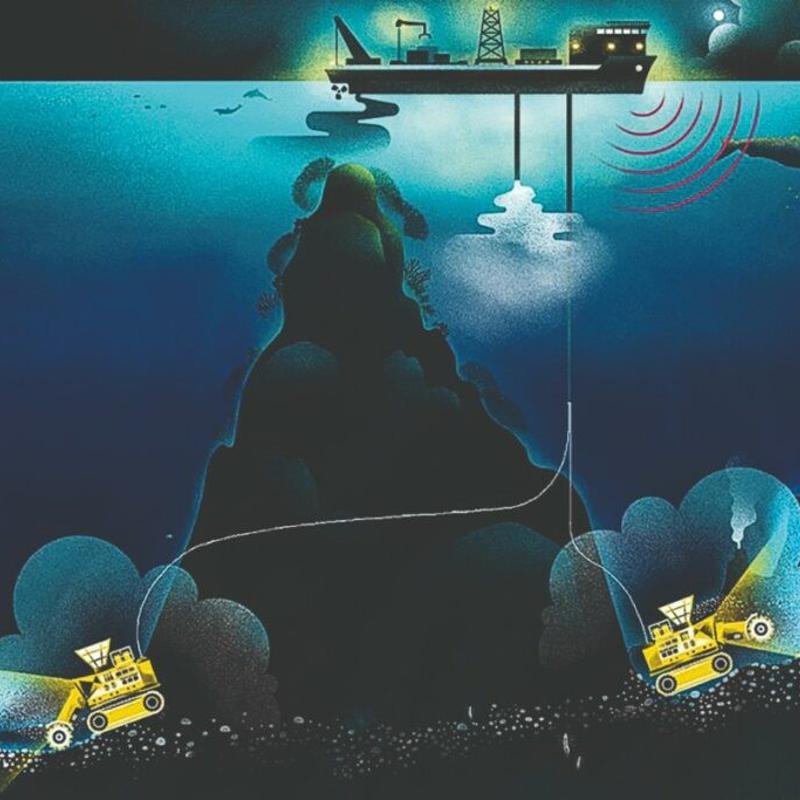
 For mining companies, these polymetallic nodules four to six kilometres under the ocean surface are prized because they’re rich in cobalt, nickel and rare earth elements. Photo via NOAA.




Fox to buy Roku for $22 billion to reach streaming customers. Roku City will soon have a new sheriff in town: Fox Corp. has agreed to purchase Roku in a cash-and-stock deal for $160 per share that would give it access to the 100 million global households with purple buttons on their remotes. The deal, expected to close next year, combines Fox’s sports, news, and entertainment content (and the streaming company it already bought, Tubi) with Roku’s popular platform, marking a big move into streaming for Fox as traditional TV’s popularity wanes. “This is a defining moment for Fox,” Fox CEO Lachlan Murdoch said, calling it a “natural extension” of the company’s strategy.




The top 1% of US companies by AI adoption spend $7,500 per employee per month on AI tools and compute. The median firm spends $11.38. That 680x gap, drawn from the Ramp AI Index, is the clearest picture yet of how unevenly AI spending is distributed across American business. Ramp describes the top 1% as […]


Dispute could rock the America’s Cup
The America’s Cup has had its share of land-based drama, but a legal row may top the charts between British Olympic champion Ben Ainslie and chemicals billionaire Jim Ratcliffe and his company INEOS that sponsored Ainslie’s America’s Cup challenge in 2021 and 2024.
According to reports from the court proceedings, Ainslie alleged that senior INEOS Sport executives warned him that Ratcliffe would effectively “burn your house down” if he did not agree to INEOS’s position in their dispute over the British America’s Cup team and its assets.
Ainslie said the remark was conveyed during a meeting by executives, including Jean-Claude Blanc and Rob Nevin, the chief executive and chairman of Ineos Sport.
The disagreement stems from the collapse of the partnership between Ratcliffe’s INEOS group and Ainslie’s sailing organization, now known as Athena Racing. After their split in 2025, both sides claimed ownership rights over key America’s Cup assets, especially the AC75 yacht that raced as INEOS Britannia in the 2024 America’s Cup.
INEOS argues that, having invested roughly £174–180 million in the project, it is entitled to ownership of the yacht and other assets under the parties’ agreements. Athena Racing argues that interpretation and maintains the assets belong to the team.
The case could have major consequences for Britain’s challenge in the 38th America’s Cup in Naples. Ainslie has warned that if INEOS succeeds in taking possession of the AC75 yacht, it could seriously disrupt or even jeopardize Britain’s campaign.
As the Challenger of Record, this is the boat Ainslie’s team needs to compete in 2027.
The reported threat is part of Ainslie’s account presented in court. INEOS’s legal position centers on ownership of the yacht and related assets rather than public allegations of personal intimidation. Court proceedings are ongoing, and the allegations remain contested.
In short, the case is one of the biggest off-the-water disputes in modern America’s Cup history: a fight between former partners over control of a British sailing team, a highly valuable racing yacht, and the future of Britain’s bid to win sailing’s oldest trophy.
Florida becomes first state to sue OpenAI

Morning Brew Inc
Florida Man is taking on Sam Altman. Florida Attorney General James Uthmeier filed an 83-page lawsuit against OpenAI and its CEO, Sam Altman, yesterday, accusing the company of releasing ChatGPT despite knowing its safety flaws. How is this case different from others? OpenAI is wrapped up in so much litigation, its in-house legal department is running out of timecards. The company has been at the center of high-profile copyright and privacy litigation, and is also being sued by seven people claiming that ChatGPT drove individuals to suicide and other delusions. But Florida is the first state to sue the company:
In the civil suit, Uthmeier references a criminal investigation he opened earlier this year against the company for its alleged role in helping an individual plan a mass shooting at Florida State University. It remains ongoing. OpenAI and Altman haven’t responded directly to the new lawsuit, but the company has previously denied similar claims and has said it’s working on bettering safety protocols within ChatGPT. Big picture: Uthmeier and Florida Governor Ron DeSantis, both Republicans, have broken with President Trump’s policy of deregulating AI. Public backlash against the tech has intensified—and even the Pope called on lawmakers to regulate it |
There’s a growing chance a Super El Niño is coming

Dasril Roszandi/Getty Images
Is it hot in here or is it just the weakening trade winds over the Pacific? El Niño, a naturally occurring weather pattern, now has an 80% chance of developing by the end of August, according to the UN’s World Meteorological Organization. The phenomenon could have wide-ranging effects on the global economy, hitting everything from trade to agriculture to energy. What is El Niño? We’ll never be able to harness Bill Nye’s raw passion for meteorological phenomena, but we can try. Every two to seven years, trade winds that normally blow from east to west weaken or reverse course over the Pacific Ocean, pushing warm waters usually headed toward Asia back to the Americas. No one is totally sure why this happens, just that when it does, it stirs up a whole bunch of weather and storm drama around the globe:
Now put a “Super” in front of itThe odds of a “Super El Niño,” which occurs when the water in a specific area of the Pacific rises above two degrees celsius, have also jumped from 25% to 37%, according to the National Weather Service. A normal El Niño is classified by only a half a degree celsius temperature increase. Some data suggests that a deep wave of abnormally warm water could push Pacific Ocean temps higher than they’ve been in a decade, resulting in a record-setting year for global temperatures in 2027. Big picture: Scientists have warned that this El Niño could be supercharged by the warming climate, exacerbating already strained supply chains for everything from fertilizer to fuel. One study from Dartmouth estimated that in the five-year fallout from the 1997–1998 El Niño, there was a $5.7 trillion drop in global GDP. |
Nvidia’s new PC chips represent CEO Huang’s bid to win at every layer of AI stack
Published Tue, Jun 2 20268:00 AM EDT


U.S. skiers latest to be fined for entering closed backcountry in Rogers Pass Published 4:40 pm Wednesday, November 4, 2026 By Evert Lindqui...


